

Over 1.8M Kenyans facing acute food shortage, Gov’t seeks Ksh.4B to avert crisis
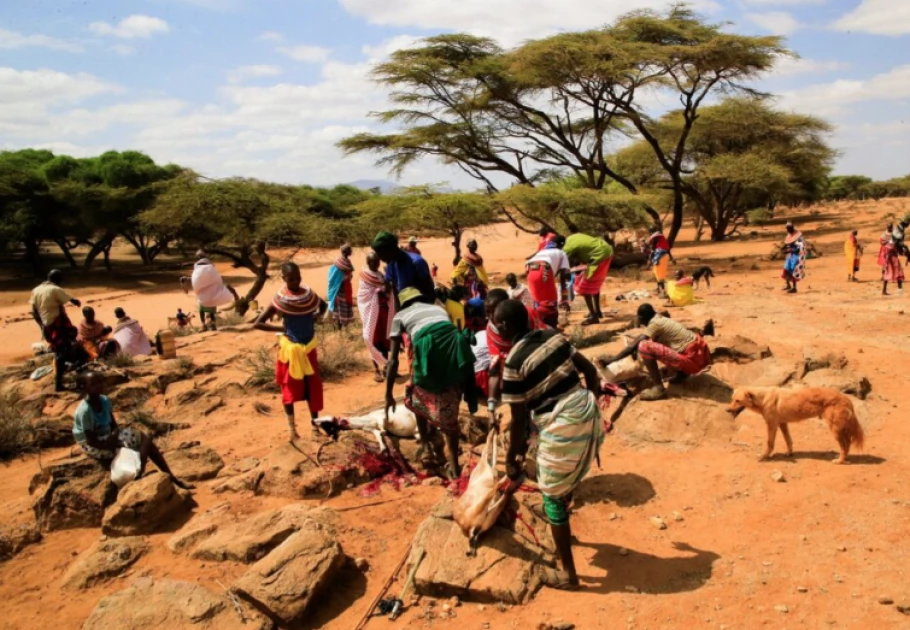
Samburu pastoralist slaughter livestock in the de-stocking of emaciated animals in a program by the government and the Kenya Red Cross to buy livestock, slaughter and distribute the meat as relief food to the most affected families following a prolonged drought near Lengusaka in Wamba, Samburu county, Kenya July 27, 2022. REUTERS/Thomas Mukoya

Audio By Vocalize
A report by the Intergovernmental
Authority on Development (IGAD) now shows that 42 million people in the 6 member
states are staring at an acute food in the coming days.
According to the report, the
region continues to face multiple shocks, ranging from extreme weather patterns
such as flooding and drought, war, as well as micro economic issues and debt.
The report notes that over 1.8
million people in Kenya’s arid and semi-arid areas are among those at risk of
food shortage.
Kenya is set to receive below
average rains in the last quarter of the year. This could see low food crop
production, with the IGAD report projecting that the low rainfall in the
country could increase the number of Kenyans at risk of acute food shortage
from the current 1.8 million to 2.1 million by early 2026.
According to the State Department
for ASALs and Regional Development Principal Secretary Kello Harsama, to avert
this, the government will require over Ksh.4 billion to caution the vulnerable
population, largely in Eastern and Northern parts of the country.
Charity
Mumbua, a food security expert at IGAD, said: “42 million people or 29 percent
of the analysed population faces acute food shortage in 2025. In Kenya,
specifically in the arid and semi-arid lands between October 2025 and January
2026, the number is expected to increase to 2.1 million, but this is because of
the expected below average seasonal rains.”
Harsama,
on his part, noted: “We have alerted our institutions. The State Department for
Special Programs is on standby to provide any Kenyan affected by the food
shortage. More than Ksh.4 billion will be required to take care of that.”
Additionally,
the report shows that in the region, 11.4 million children are malnourished,
out of which 3.1 million require life-saving treatment.
The data underscored the Horn of
Africa’s unenviable ranking as the global epicenter of malnutrition, with IGAD
warning that the region is not making sufficient progress despite years of
pledges and interventions, even as experts called for a shift away from aid
dependency.
“These
statistics are not just abstract data, they represent the lives of people
living amongst us. The figures and the evidence we have provided show that we
are not on track to end hunger, achieve food security, and improve nutrition by
2030,” Mumbua added.
The seventh edition of the IGAD Regional
Focus of the Global Report on Food Crises continues to provide essential
information, analyses, and insights to collectively address the causes and
consequences of escalating acute food insecurity and malnutrition in the
region, with the hope that policy shapers will take advantage of the actionable
data to enhance their efforts in making their countries food secure.
Leave a Comment