
Asbel labels Kenya’s VO2 Max workouts ‘Old-School', calls for shift
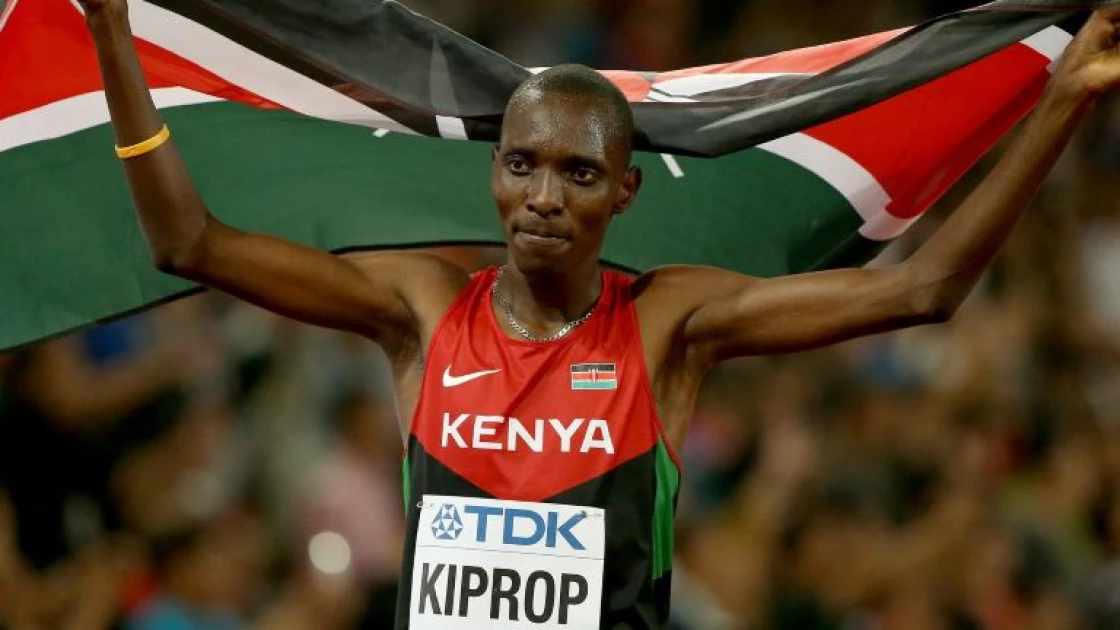
Three-time world champion Asbel Kiprop celebrating after a race in a past chmpionship, during his peak days on the track. Photo/Courtesy.

Audio By Vocalize
Three-time 1500m world champion Asbel
Kiprop has called on Kenya to embrace new training regimens to safeguard its
dominance in middle-distance running.
The 2008 Olympic champion believes
it’s time to move away from the ‘old-school’ VO2 max workouts that have defined
Kenyan training since the 1980s and instead adopt the double threshold method,
which is gaining traction in Europe and the U.S
Kiprop attributes the recent success
of Emmanuel Wanyonyi, who clinched gold in the 800 meters at the Paris
Olympics, to his dedication to cross-country training early in the season.
"To reclaim our middle-distance glory, we
need to focus on building endurance," Kiprop stated.
"Wanyonyi’s victory wasn’t just
about speed; it was his endurance from cross-country events like the Lobo Cross
Country that made the difference," he added.
He emphasised that Kenyan
middle-distance runners, especially those competing in the 1500 meters, need to
integrate endurance training into their regimes.
Kiprop highlighted Faith Kipyegon’s
triumph in the 10-kilometer race at the Lobo Discovery Cross Country as
evidence of the benefits of such an approach.
"Her higher endurance capacity
is a significant edge over her competitors," he explained, pointing out
that a strong endurance base, built early in the season, is crucial for success
on the track.
Why Double Threshold Training is the
Future
Beyond endurance, Kiprop is a strong
advocate for the adoption of double threshold training, a method that has
rapidly gained traction in Europe and the United States.
"Double threshold training has
become popular in the US, and it’s something Kenyan athletes need to adopt if
they want to stay competitive," Kiprop argued.
"Kenyan athletes training in American universities are increasingly excelling because they’re using this method," he further observed.
So, what exactly is double threshold
training? This method involves two high-intensity workouts in a single day,
both targeting the lactate threshold—the point at which lactate begins to
accumulate in the blood, leading to muscle fatigue.
By training at this threshold,
athletes can push their bodies to sustain higher intensities for longer
periods, thereby enhancing endurance and performance.
In contrast, traditional VO2 max
training, which focuses on improving the maximum amount of oxygen an athlete
can utilize during intense exercise, has been the cornerstone of Kenyan
training since the 1980s.
While effective in building aerobic
capacity, VO2 max training does not specifically target the sustained
high-intensity efforts required in middle-distance running.
"The world is catching up to
Kenya’s dominance. In the past, it was all about Kenya, but now other countries
are upgrading their training techniques. Europeans, for instance, are
extensively using double threshold training, while many of our athletes are
still relying on VO2 max workouts. It’s time we evolve," Kiprop cautioned.
Kiprop’s message is clear: for Kenya
to maintain its historic dominance in middle-distance running, coaches must
embrace new training methodologies.
"Our male 1500-meter runners, in
particular, need to maximize their endurance by incorporating double threshold
training into their routines," he advised.
Join the Discussion
Share your perspective with the Citizen Digital community.
No comments yet
This discussion is waiting for your voice. Be the first to share your thoughts!