
AU leaders rally behind 2026 water and sanitation agenda at Addis Ababa summit
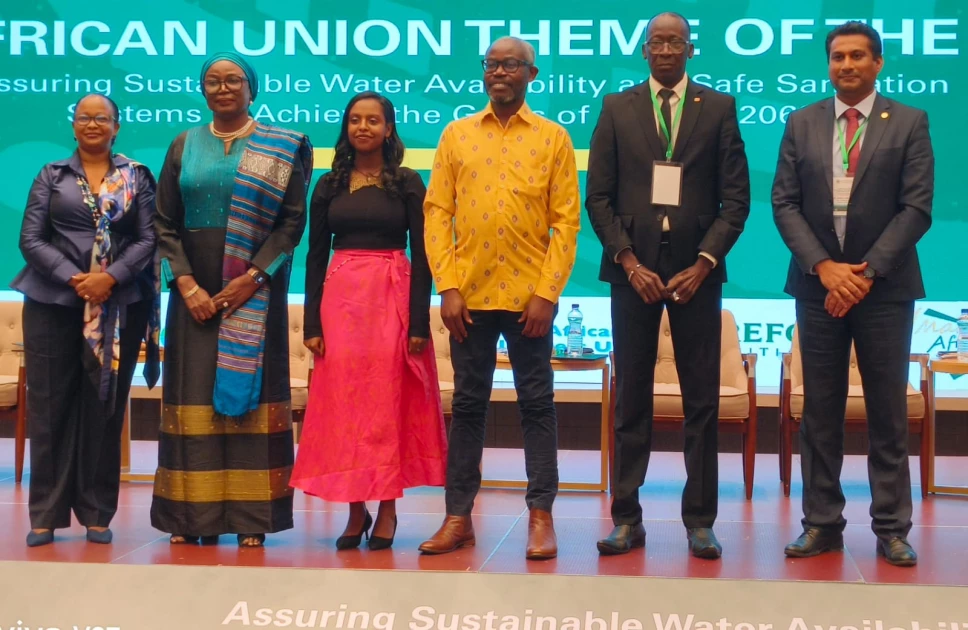
From left: African Renaissance Director Caroline Kwamboka and (fourth from left) Counsel Don Deya, Executive Director of the Pan-African Lawyers Union (PALU), pose with fellow panellists after a discussion at the ECOSOCC Civil Society AU Pre-Summit in Addis Ababa, Ethiopia.

Audio By Vocalize
The two-day meeting — the continent’s highest decision-making forum — saw leaders underscore the need for coordinated African positions to unlock financing, accelerate implementation and keep water and sanitation high on national development agendas.
Burundi President Évariste Ndayishimiye officially launched the theme of the year, taking on a lead role in steering the 2026 agenda, overseeing priority implementation and helping resolve outstanding issues linked to the AU’s development programme.
The AU Assembly also acknowledged the importance of continental initiatives aimed at mobilising resources for key sectors, including water and sanitation and climate change adaptation, amid growing pressure on water systems driven by rapid urbanisation, drought and rising demand.
On the sidelines of the summit, civil society organisations urged leaders to convert the theme into tangible action on the ground, particularly in underserved rural areas and informal settlements.
African Renaissance Director Caroline Kwamboka said the year-long focus offers an opportunity to address what she described as a troubling imbalance between digital connectivity and basic sanitation.
“It is currently alarming that the numbers of mobile phones are much more than the numbers of toilets in Africa today… it is the sad reality, but it can be turned around,” Kwamboka said, arguing that improved sanitation would bring major gains in public health and dignity.
Stakeholders say the 2026 agenda could also help countries better connect water and sanitation investments to broader outcomes, including reduced disease burden, improved productivity, social stability and job creation — especially as governments face rising healthcare costs linked to waterborne illnesses.
Pan-African Lawyers Union (PALU) Executive Director Don Deya called on African governments to strengthen legal and policy frameworks that recognise access to water and sanitation as a fundamental right.
“There is need for the general population in every country to be sensitised on the African Union legal guidelines and frameworks to know that water and sanitation is a basic right,” he said.
The AU theme is also being framed as a chance to speed up progress toward Sustainable Development Goal 6 (SDG 6) — universal access to clean water and sanitation by 2030 — targets that many countries remain off track to meet.
The discussion is expected to feed into preparations for the next UN global water conference, which organisers say will focus on strengthening global water governance, closing implementation gaps and boosting international cooperation, building on momentum from the 2023 UN Water Conference.
With the AU now placing water and sanitation at the centre of its 2026 agenda, observers say the key test will be whether political commitments translate into financing, accountability and measurable improvements for communities that still lack safe water and basic sanitation.
Join the Discussion
Share your perspective with the Citizen Digital community.
No comments yet
This discussion is waiting for your voice. Be the first to share your thoughts!