

BAFTAs: BBC faces backlash over unedited slur shouted by Tourette campaigner

Audio By Vocalize
One of the films up for awards was I Swear – a movie inspired by the real-life story of the TS campaigner Davidson, who was present at the event on Sunday.
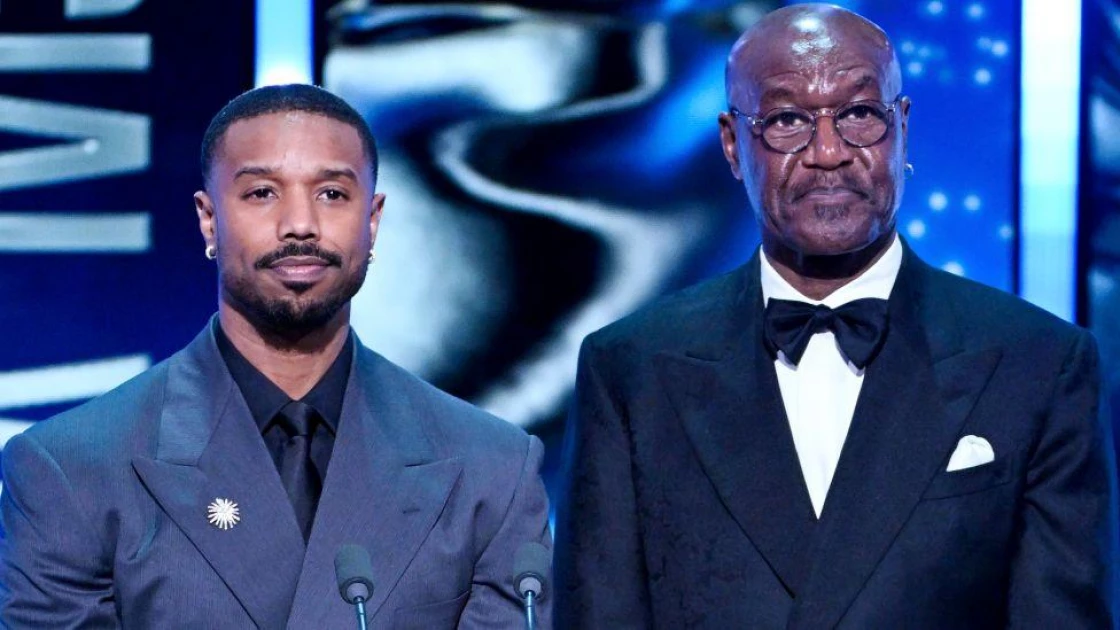
Davidson shouted several times during the ceremony. In one case, he used the N-word while the actors Delroy Lindo and Michael B Jordan were presenting a prize on stage.
While the host Alan Cumming explained later to the audience that the incident was a result of Davidson living with TS, it was not initially edited out of the programme before broadcast - despite the awards being shown with a two-hour delay.
The outburst followed an opening monologue from host Alan Cumming during which Davidson, who has Tourette syndrome, was involuntarily ticking. The audience had been informed of Davidson’s condition before the show began - but it was only after he said the racial slur that Cumming openly addressed the issue.
Referring to Davidson's outbursts, host Alan Cumming responded from the podium, "You may have heard some strong and offensive language tonight." He attributed the shouts to Davidson's condition, adding: "We apologize if you were offended."
While Sinners stars Michael B. Jordan and Delroy Lindo were onstage presenting the award for visual effects, Davidson yelled out the n-word. The actors did not respond in the moment.
John Davidson was in the audience as he is the real-life inspiration behind the film _I Swear_ , which chronicles his life with Tourette syndrome, a neurodevelopmental disorder.
I Swear was nominated for six prizes and won two BAFTA awards on Sunday, including a lead actor award for Robert Aramayo, who plays Davidson.
The BAFTAs are broadcast on a tape delay. But the BBC did not edit the audible slur from its broadcast on the television channel BBC1 and on E! in the U.S. Nor did the BBC edit the archival version available in the U.K. on its BBC iPlayer platform until Monday.
On Monday, the BBC responded to NPR in a written statement: "Some viewers may have heard strong and offensive language during the BAFTA Film Awards. This arose from involuntary verbal tics associated with Tourette syndrome, and as explained during the ceremony, it was not intentional. We apologize that this was not edited out prior to broadcast and it will now be removed from the version on BBC iPlayer."
BBC's error was seen as intentional by most people around the world, with their decision to leave the slur in the broadcast causing a massive explosion of angry reactions, statements and condemnation from across the world.
The Oscar winner Jamie Foxx posted a comment on Instagram that use of the N-word had been “unacceptable”, while Wendell Pierce, who stared alongside Jordan in The Wire, wrote on X: “It’s infuriating that the first reaction wasn’t complete and full throated apologies to Delroy Lindo and Michael B Jordan. The insult to them takes priority. It doesn’t matter the reasoning for the racist slur.”
On Monday, BAFTA released a lengthy written apology, saying: "Our guests heard very offensive language that carries incomparable trauma and pain for so many. We want to acknowledge the harm this has caused, address what happened and apologize to all."
The statement identified Davidson as the source of the outbursts. BAFTA said: "One of our guests, John Davidson MBE, has Tourette syndrome and has devoted his life to educating and campaigning for better understanding of this condition. Tourette syndrome causes involuntary verbal tics, that the individual has no control over. Such tics are in no way a reflection of an individual's beliefs and are not intentional.
The statement continued: "Early in the ceremony a loud tic in the form of a profoundly offensive term was heard by many people in the room. Michael B. Jordan and Delroy Lindo were on stage at the time, and we apologize unreservedly to them, and to all those impacted. We would like to thank Michael and Delroy for their incredible dignity and professionalism."
In an exclusive email interview with Variety, Davidson offers his perspective on what happened, including what precautions and guardrails he had expected the BBC and BAFTA to take before he attended the ceremony.
Since the fallout, Davidson’s team shared that he reached out to the studio handling “Sinners” in order to directly apologize to Jordan, Lindo and production designer Hannah Beachler.
But was exactly is Tourette Syndrome and how does it affect patients?
TS, often called Tourette’s, is a condition that has tics as its main symptom. These are involuntary sounds or movements.
Tourette’s syndrome cannot be cured, but potential triggers can be identified, and treatment can help manage the symptoms.
In an interview with CNN before the ceremony, Davidson — who has long campaigned for awareness of the condition — pointed to the number of people at the event as a potential trigger for his tics.
“Certain things — like today, lots of people around, I’m feeling very, you know, motor tics, in case I lash out. Different situations can trigger different emotions and tics,” he said.
Tics are the symptom most commonly associated with Tourette’s syndrome.
These are two types of tics: vocal tics, which can include whistling, repeating a word or, in rare cases, swearing; and motor tics, which can include movements such as twitching or shrugging your shoulders.
Making inappropriate remarks can be a rare symptom of the condition.
“John (Davidson) wouldn’t have known that was the tic that he was about to do,” Edward Palmer, the vice chair of UK-based charity Tourettes Action, told Times Radio on Monday.
“Some people will find they can be, kind of, stimulated or triggered by things in the environment. But for some people, they are completely random. But whatever the circumstances, they are involuntary. They don’t choose the words,” he said.
These tics are mostly sudden, brief, and intermittent sounds or movements that are difficult - and sometimes impossible - to control.
Premonitory urges cause many people experience an uncomfortable bodily sensation, like an itch or tension, before a tic occurs.
According to experts, expressing the tic provides temporary relief from this urge while the type, frequency, and severity of tics often change over time, sometimes disappearing for weeks or months before returning.
Approximately 10% to 15% of people with Tourette’s syndrome have tics that result in offensive or rude language, Palmer said.
In the UK, more than 300,000 people live with the condition, Tourettes Action said.
The cause of the condition has not yet been fully established, but it can often run in families, Tourettes Action said. It is also possible that environmental factors, such as infection or inadequate weight gain of the mother during pregnancy, could increase the risk, the charity said.
Symptoms typically start around age 6 and can become more noticeable around age 10, according to Britain’s National Heath Service (NHS).
Several celebrities and public figures have spoken openly about living with Tourette Syndrome (TS). They include: singer Billie Eilish, actor Dan Aykroyd, soccer star David Beckham, and TV personality Pete Bennett.
Leave a Comment