
CAS ruling in favour of Senegal reasserts that referee's decision is final
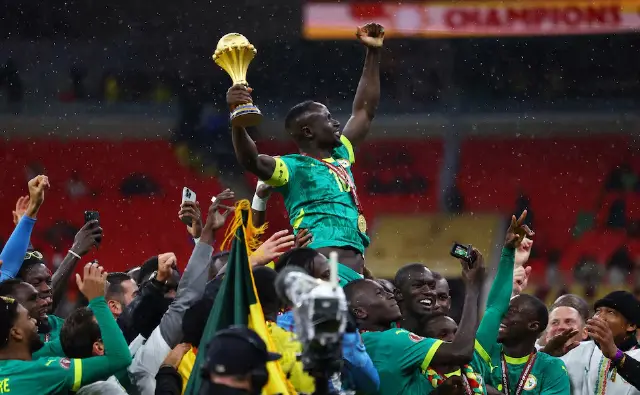
CAF Africa Cup of Nations - Morocco 2025 - Final - Senegal v Morocco - Prince Moulay Abdellah Stadium, Rabat, Morocco - January 18, 2026 Senegal's Sadio Mane lifts the trophy with teammates as they celebrate after winning the Africa Cup of Nations REUTERS/Siphiwe Sibeko

Audio By Vocalize
The decision by the Court of Arbitration for Sport
to reinstate Senegal as Africa Cup of Nations winners
reasserts the cornerstone of football that the referee’s decision is final.
The Swiss-based CAS on Tuesday announced it had
upheld Senegal’s appeal against the decision to
strip them of this year's Africa Cup of Nations title.
"The CAS panel finds that the referee did not
commit any error of law," CAS secretary general Matthieu Reeb said.
Senegal beat Morocco 1-0 after extra time in
January's final in Rabat, but not before walking off the field in a 14-minute
protest when a penalty was awarded against them late
in the game.
They returned to finish the match, saving the
Morocco penalty and going on to score the game's only goal and lift the
trophy.
Morocco’s initial appeal against the outcome was
rejected, but the Confederation of African Football's Appeal Board overturned
it and ruled
that Senegal had forfeited the match by walking off the pitch.
The decision was based on the tournament
regulations, specifically article 82.
"If, for any reason whatsoever, a team
withdraws from the competition or does not report for a match, or refuses to
play or leaves the ground before the regular end of the match without
the authorisation of the referee, it shall be considered loser and shall be
eliminated for good from the current competition," the article states.
In January’s final, referee Jean-Jacques Ndala of
the Democratic Republic of Congo did not, however, stop the game and award the
match to Morocco, waiting instead for Senegal to return to the field and then
continuing with the contest.
His decision went contrary to the regulations, but
he is not the first official to make a mistake, and the Laws of the Game ensure
the
fallibility of referees is recognised.
"The decisions of the referee regarding facts
connected with play, including whether or not a goal is scored and the result
of the match, are final. The decisions
of the referee, and all other match officials, must always be respected,"
says Law 5.
"The referee may not change a restart decision
on realising that it is incorrect or on the advice of another match official if
play has restarted or the referee has signalled the end of the first or second
half (including extra time) and left the field of play or abandoned the
match."
However, there have been match results overturned by
world football governing body FIFA in cases where game manipulation
has been discovered.
A World Cup qualifier
that Senegal lost to South Africa in 2016 was
ordered to be replayed when it was found the referee from Ghana had awarded a
contentious penalty and ignored a blatant offside to allow for a 2-1 home win
in collusion with a betting syndicate.
"He took intentional decisions
with the sole purpose of facilitating a minimum number of goals to make certain
bets successful," FIFA said of
Joseph Lamptey’s
officiating when it banned him for life.
It ordered the game to be replayed, which Senegal
won 2-0 to qualify for the 2018 World Cup in Russia.
There has been no suggestion of cheating on Ndala’s
part, and he was in a no-win situation given that it was African football’s
showpiece match with a worldwide television audience and abandoning it
would have been a major calamity.
Join the Discussion
Share your perspective with the Citizen Digital community.
No comments yet
This discussion is waiting for your voice. Be the first to share your thoughts!