
Court rejects bid to hold State liable for 1998 bomb blast
The judge noted that while the petitioners relied on various reports to support their claims, the authors of those reports did not testify in court, rendering the documents hearsay and of no evidentiary value.

Audio By Vocalize
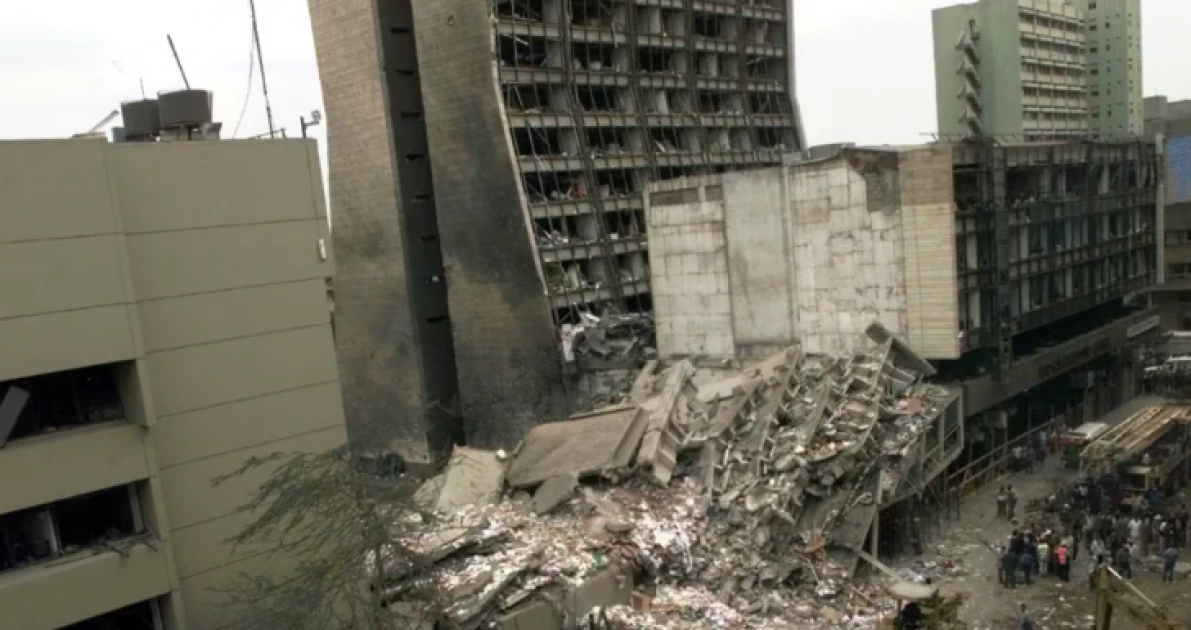
For survivors of the 1998 Nairobi bomb blast and families who lost loved ones during the attack , the High Court decision delivered more than a legal decision it reopened wounds that have remained raw for over two decades.
The court dismissed a petition in which the victims and affected families had sought compensation from the government, ruling that the case lacked sufficient legal merit.
For the petitioners, many of whom have lived with permanent injuries, trauma, and economic hardship since the attack, the judgment fell far short of the justice they had hoped for.
In its decision, the court held that the petitioners failed to prove that the government had prior knowledge of the impending attack or intelligence that could have prevented it.
High court judge Lawrence Mugambi noted that although the victims relied on several reports to support their claims, the authors of those documents did not appear in court to testify, rendering the evidence hearsay and legally inadmissible.
"It cannot be established, on the basis of the material placed before this court, that the government was aware of the attack or that it failed to act on any intelligence,” the court ruled.
The judge further observed that there was no evidence showing that the United States government faulted Kenya for failing to prevent the bombing.
The petitioners had approached the court with high expectations not only for compensation, but for recognition of their suffering and accountability from the state.
They argued that the government failed in its constitutional duty to protect its citizens and that, despite the immense loss of life, lifelong injuries, and psychological trauma caused by the bombing, many victims had never received meaningful support.
Some survivors told the court they have struggled for years with disabilities, medical expenses, and lost livelihoods, while families of the deceased said the pain of loss was compounded by what they viewed as neglect by the state.
However, the court emphasized that sympathy, no matter how justified, could not replace the strict legal requirement for credible and admissible evidence.
The burden of proof, the judge noted, lay with the petitioners to show that actionable intelligence existed and that the government failed to act despite being aware of it a threshold the court found had not been met.
As a result, the petition was dismissed, leaving the victims with a renewed sense of disappointment and unanswered questions, more than 25 years after one of Kenya’s deadliest terror attacks.
For the survivors and families, the ruling underscored a painful reality while time has passed, their search for justice, closure, and acknowledgment of their suffering remains unfinished.
Kituo cha Sheria who were representing the victims indicated that they were disappointed with the judgement and said that they will move to superior court .
Join the Discussion
Share your perspective with the Citizen Digital community.
No comments yet
This discussion is waiting for your voice. Be the first to share your thoughts!