

Djibouti bets on Salaam city to grow real estate sector
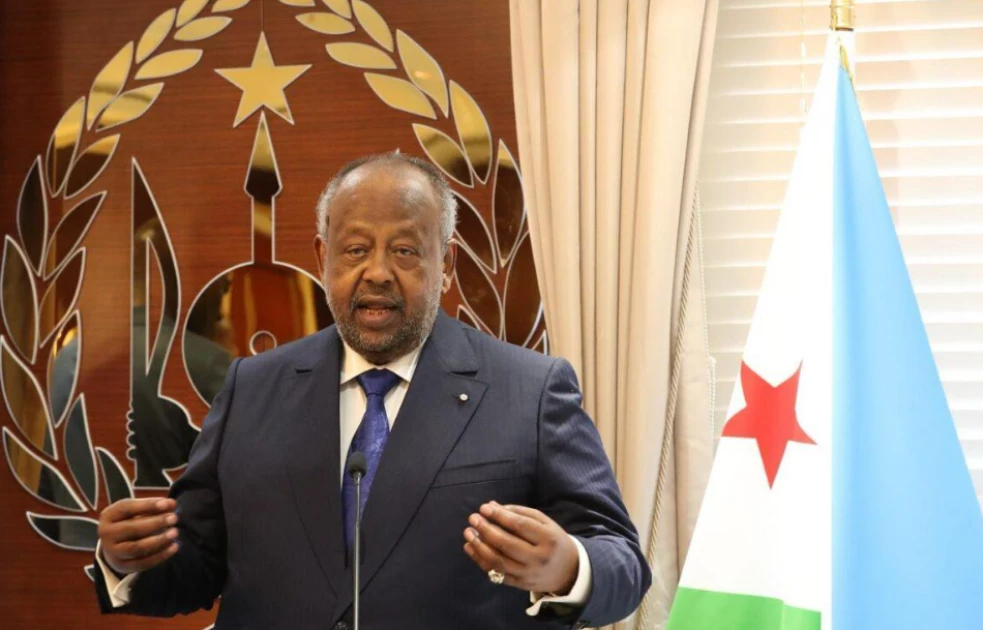
Djibouti President Ismail Omar Guelleh speaks during a past function.

Audio By Vocalize
Djibouti’s President Ismail Omar Guelleh will on Monday launch one of the country’s largest housing projects as Africa increasingly looks to the real estate sector to soar up growth.
The $480 million Salaam City has 7,496 units that include homes,
schools, healthcare facilities among other amenities. The project combines competitive
housing options with flexible financing solutions developed in partnership with
Salaam African Bank.
Billed as a gem-changer, the project also offers opportunities
for local and international investors, including the Djiboutian diaspora, to
contribute to the country’s budding real estate sector.
“The city is properly designed to make homeownership
accessible and affordable for families across Djibouti,” Mustafe Liibaan, the General
Manager of Salaam Real Estate, said in a press release issued ahead of the
Monday launch.
As Djibouti continues to strengthen its role as a regional
economic and logistics hub, Mr. Liiban said the project fully aligns with the
country’s vision for modernization and urban expansion in a new economic
dispensation that consider the real estate an economic enable.
Beyond housing, the development is expected to drive
significant economic activity, with workforce mobilization projected to reach
up to 2,000 people on site during peak construction periods across
construction, engineering and technical sectors.
“Our goal is to create a community where everyone can enjoy
quality housing, modern amenities, and a safe environment for their families to
grow,” Mr. Liiban added.
Salaam Real Estate develops real estate projects that support
urbanization. By structuring urban growth and creating a new residential
center, local observers say, the project will meet help in Djibouti’s growing
housing demand while supporting the country’s demographic and economic
ambitions in a continent yearning for economic takeoff.
Djibouti’s real estate sector is smaller compared to Kenya’s
but increasingly strategic. With a limited land mass and population,
development has historically been modest.
However, large-scale projects such as Salaam City signal a
shift to structured expansion and modern housing solutions.
Kenya’s real estate sector is among the most dynamic in
Africa, driven by rapid urbanization, a growing middle class, and strong demand
for residential and commercial property.
Cities such as Nairobi have
become regional property hubs, attracting both local and international
investors.
The sector is diversified, spanning high-end developments,
affordable housing projects, retail spaces, and office parks.
Government-backed initiatives, including affordable housing programmes, have further stimulated growth, although challenges such as high construction costs, financing gaps, and oversupply in some segments persist.
Leave a Comment