

E-mobility: Kenya must seek collaboration in green transportation to lower carbon footprint

Audio By Vocalize
Zero-emission transport is a critical pillar of Kenya’s bold ambition to cut carbon footprints across the country, as part of its green and sustainable development agenda.
The country has continued to ramp up its response to climate change, which has been found to erode 3–5% of its Gross Domestic Product (GDP) annually through extreme and destructive weather events.
But the transport sector, one of Kenya’s economic pillars, remains a key contributor to the country’s carbon footprint. Air pollution, stemming from the almost exclusive use of petroleum products, roils around Kenya’s transport sector like a bad odour.
The over 4.5 million vehicles - personal cars, public service vehicles (PSVs), boda boda and long-distance transport trucks – that ply Kenyan roads generously feed the country’s carbon footprint due to the use of fossil fuel, in the form of petroleum products and gas.
And the trend has so far defied repeated attempts by the government and its agents. Efforts by traffic police to rein in vehicles spewing smoke with reckless abandon have all come a cropper. So have warnings and commitments by the National Transport and Safety Authority (NTSA) and the National Environmental Management Authority to crack down on unroadworthy vehicles behind the environmental pollution.
But this state of affairs can no longer be tolerated. As the ravages of climate change continue to escalate, triggering demographic and ecological catastrophes and draining resources required for development.
Uptake of e-mobility is therefore an undeniable imperative if Kenya is to record any milestone in its journey to reduce its carbon footprint and help stave off climate change.
Successful implementation of green transport is not far-fetched; it is already gaining pace globally. Secondly, it aligns with Kenya’s National Climate Change Action Plan (NCCAP) 2023-2027, Long-Term Low Emission Development Strategy (LT-LEDS) 2022-2050, and the First Nationally Determined Contribution (NDC) blueprint, which together seek to reduce greenhouse gas emissions by 32 per cent by 2030.
Kenya’s First NDC singles out high consumption of fossil fuel - coal, coal products, natural gas, crude oil, petroleum products and non-renewable wastes - as a major impediment to local efforts to cap carbon emissions. Unveiled by the government on December 24, 2020, it committed to cut GHG emissions by 32% by 2030.
Its successor, the Second Nationally Determined Contributions (2031-2035), published in 2025 by the Ministry of Environment, Climate Change and Forestry, advocates for low-carbon, climate-resilient and efficient transportation systems “that are gender-responsive and accessible to all, through electrification, modal shifts, urban mass rapid transport systems and overall greening of the transport sector”.
NDC II estimated Kenya’s total greenhouse gas emissions by 2022 at 113.366 MtCO₂ 2 eq (metric tonnes of CO₂ equivalent (CO₂e). It projected this would increase towards 143 MtCO 2 eq by 2030, necessitating urgent intervention, more so a shift to e-mobility.
But even as Kenya contemplates taking this quantum leap from fossil-fuel-driven transport, a lot still remains to be done to make the dream a reality.
Effective implementation of e-transport presents three key requirements. These are a robust policy framework, a reliable and stable power supply, and incentives for would-be investors in this sub-sector.
As things stand, Kenya is steadily on course on two fronts – policy framework and power supply.
Last year the ministry launched the Draft Electric Mobility Policy meant to guide development of electric mobility in all transportation modes – road, rail, air and maritime- by providing a transition framework from the use of conventional internal combustion engine (ICE) vehicles.
Then transport minister, Kipchumba Murkomen, hailed the policy launch as a pivotal moment for Kenya, ushering in a new era in transportation.
The policy would guide the development of electric mobility in all transportation modes – road, rail, air and maritime- by providing a transition framework from the use of conventional ICE vehicles.
It will drive several parameters, including a reduction in emissions, lower operating costs, decreased reliance on imported fuels, and the creation of green jobs.
The policy also addresses the issue of peak and off-peak demand in Kenya, suggesting that e-mobility could help bridge the gap by charging EVs at night. The policy estimates that the daily curtailed energy could power about 7,000 electric buses or over 200,000 electric motorcycles.
Additionally, the Draft Policy includes measures to enhance gender equality and social inclusion in the e-mobility ecosystem, aiming to incentivize women, youth, and people with disabilities to participate in e-mobility-related economic activities.
In power supply, Kenya boasts of adequate energy with a potential for more input in its power grid to cater for any additional demand.
Data from the Ministry of Energy and Petroleum indicates that Kenya increased its power generation by over 240 megawatts, from 3,076 megawatts in 2022 to 3,243 megawatts in 2024. This represents a 5.4 per cent increase. Over the same period of time, power connections to homes soared by over 774,000 consumers, from 8,919,584 homes in 2022 to 9,693,954 in 2024.
A whopping 90 per cent of electricity supplied to its national grid emanates from renewable energy sources. Geothermal energy accounts for nearly 45 per cent of the supply, followed by Hydropower, Wind, Solar and Biomass energy.
Besides this domestic supply capacity, Kenya has the leeway to tap into the rich regional power pool, recently enhanced further by the launch of the historic Grand Ethiopian Renaissance Dam – a massive hydroelectric project with an installed capacity of 5,150 megawatts.
It is instructive to note that central to the Second NDC is the reduction of electricity costs, a pivotal step toward universal access, enhanced affordability. This will not only improve operational and technical efficiency of power systems, but also unlock opportunities for private sector investment, drive industrial competitiveness, and expand electrification to underserved urban and rural areas in a low-carbon and climate-resilient manner, and for the uptake of e-mobility.
Be that as it may, it is on the third front, namely, the installation of the infrastructure to support e-mobility, that Kenya needs to show diligence.
President William Ruto, the erstwhile Chairperson of the Committee of African Heads of State on Climate Change, has repeatedly demonstrated Kenya’s willingness to shift to e-mobility by launching electronic motorcycles, testing e-vehicle prototypes, and even launching the Roam Park - touted as the largest motorcycle assembly line in East Africa.
But the real challenge lies in putting in place the requisite supporting infrastructure for e-mobility, including an elaborate network of charging points, seamless supply of e-vehicle spare parts and all the requisite accessories, among them EV batteries.
At full throttle, e-mobility would be a juggernaut: consuming power and imbibing these accessories and spare parts in enormous quantities.
As the saying goes, experience is the best teacher. For Kenya to get it right, it must be ready to learn from the best practices globally. And this is where China, the market leader in this space in terms of mass production and use, comes in.
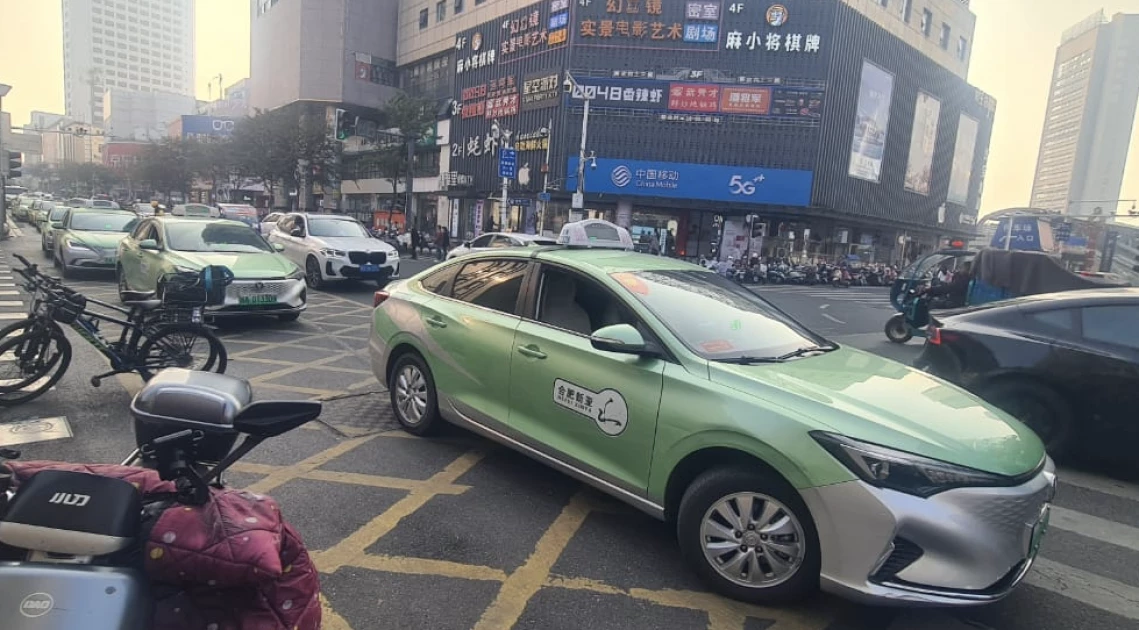
Electric vehicles have reached a tipping point in China, representing the majority of the new car market. They now represent the majority of the new car market, hogging a whopping 51% market share.
A majority of the world’s electric vehicles - battery electric vehicles (BEVs) and plug-in hybrid electric vehicles (PHEVs) - are built and sold in China. In 2024, global electric car production reached around 17 million vehicles, with China accounting for about 12 million of those — over 70% of the world’s total.
Roughly 11 million of the 12 million EVs were also sold in China. The rest were exported to other markets.
This trend loudly signals China’s determination to run away with the market in this latest addition to its robust modernization programme. In the same breath, it also gives new players like Kenya an opportunity to learn and adopt emerging technologies and exploit the numerous opportunities presented for their own economic progress.
With a policy guideline in place and electricity supply guaranteed, Kenya must now focus on robust collaborative ventures with China and other nations dominant in this space to entrench e-mobility and boldly march on in its quest to cut carbon emissions and help curb the ravages of climate change.
The writer, Maricus Agutu, is a communication practitioner, specialising in climate communication
Leave a Comment