
Eight arrested in suspected fertilizer adulteration, repackaging syndicate
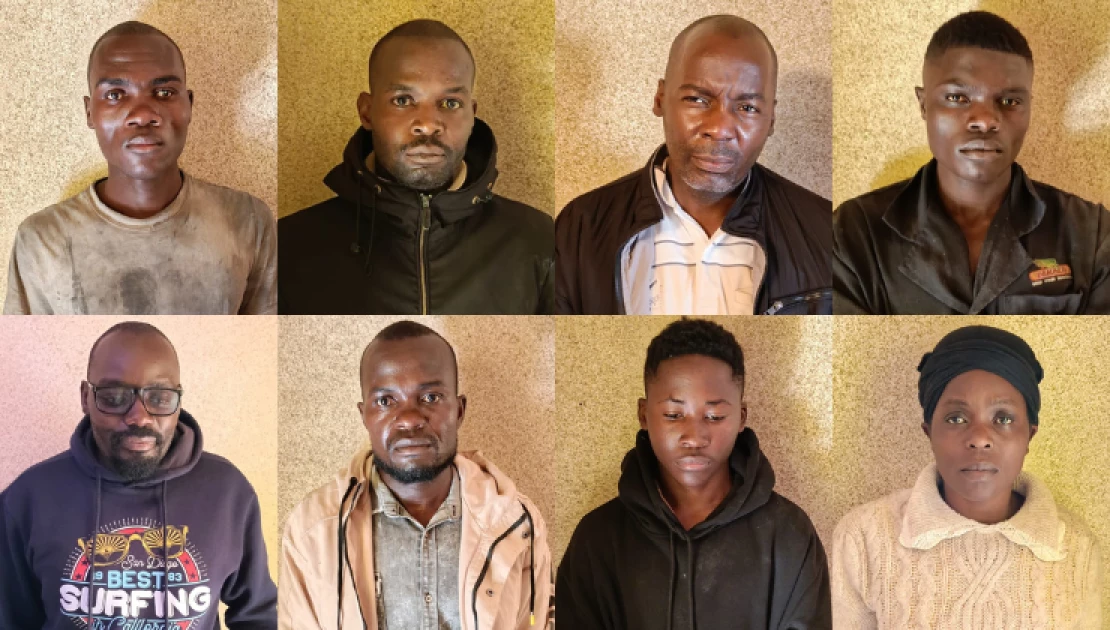
A collage of the eight suspects arrested in a suspected fertiliser adulteration and repackaging syndicate in Kakamega. PHOTO | COURTESY

Audio By Vocalize
Eight suspects have been arrested following the dismantling of a suspected fertiliser adulteration and repackaging syndicate in Ejinja Village, Rurambi Sub-County, Kakamega County, after a targeted, intelligence-led operation by detectives.
The arrested individuals include the principal suspect,
Napoline Murende Wakukha, alongside Isaya Chepkose Marende, Brivin Yeswa,
Milkzadek Meja Nandwa, Martin Shilabula, Strola Deptica, Pascal Wathika
Omusikoyo, and Jesca Bulimo.
According to the Directorate of Criminal Investigations (DCI),
a contingent of detectives drawn from the Operations Support Unit and their
Kakamega-based counterparts conducted the raid at a homestead that had been identified as a
processing and distribution point for fraudulent fertilizer products targeting
unsuspecting farmers.
During the operation, sleuths established that the premises
was being used for the illegal handling of Government of Kenya (G.O.K) subsidised fertiliser.
“A comprehensive search of the premises yielded significant
exhibits, including two motor vehicles — a white Toyota Fielder (registration
KDT 604C) and a black Mazda CX-5 (registration KDE 372P) — both loaded with
assorted fertiliser bags, both full and empty,” DCI stated.
Detectives also recovered large quantities of fertiliser of
various brands and weights, including UREA TOSHA labelled as G.O.K subsidised fertiliser, YARA products, BORA BORA variants, MEA CAN, DAP, and CALCIGROW
granules.
Further, investigators recovered fertiliser suspected to
have been tampered with, including contents from 39 bags of OCP Africa TSP
labelled as G.O.K. subsidised fertiliser.
DCI also seized assorted empty branded bags, 48 packets of
cement colour pigment used to alter the appearance of fertiliser, and three
sewing machines used for repackaging.
Preliminary investigations revealed that the syndicate
exploited registered farmers by persuading them to redeem government-issued
subsidy fertiliser vouchers on their behalf in exchange for small incentives.
“The fertiliser would then be diverted, adulterated using chemical pigments to mimic high-value products such as DAP, repackaged, and sold at prevailing market rates,” stated DCI.
Investigations suggest possible collusion between the
syndicate and individuals within select National Cereals and Produce Board
(NCPB) depots, notably in Voi and Webuye, facilitating the irregular
acquisition of subsidised fertiliser.
According to the probe, while the fertiliser is legitimately
collected from NCPB depots, its diversion and subsequent adulteration undermine
government subsidy programmes, exposing farmers to economic loss and
compromising agricultural productivity.
The scene has since been processed by Crime Scene
Investigation (CSI) personnel, while the suspects remain in custody pending
arraignment as investigations continue.
Join the Discussion
Share your perspective with the Citizen Digital community.
No comments yet
This discussion is waiting for your voice. Be the first to share your thoughts!