
Food commodity prices up on Mideast war: UN food agency
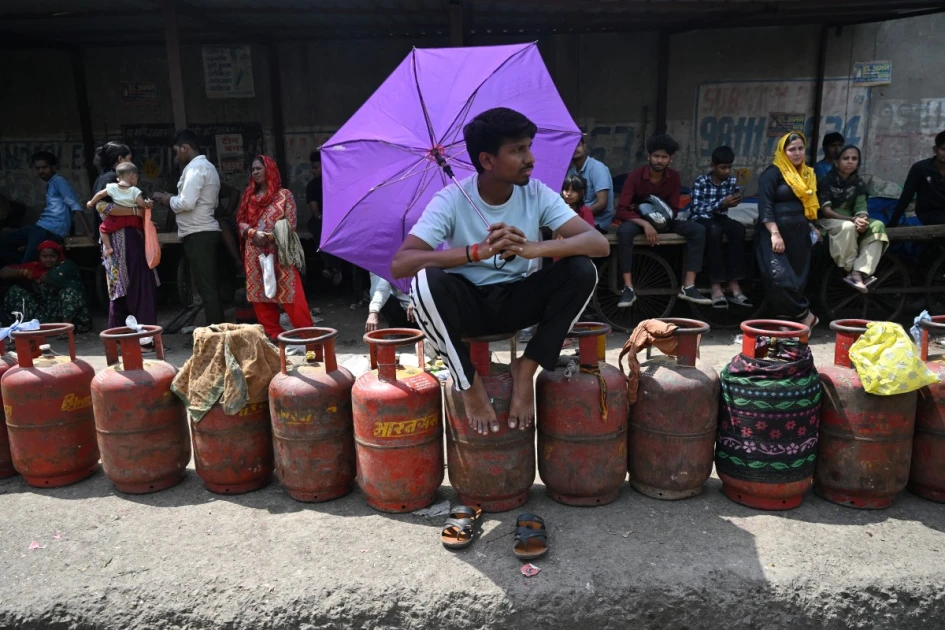
People wait to buy liquefied petroleum gas (LPG) cylinders at a gas agency office in Noida on April 2, 2026 amid ongoing oil and gas import disruptions caused by the Middle East war. Photo by ARUN SANKAR / AFP

Audio By Vocalize
The war in the Middle East has pushed food commodity prices
higher due to higher energy and fertiliser costs, the UN's food agency said
Friday.
The UN's Food and Agriculture Organisation (FAO) said its
Food Price Index, which measures the monthly changes in international prices of
a basket of food commodities, had increased 2.4 per cent in March from February.
It was the second rise in a row, which the agency said was
largely due to higher energy prices linked to conflict in the Middle East.
Within the index, the category of vegetable oil saw the
sharpest rise, of 5.1 per cent over February, as palm oil prices reached their
highest point since the middle of 2022, due to effects from spiking crude oil
prices, FAO said.
However, a "broadly comfortable" supply of cereal
has cushioned the damage from the conflict, FAO said.
"Price rises since the conflict began have been modest,
driven mainly by higher oil prices and cushioned by ample global cereal
supplies," said FAO Chief Economist Maximo Torero in a statement.
But he warned that if the conflict goes on beyond 40 days
and the high prices on fertiliser continue, "farmers will have to choose:
farm the same with fewer inputs, plant less, or switch to less intensive
fertilizer crops".
"Those choices will hit future yields and shape our
food supply and commodity prices for the rest of this year and all of the
next."
Disruptions to production and supply chain routes had also
introduced "additional uncertainty" into the outlook for wheat and
maize, FAO found.
Join the Discussion
Share your perspective with the Citizen Digital community.
No comments yet
This discussion is waiting for your voice. Be the first to share your thoughts!