

From 'sambaza' makeshift matatu seats to drop offs before destination, Nairobians share hassles of PSV rides
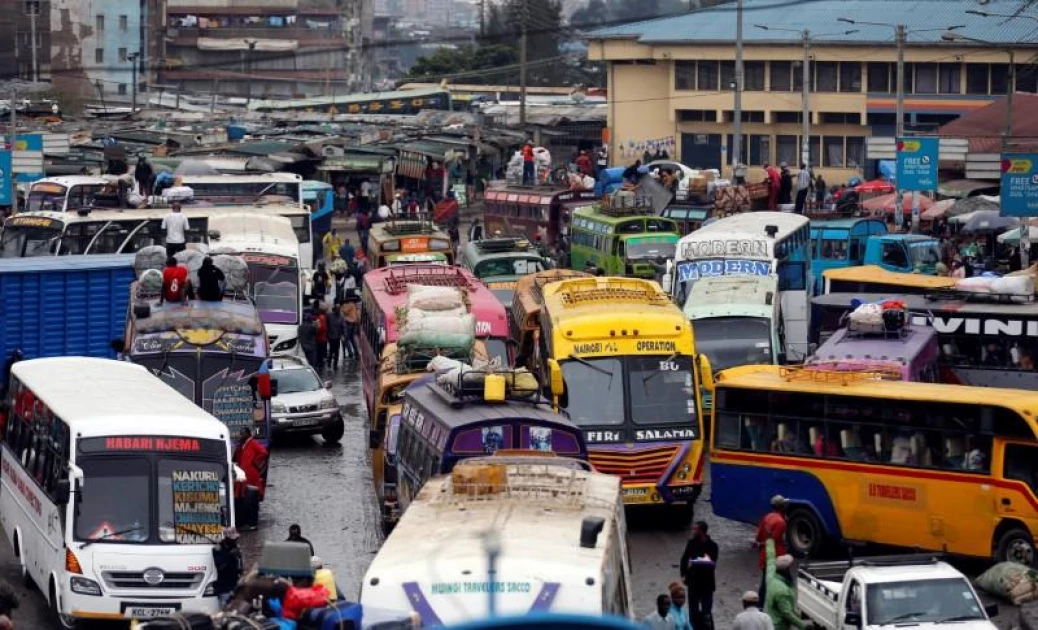
Public buses queueing for passengers travelling to the countryside ahead of next week's general election in Nairobi, Kenya August 3, 2017. REUTERS/Thomas Mukoya

Audio By Vocalize
According to data from Statista, an online data gathering website, only seven per cent of Kenyans owns cars.
With the majority using public means of transport, including matatus and buses, many Nairobians have been left at the mercy of rogue operators who engage in several unlawful activities, as they try to make their daily commute.
From uncomfortable seats with material whose colour changed from the original to a dark brown colour - an indication the dirt that has accumulated and lack of cleaning, to being overcharged for transport; to being forced to do a workout you hadn't planned for after a PSV decides it is terminating its ride several stops before you reach your destination, Nairobians have seen it all when it comes to the using public transport.
And as if that were not enough, some touts have been accused of harassment, with some matatu saccos becoming notorious for assaulting passengers, while others flout rules on the maximum carrying capacity and overload passengers like packs of fish put close to each other with hardly any breathing space. This while some windows do not even open to let in fresh air, yet there rising cases of airborne infections spreading fast.
Wananchi Reporting got experiences from a section of Nairobians who shared their stories of discomfort and flouting of rules when using matatus:
“I went to board a matatu after rush hour because I was broke and didn’t want to spend much. I bordered a matatu after consulting the tout who informed me that I was supposed to pay sixty shillings as my fare. When he was collecting fare, he told me that my fare was eighty shillings. When I protested, he wanted to throw me out of the vehicle. I had to call my friend to send me twenty more shillings,” Mildred Awuor, said.
Mildred’s experience is not unique. Another commuter, Fredrick, narrated how he was forced to alight before his destination for lack of the 'full' fare amount.
“I was going to Nakuru where I used to study, boardered a bus from Nairobi CBD. Usually, the bus operates in Nairobi to Nakuru route. We reached Naivasha around 7.00pm and this bus stopped. The driver told us to alight because the bus was going no further. He refunded some cash but it was already late and I couldn’t get any other bus leading to Nakuru. I waited for hours and reached Nakuru around 1.00 am” Fedrick said.
Another victim of rogue matatu drivers, Peris Wangui, shared how she did not receive a refund, despite not being dropped to her destination.
“I was never refunded, not even twenty shillings I tell you,” she said.
Another commuter who preferred to remain anonymous shared their story, saying, “I was late from work and I didn’t use my car. I boarded a matatu from Nairobi CBD heading to my place and gave the tout one thousand shillings and was expecting to get back my balance. I kept on asking for my balance and the guy was ignoring me. When I reached where I was supposed to alighte, he didn’t want me to get off and didn’t stop the car so I got mad. He stopped the bus several metres away and he gave me my balance as they drove away. I noticed he gave me two hundred and fifty less,” he shared.
Another pain point for commuters is when it comes to overloading. Who is to blame when a matatu is carrying more than the required number of passengers? The tout, or the passengers who decided to squeeze into an already full vehicle?
Felicia Angel narrated how she boarded a bus heading upcountry, and as she was waiting for the bus to depart, she saw a lady approaching with four children. They sat on one sit next to her and she found herself inadvertently carrying one of the children throughout the journey.
“Mmoja alinikalia kwa mapaja, mwingine amesimama mbele yangu naye mama yao akabeba wawili,” (I carried one kid, another one was standing in front of me and the mother carried two), she said.
This, and the journey was about seven hours long.
As tough times bite, many have had to do what is necessary to cut costs, however, it has come with other costs - costs to comfort and safety.
In several matatus, there is an extra board, commonly known as ‘Sambaza’ which are usually placed between two seats for a passenger to sit on. And they pay the same amount as the rest of the passengers.
What has your experience been with matatus? Share your story to wananchi@royalmedia.co.ke
Leave a Comment