
Google parent Alphabet hits market capitalization of $3 trillion for first time
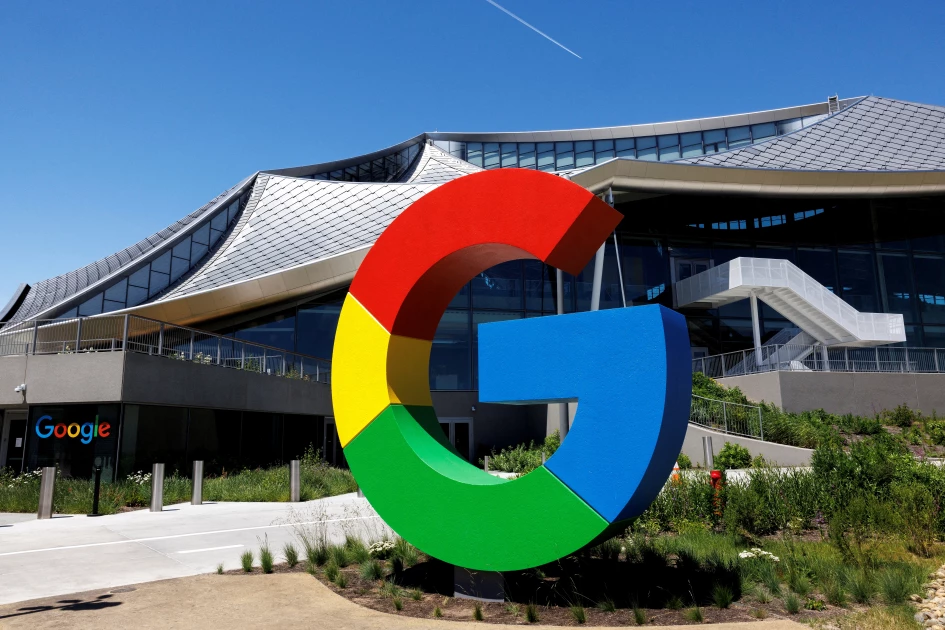
An exterior view of building BV100, during a tour of Google's new Bay View Campus in Mountain View, California, U.S. May 16, 2022. REUTERS/Peter DaSilva

Audio By Vocalize
Google parent Alphabet hit a market capitalization of $3
trillion for the first time on Monday, riding on renewed optimism around
artificial intelligence and a favourable antitrust ruling.
Class A shares of the company were up 3.8% at $250, while
Class C shares climbed 3.7% to $250.4 - both trading at record highs.
Including Monday's gains, the company's shares have rallied
more than 32% so far this year, the best performer among the so-called
"Magnificent 7" stocks and outpacing the 12.5% gain for the S&P
500.
Alphabet joined other tech giants Apple and Microsoft in
hitting a $3 trillion valuation, while AI chipmaker Nvidia, the world's most
valuable company, boasts a market cap of $4.25 trillion.
Technology and AI-linked stocks have powered Wall Street's
main indexes to record highs lately amid growing hopes that the U.S. Federal
Reserve will cut interest rates later this week.
Oracle's blowout forecast last week was the latest to fire
up the AI trade.
Kim Forrest, chief investment officer at Bokeh Capital
Partners, said tech stocks have been the leaders of the recent rally and
"there has been no other (sector) in the past 18 months, maybe even two
years that has had such excitement from investors."
The communications services sub-sector - which houses
Alphabet - has jumped more than 26% so far this year, making it the best
performing sector among the 11 major sub-indexes with information technology in
second place.
Investor sentiment received a boost after a U.S. court
earlier this month allowed Alphabet to retain control of its Chrome browser and
Android mobile operating system, marking a pivotal moment for the company,
whose dominance in search and mobile ecosystems has long drawn scrutiny.
While sharing data as part of the ruling will strengthen
Google's advertising business rivals, not having to divest Chrome or Android
removes a major concern for investors who view them as key pieces to Google's
overall business.
In July, the company's cloud-computing unit delivered an
almost 32% jump in second quarter revenue, surpassing expectations as
investments in in-house chips and the Gemini AI model began to pay off.
"They still are very dependent on search, but with
YouTube, Waymo, and other capabilities and products they're working on,
investors are starting to see that possibility that this isn't just a search
company anymore, this is a company that's moving into a lot of other
things," said Dennis Dick, chief strategist at Stock Trader Network.
Alphabet trades at around 23 times its forward earnings -
the lowest among the "Magnificent 7" - compared to its five-year
average 22, according to data compiled by LSEG.
Leave a Comment