

How much damage has Israel inflicted on Iran's nuclear programme?
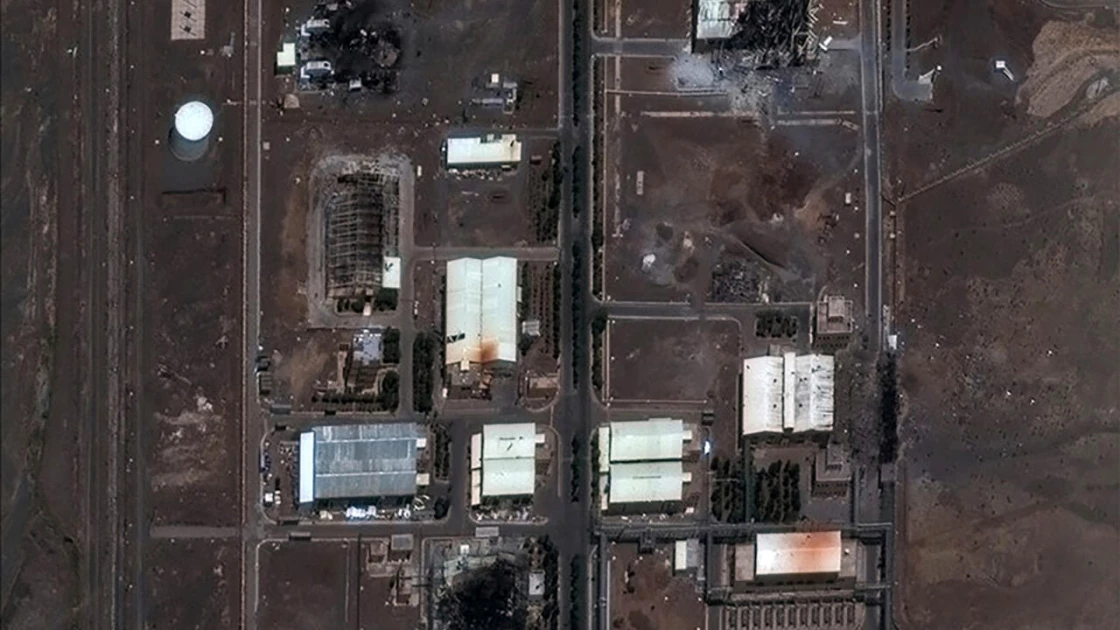
A satellite image released by Maxar Technologies showing the Iranian nuclear site of Natanz after Israeli strikes © Stephen A. Wood / Satellite image ©2021 Maxar Technologies/AFP

Audio By Vocalize
Israel's strikes on Iran have targeted several of its
nuclear facilities as it claims the country is seeking to develop nuclear
weapons -- an accusation Tehran denies.
Experts told AFP that while the attacks had caused some
damage to Iran's nuclear programme, they are unlikely to have delivered a fatal
blow.
- What is the extent of the damage? -
Israel's operation included strikes on Iran's underground
uranium enrichment sites at Natanz and Fordow, and on its Isfahan nuclear site,
the UN's International Atomic Energy Agency (IAEA) said, citing Iranian
officials.
A key, above-ground component of Iran's Natanz nuclear site
has been destroyed, including its power infrastructure, the IAEA reported
Monday.
The UN watchdog added Tuesday that satellite images
indicated possible "direct impacts" on the underground section of the
plant, where thousands of centrifuges are operating to enrich uranium.
At the underground Fordow enrichment plant, Iran's second
uranium enrichment facility, the IAEA said it observed "no damage"
following the attacks.
At the Isfahan nuclear site, however, "four buildings
were damaged" -- the central chemical laboratory, a uranium conversion
plant, the Tehran reactor fuel manufacturing plant, and a metal processing
facility under construction, the IAEA said.
Significant uranium stockpiles are believed to be stored
around the Isfahan site.
Ali Vaez, the International Crisis Group's Iran project
director, told AFP that if Iran managed to transfer significant quantities to
"secret facilities," then "the game is lost for Israel".
Iran's only nuclear power plant, the Bushehr plant, was not
targeted, nor was the Tehran research reactor.
While "Israel can damage Iran's nuclear programme... it
is unlikely to be able to destroy it," Vaez said, saying that Israel did
not have the massively powerful bombs needed "to destroy the fortified,
bunkered facilities in Natanz and Fordow".
Destroying those would require US military assistance, added
Kelsey Davenport, an expert with the Arms Control Association.
She also noted that Israel's unprecedented attack would not erase
the expertise Iran had built up on nuclear weapons, despite killing nine
Iranian nuclear scientists.
The IAEA has not detected any increase in radiation levels
at the affected sites.
"There is very little risk that attacks on Iran's
uranium enrichment facilities would result in a harmful radiation
release," Davenport said.
But an attack on the Bushehr plant could "have a
serious impact on health and the environment", she said.
After Israel launched its strikes, IAEA chief Rafael Grossi
said that nuclear facilities "must never be attacked" and that
targeting Iranian sites could have "grave consequences for the people of
Iran, the region, and beyond".
After the United States under President Donald Trump
unilaterally withdrew in 2018 from a landmark deal that sought to curb Tehran's
nuclear activities, Iran has gradually retreated from some of its obligations,
particularly on uranium enrichment.
As of mid-May, the country had an estimated 408.6
kilogrammes (900 pounds) enriched to up to 60 percent -- just a short step from
the 90 percent needed for a nuclear warhead.
Iran theoretically has enough near-weapons-grade material,
if further refined, for about 10 nuclear bombs, according to the definition by
the Vienna-based IAEA.
Iran is the only non-nuclear-armed state producing uranium
to this level of enrichment, according to the UN nuclear watchdog.
- How much damage has Israel inflicted on Iran's nuclear
programme? -
While the IAEA has been critical of Iran's lack of
cooperation with the UN body, it says there are "no credible indications
of an ongoing, undeclared structured nuclear programme".
Tehran has consistently denied ambitions to develop nuclear
warheads.
But Davenport warned that the strikes could strengthen
factions in Iran advocating for an atomic arsenal.
"Israel's strikes set Iran back technically, but
politically the strikes are pushing Iran closer to nuclear weapons,"
she said.
Leave a Comment