
How the US-Israel-Iran war might reshape Kenya's economy
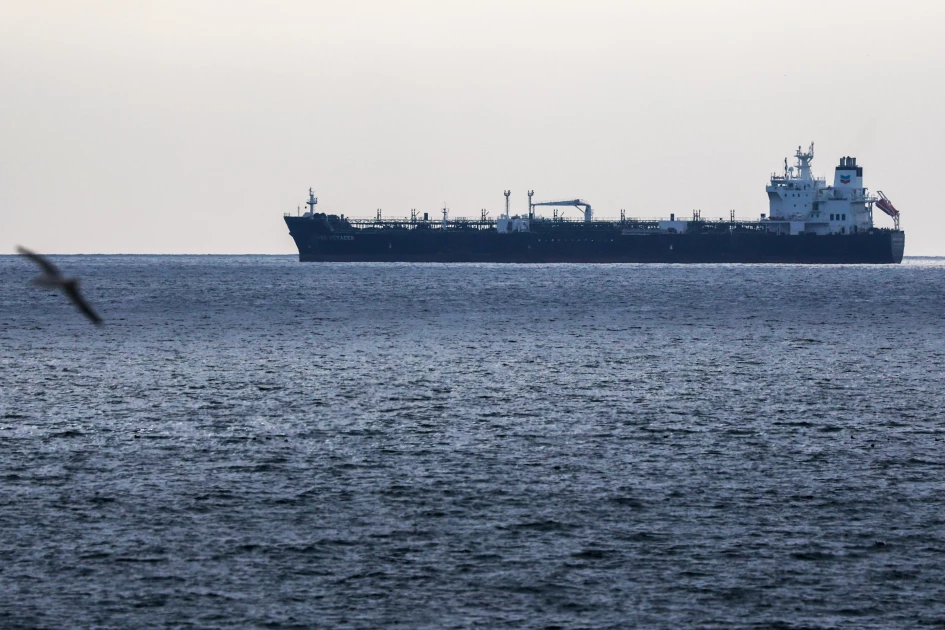
The Texas Voyager oil tanker sits anchored off the coast of Chevron's El Segundo Refinery in El Segundo, California on March 4, 2026. Photo by PATRICK T. FALLON / AFP

Audio By Vocalize
In retaliation, Iran fired hundreds of ballistic missiles and launched thousands of drones at US military assets and allied nations, including Bahrain, the United Arab Emirates (UAE), Saudi Arabia, Kuwait, Qatar, Jordan, Oman, and Iraq.
Most of these countries are Kenya's prominent trading partners in the Middle East, the source of its petroleum oil, and the hub through which a number of its export products transit to global markets.
Kenya, similar to a majority of African nations, is a net importer of oil products from the Gulf countries.
The war, code-named “Operation Epic Fury,” has shattered the Gulf region's carefully cultivated image of stability and triggered the most severe geopolitical shock to global energy and trade infrastructure since the 2003 invasion of Iraq by the US. U.S.
President Donald Trump and Israeli Prime Minister Benjamin Netanyahu have both openly indicated their desire for an Iranian regime change, but the fate of this operation remains unclear as the situation on the ground remains inconclusive.
Within days of the war, the Strait of Hormuz, the narrow maritime choke point through which roughly a fifth of the world's oil supply passes, was effectively closed to commercial shipping courtesy of threats from Iran.
The Bab el-Mandeb corridor feeding into the Red Sea was simultaneously threatened as Houthi militants announced a resumption of attacks on shipping.
Major container lines, including Maersk, Hapag-Lloyd, MSC, and CMA CGM, suspended all Red Sea and Suez Canal transits, diverting Europe-Africa-Asia and Asia-Africa-Europe sea courses via the long route through the Cape of Good Hope.
For Kenya, whose economy is "a net importer of oil products" and a critical hub of East African trade, the consequences are neither distant nor abstract; but rather they are real and current.
The Crude Truth: Oil Prices and Kenya's Energy Exposure
Kenya imports virtually all of its refined petroleum products. Although it struck oil in the northern part of the country years ago, it has no meaningful domestic crude oil production.
This single structural fact makes the country acutely exposed to what Chatham House economists describe as an “adverse shift” in its terms of trade, the price of its exports relative to its imports, triggered by rising energy costs.
Before the “Operation Epic Fury” began, Brent crude was trading at approximately $70 per barrel. Within days of the US-Israeli strikes, oil prices surged more than 25 percent, reaching $80-84 a barrel, levels not seen in over 18 months, as markets priced in geopolitical risk and physical supply disruptions.
The Strait of Hormuz, which carries roughly a quarter of global seaborne oil and a fifth of global LNG shipments, saw shipping traffic fall by approximately 90 percent compared to pre-war levels, according to vessel tracking data from MarineTraffic.
Currently, Brent Crude, widely considered the world's leading benchmark for oil prices, with roughly two-thirds to over 80% of internationally traded crude oil indexed to its price, traded as high as $105 per barrel before dropping back to $90 per barrel of crude oil.
The impact is direct and brutal, higher global crude prices translate into higher import bills for Kenya, weakening the Kenya Shilling as foreign exchange demand rises to pay for fuel.
This puts pressure on the Central Bank of Kenya (CBK) to either raise interest rates, strangling credit access for businesses, or allow the shilling to weaken further, which itself raises import costs in a feedback loop of inflation.
Many observers hope that Kenya’s deal to buy oil directly from the Gulf in a government-to-government (G-to-G) oil deal will come in handy to steady the economic ship. It was initiated in April 2023 to stabilize the Kenyan shilling and secure fuel supply, which was extended for two years in April 2025, running into 2027.
The deal involves importing petroleum on a 180-day credit basis from Gulf firms, Saudi Aramco, ADNOC, and ENOC, with the most recent negotiations lowering cargo transport costs by up to 14%.
If the deal gives way, industries at the sharpest end of this shock include manufacturing (which relies on diesel-powered machinery), aviation (jet fuel costs), logistics and trucking (the arteries of East African trade), and agriculture (fuel for irrigation, cold chains, and transport to export markets).
Kenya's tea, horticultural, and coffee sectors, critical foreign exchange earners, face a margin squeeze precisely when they can least afford it.
Kenya, where food inflation already disproportionately burdens lower-income households, even a modest spike in fuel prices ripples through transport costs, food prices, and manufacturing inputs, compounding the existing fiscal stress.
The worst-case scenario, picked out by Chatham House, is already underway. It involves oil prices climbing beyond $100 per barrel if the Strait closure extends. It might push global inflation one percent higher and shave 0.25 to 0.4 percentage points off Kenya’s debt-stressed economy, and this could mean the difference between fiscal resilience and IMF emergency discussions.
Mombasa and Lamu Port Idle and Waiting
Kenya's ports of Mombasa and Lamu, critical entry points for goods destined for landlocked nations including Uganda, Rwanda, Burundi, South Sudan, Ethiopia, and the DRC, face a severe structural disruption from the double-closure of the Suez Canal and the Strait of Hormuz.
The rerouting of global shipping around the Cape of Good Hope adds thousands of nautical miles to all ships destined for eastern Africa, but have to go round to Cape Town before making the final turn to east Africa.
This, in many instances, sees the cost of fuel up by an estimated additional $1 million per round-trip voyage in fuel costs alone, and it also pushes up total voyage premiums for crew, insurance, and war risk surcharges.
These costs are naturally passed on to importers and could be directly felt in Nairobi's factories, food markets, construction sites, and agricultural inputs.
For the Port of Mombasa, which handles approximately 33 million tonnes of cargo annually and serves as the gateway for East Africa's landlocked hinterland, the disruption manifests in two contradictory ways.
On one hand, ships rerouting to go round the Cape of Good Hope will call at East African ports for bunkering and provisioning, as was witnessed during the 2024-2025 Houthi crisis, when Mombasa and Dar-es-Salaam reported massive spikes in vessel arrivals.
On the other hand, the inbound shipments of manufactured goods, electronics, vehicles, grain, edible oils, produce, and products from Europe and Asia via the Gulf might face extended journey and drastically higher landed costs.
The irony of the unfolding scenario in Mombasa's berths is that it might temporarily bustle with diverted vessels, yet the goods those ships carry will be fewer, later, and far more expensive, feeding imported inflation rather than economic productivity.
The Port of Lamu and Lamu-South Sudan-Ethiopia Transport (LAPSSET) corridor, Kenya's strategic bet on a new economic gateway to the north, also faces a direct threat. The Lamu area also hosts Camp Simba, the US military facility at Manda Bay that could draw Iran's attention.
Goods Kenyans might stop finding on shelves
Beyond fuel, the Arabian Gulf supplies to Kenya an array of critical imported goods. The Gulf region is a major source of fertilizers which are crucial for Kenya's agricultural sector, as well as industrial chemicals, construction materials, and a wide range of consumer electronics and manufactured goods that transit through Dubai's Jebel Ali port, the region's principal redistribution hub.
The global economy is already feeling these ripples, Kenya included, which, as a net importer of Asian rice, relies on Indian Ocean sea lanes for such goods.
Iran has also been Kenya’s top tea purchaser and a significant trade partner. Despite being under US sanctions, Iran ranked among Kenya's top ten tea export destinations in 2024, purchasing 13 million kilograms of tea worth approximately Ksh.4.26 billion, according to the Tea Board of Kenya.
This market has now gone quiet. The Iran-Kenya bilateral trade relationship, which the Iranian ambassador had publicly described as being on a trajectory toward a $1 billion target, is now effectively suspended by the war.
Fertilizer supply chains deserve special attention. Kenya's agricultural calendar depends on timely access to imported nitrogen, phosphate, and potash fertilizers, many of which originate from or transit through the Gulf from eastern Europe.
Disrupted shipping timelines, rising freight costs, and war risk surcharges all translate into higher input costs for farmers growing tea, coffee, and horticultural products, which are Kenya's three most important agricultural export earners.
Aviation, Tourism, and the Nairobi Hub
Nairobi's Jomo Kenyatta International Airport (JKIA) positions itself as the aviation gateway to East and Central Africa, with Kenya Airways operating routes that crisscross the globe.
The Gulf's leading aviation hubs, Dubai, Doha, Riyadh, and Abu Dhabi, are among JKIA's most important connecting nodes for passengers travelling to and from Europe, Asia, but the war has totally disrupted Gulf aviation.
Dubai International Airport, which in 2025 handled over 95 million passengers, making it the world's busiest, has been operating only limited services since the outbreak of hostilities.
Qatari airspace, home to Al-Udeid Air Base, one of the largest US military installations in the Middle East, has been targeted by Iranian drones. Hundreds of thousands of travelers have been stranded across the region, Kenyans included.
Beyond commercial aviation, Kenya's tourism sector, which contributed over KShs. 300 billion to the economy in 2024 faces fresh headwinds.
Europeans and Asians who might connect through Dubai or Doha to reach Nairobi or Mombasa are instead rerouted, delayed, or simply deterred by the chaos of Middle East travel. Business travel, the lifeblood of Nairobi's conference economy and its MICE (Meetings, Incentives, Conferences, Exhibitions) aspirations, is similarly unsettled.
Kenya's Diplomatic Balancing Act
Kenya's official position on the war has been perplexing. President William Ruto condemned Iran's retaliatory strikes on third-party Gulf nations, posting on X that "Kenya strongly condemns the strikes on the UAE, Qatar, Saudi Arabia, Iraq, Oman, Kuwait, Jordan and Bahrain," warning that the "regionalization of this conflict poses a grave threat to international peace and security."
Soon after, the Foreign Affairs Principal Secretary, Korir Sing'oei clarified that Kenya was not taking sides, but was "only opposed to escalating violence."
The diplomatic ambiguity, which simultaneously reassured the US while seeking to avoid permanent damage to ties with Iran, reflects the genuine complexity of Kenya's strategic interests.
Kenya is nonetheless walking a tight rope in relations with the US and Iran. Kenya and the US remain partners in a long-standing strategic security and economic ties formalized in 2024 when the Biden administration designated Kenya as a Major Non-NATO Ally, the first sub-Saharan country to receive that status.
The African Growth and Opportunity Act (AGOA) provides Kenyan exporters with preferential access to US markets, while the US-funded $70 million expansion of the Manda Bay airfield is ongoing.
Kenya's security operations against Al-Shabaab in Somalia are deeply integrated with US Africa Command (AFRICOM). Kenya is entwined at the hip with US with the latest being the Kenya-US Health Cooperation Framework of 2025.
On the other hand, Iran has also proven to be a genuine economic partner to Kenya. Beyond tea exports, the Iranian ambassador had described ambitious plans to quintuple bilateral trade to $1 billion.
A Kenyan diplomatic rupture with Tehran would shut that door entirely, and Iran's ambassador has made clear with clear demands that Iran expects Kenya to "speak out against violations of territorial integrity."
The risk of getting this balance wrong cuts both ways. An overtly pro-US stance could jeopardize what remains of Iran's economic relationship and invite indirect pressure through Iran's networks in the region.
An insufficiently supportive posture toward Washington could threaten AGOA preferences at a time when the Trump administration has weaponized trade relationships, as seen against Spain and the UK over their war-related positions.
Iran's Assurance to Kenya and Its Limits
Might Kenya be targeted in the unfolding war situation? This thought has unsettled many Kenyans, and it deserves a careful, sober answer rather than either alarmism or naive reassurance.
Iran's Ambassador to Kenya, Dr Ali Gholampour, provided unusually specific reassurances in a media briefing in Nairobi.
He stated that Iran has "deliberately limited the range of its missiles to a maximum of 2,000 kilometres" — a distance that falls well short of East Africa.
"Our missiles will not reach Kenyan territory," he said. He further expressed confidence that Kenya would not permit its soil to be used to launch attacks against Iran, and that the Manda Bay facility "does not provide a US military facility with a magnitude to attack Iran."
These assurances are significant, specific, diplomatically delivered, and rooted in genuine Iranian interest. Kenya is a tea producer, and a country whose goodwill Tehran clearly values. Iran is not in the business of provoking neutral African nations without purpose.
However, an unconventional and proxy risk is still present despite the official Tehran assurance to Kenya. The critical analytical distinction is between Iran directly targeting Kenya (which the ambassador's assurance addresses) and Iran's broader proxies, affiliated networks, or opportunistic actors exploiting heightened tensions to attack Western-linked targets on Kenyan soil.
These are different categories of risk, and the ambassador's assurance, however sincere, does not foreclose the latter.
Remittances Under Threat
An underappreciated dimension of the Gulf war's impact on Kenya is the fate of the large Kenyan diaspora community working across the GCC states.
Thousands of Kenyan professionals, domestic workers, and skilled laborers are employed in the UAE, Saudi Arabia, Qatar, Kuwait, Bahrain, and Oman, all countries which have been struck by Iranian missiles and drones and face ongoing security threats.
Remittances from the diaspora are a critical pillar of Kenya's foreign exchange earnings, regularly exceeding even tourism receipts in certain years.
If Gulf economies slow down or if Kenyans in the Gulf lose jobs, face insecurity, or cannot transfer funds due to banking disruptions, the impact on household incomes in Kenya will be direct and painful.
Job losses among expat workers in the Gulf construction, hospitality, and services sectors are virtually certain if the conflict extends. If Kenya receives a big wave of returnees, it will place pressure on domestic labor markets already strained by youth unemployment.
Navigating the Storm
Kenya is weathering this crisis in a structurally vulnerable position; it is a net fossil fuel importer, heavily reliant on Gulf trade routes, diplomatically exposed between two powerful patrons with conflicting interests.
Over the medium term, the war, painful as it is, underlines the structural argument for Kenya's own energy transition: geothermal, solar, and wind resources that would make the country less hostage to the geopolitics of the Persian Gulf.
The LAPSSET corridor and the Mombasa port's infrastructure investments remain vital, but their strategic logic is reinforced, not undermined, by demonstrating how catastrophically exposed East Africa remains when Gulf sea lanes close.
Kenya has weathered external shocks before, the 2008 post-election crisis, COVID-19, the 2023-2024 Red Sea disruptions, and the domestic fiscal turbulence of 2024.
Although this crisis is different in scale and scope, the country's economic fundamentals, its regional strategic importance, and diplomatic sophistication give it tools that smaller, less connected neighbors do not possess, and it should use them pragmatically.
Thus, the real question here is not whether Kenya will be hit in a crossfire; rather, it is whether Kenya will emerge from this crisis having learned the urgent lesson of structural economic independence from the Gulf's volatile arc.
Join the Discussion
Share your perspective with the Citizen Digital community.
No comments yet
This discussion is waiting for your voice. Be the first to share your thoughts!