

Inside ambitious Gov't plan to modernise JKIA, double passenger capacity
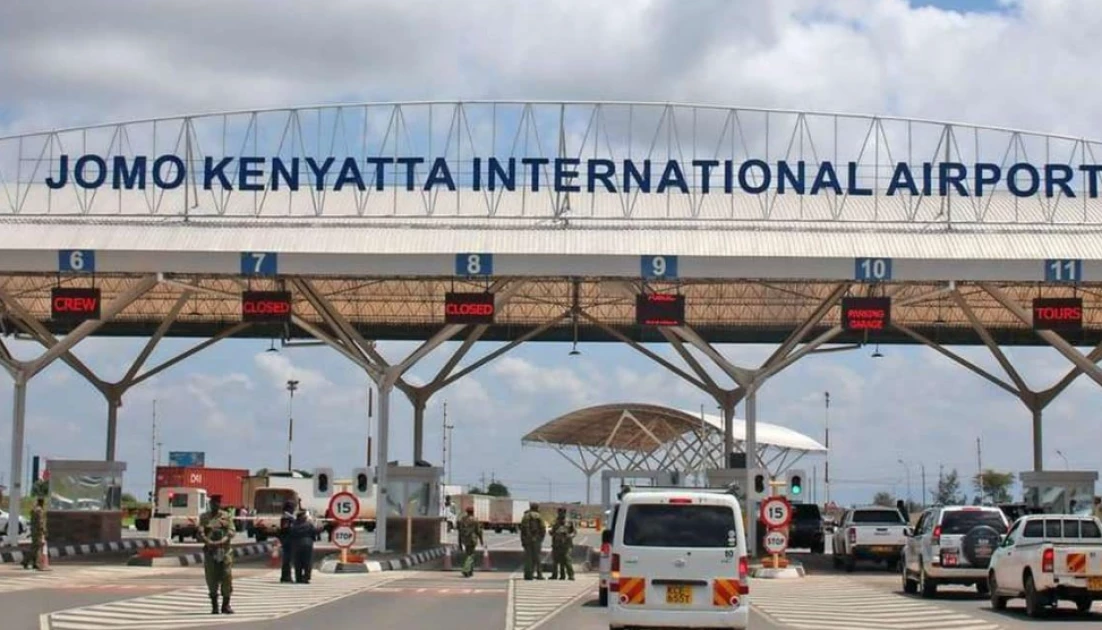
File image of the JKIA entrance.

Audio By Vocalize
According to the programme’s master plan, the redevelopment project will expand its runways, terminals and transport links over the next two decades to make the country’s main airport a modern aviation hub capable of handling more than double its current passenger traffic.
Earlier this week, the government set the process in motion by inviting investors to bid for the project.
For nearly seven decades, the JKIA has been Kenya’s main gateway to the world. Opened in 1958 and spread across roughly 11,000 acres in Nairobi’s Embakasi area, the airport now serves about 70 destinations, 8 domestic and 62 international routes.
Last year alone, JKIA handled just under nine million passengers, the majority of them international travellers. And as the number of travellers grows, the airport has increasingly been running into physical limits.
The entire operation currently relies on a single 4-kilometre runway, with limited taxiways and constrained aircraft parking space.
Passenger terminals have been expanded in stages over the years, but much of the infrastructure is aging and congestion during peak hours has become common.
According to the government’s newly completed master plan, passenger numbers at JKIA are projected to climb from about 8.9 million today to about 23 million every year by 2045.
To handle that surge, the airport will undergo a phased transformation designed to expand capacity while keeping operations running. The development will involve two major projects happening at the same time.
The first will focus on upgrading the existing airport. Beginning in 2026, improvements to the current JKIA facilities will run for about 15 months.
These works will include enhancements to airfield infrastructure such as new rapid exit taxiways, improvements to aircraft parking areas and upgrades to existing terminals aimed at easing congestion and improving passenger flow.
But at the same time, construction will begin on an entirely new airport complex within the JKIA grounds. Groundbreaking is expected to start in 2026, with construction expected to run for about three years.
The new development will be located roughly one kilometre from the current airport facilities. At the centre of the new complex will be a modern passenger terminal designed to handle about 10 million travellers annually, supported by expanded aircraft parking areas and new operational infrastructure.
The development will also include a second new and independent runway. Once complete, the additional runway and new terminal are expected to dramatically increase the airport’s overall capacity and reduce congestion that has built up over years of rising traffic.
Both the upgrade of the existing airport and construction of the new facilities is to be handled by the same contractor.
According to the masterplan, the new terminal will incorporate modern airport technologies including biometric passenger processing, automated baggage handling systems and digital queue management aimed at reducing wait times.
Beyond the runways and terminals, the plan also addresses one of the biggest frustrations for travellers, getting to the airport. To ease the notorious traffic along Mombasa Road, the master plan proposes integrating JKIA into Nairobi’s commuter rail system. That would allow passengers to travel by train directly from the Syokimau rail station to the airport terminals.
At the same time, planned BRT routes will also be extended to include stops at the airport, providing additional public transport options for travellers and airport workers, aside from the expressway.
Funding for the expansion is expected to rely heavily on Public-Private Partnerships, as the government seeks private investors to finance parts of the project amid pressure from high public debt.
The expansion is being driven by growing competition across the region. Ethiopia is developing a new mega-airport designed to handle more than 100 million passengers, while Rwanda is building the Bugesera International Airport with capacity for up to 14 million passengers.
The government hopes that modernising JKIA will ensure Nairobi remains East Africa’s leading aviation hub for passengers, cargo and international connectivity in the decades ahead.
Leave a Comment