
Inside the Ksh.500B Naivasha-Malaba SGR extension project
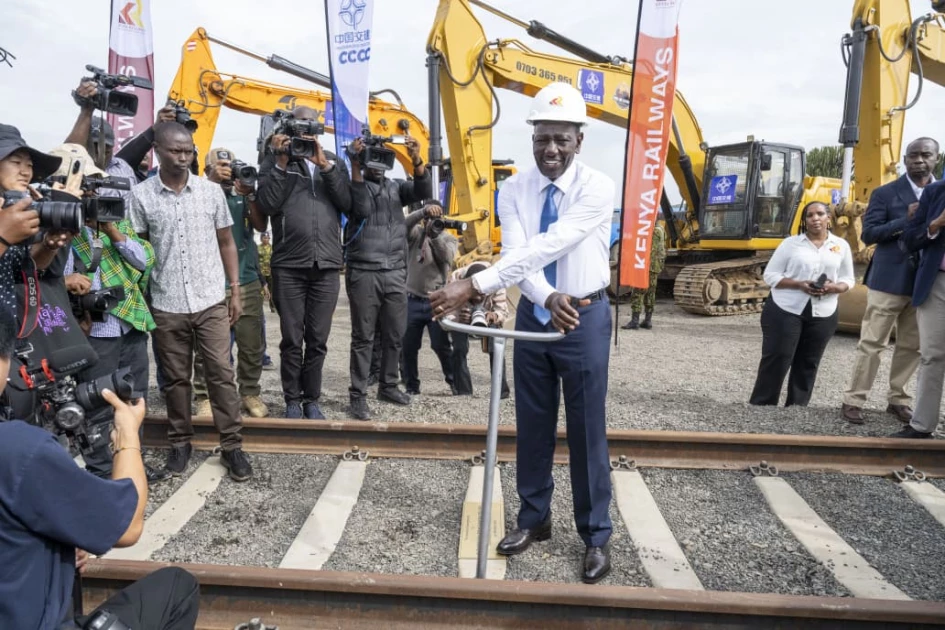
President William Ruto breaks ground for the land-mark construction of the Naivasha-Kisumu-Malaba Standard Gauge Railway line in Narok on March 19, 2026.

Audio By Vocalize
President William Ruto on Thursday launched the railway project in Narok County.
The project stalled near Naivasha, more than 350 km short of reaching the Ugandan border, due to China's slashed funding for large African infrastructure projects under its Belt and Road Initiative.
The project, implemented by Kenya Railways in collaboration with the National Land Commission, comprises two sections: the Naivasha – Kisumu section and the Kisumu – Malaba section.
The State plans to use over Ksh.500 billion in the project, with more money allocated to the longer Naivasha to Kisumu leg of 264 kilometres.
Kenya Railways Managing Director Philip Mainga indicated that phase 2B of the line will be completed by June 2027.
The Naivasha – Kisumu section is set to commence from Emurtoto, in Narok County, to Kisumu, and a branch line of 8.69km to the proposed new Kisumu Port.
The railway line will have six intermediate stations located in Narok, Mulot, Bomet, Sotik, Sondu, and Ahero, traversing through 17 crossing sections that traverse through Narok, Bomet, Nyamira, Kericho, and Kisumu Counties.
The Kisumu – Malaba 107km section will have two intermediate stations in Yala and Mumias and will traverse through six crossing stations across Kisumu, Siaya, Vihiga, Kakamega and Busia Counties. The stations include Kisian West, Ramala, Yala, Musanda, Manyulia, and Amukura.
Likewise, the project design includes 13 tunnels, 23 bridges and 376 culverts.
Each passenger train will have a capacity of 1,096 passengers, and with a designed speed of 120 kilometres per hour, and each freight train will have a haulage capacity of 4,000 tonnes (216 TEUS) with a designed speed of 80 kilometres per hour.
The designed freight carrying capacity of the railway is 22 million tonnes per annum.
Other key features in the extension project include a uniform design specification, which will permit seamless operation across the borders.
The project is projected to significantly improve logistics efficiency within the country and the neighbouring countries.
Some of the projected benefits include reduced freight transport costs, faster movement of goods and passengers, increased trade competitiveness and promoting regional connectivity and integration.
The railway’s first section, linking the port of Mombasa to Nairobi, was completed in 2017.
Critics have said the stalled project had become a symbol of China's debt trap diplomacy, with Beijing extending large, often opaque loans to a poorer country for infrastructure projects - though that is a claim rejected by the Chinese government.
Join the Discussion
Share your perspective with the Citizen Digital community.
No comments yet
This discussion is waiting for your voice. Be the first to share your thoughts!