
Kenya among countries set to roll out HIV preventive drug Lenacapavir
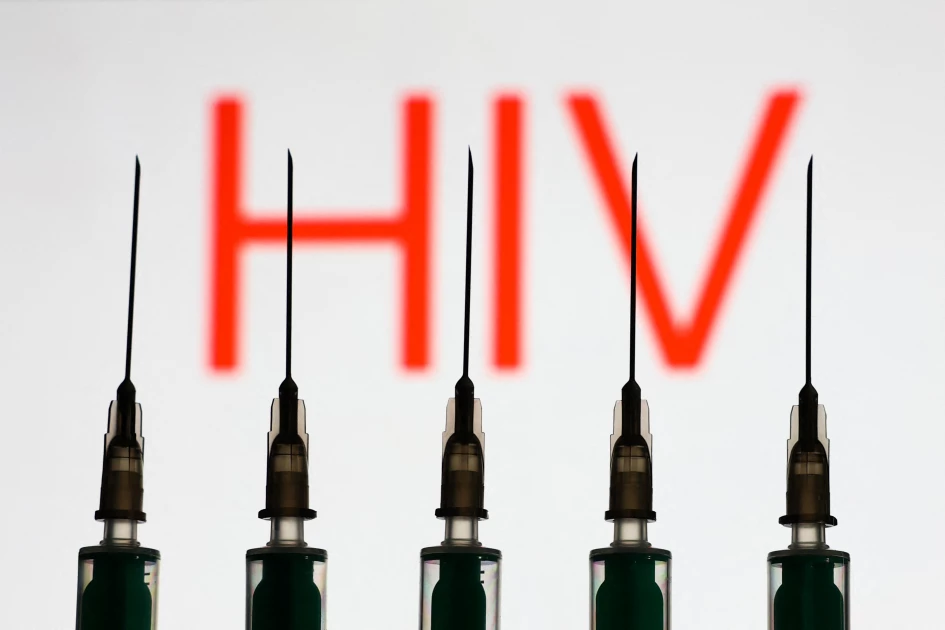
The 'HIV' inscription displayed on a screen and illustrative syringes are seen in this illustration photo taken in Krakow, Poland on June 20, 2025. (Photo by Jakub Porzycki/NurPhoto) (Photo by Jakub Porzycki / NurPhoto / NurPhoto via AFP)

Audio By Vocalize
The World Health Organization has approved the rollout of Lenacapavir (LEN), an injectable HIV preventive medication, with Kenya selected as one of the nine early adopter countries for its implementation.
According to the National AIDS and STI Control Program (NASCOP), the HIV prevention drug will be available by January 2026.
“The Ministry of Health through NASCOP in collaboration with various partners, is actively working to ensure the availability of this innovative product for Kenyans by January 2026,” NASCOP said.
The World Health Organization issued guidelines recommending the use of LEN twice a year as an additional pre-exposure prophylaxis (PrEP) option for HIV prevention, in a historic policy move that could help reshape the global HIV response.
LEN, the first twice-annual injectable PrEP product, is a highly effective, long-acting alternative to daily oral pills and other shorter-acting options.
WHO said that LEN will help protect people at risk of HIV – particularly those who face challenges with daily adherence, stigma, or access to healthcare.
“While an HIV vaccine remains elusive, Lenacapavir is the next best thing: a long-acting antiretroviral shown in trials to prevent almost all HIV infections among those at risk," WHO Director-General Dr Tedros Adhanom Ghebreyesus said.
The new guidelines come at a critical point as HIV prevention efforts have plateaued, with 1.3 million new HIV infections reported in 2024.
By the end of 2024, approximately 40.8 million people were living with HIV worldwide, with about 65% of these cases in the WHO African Region.
Globally, around 630,000 people died from HIV-related causes, and an estimated 1.3 million new infections occurred, including 120,000 children.
Access to antiretroviral therapy (ART) continues to improve, with 31.6 million people receiving treatment in 2024, an increase from 30.3 million in 2023.
In Kenya, the fight against HIV/AIDS remains a national priority, with progress driven by innovative strategies and community-centered approaches.
Among the latest breakthroughs is LEN, a long-acting injectable PrEP administered twice a year, proven to significantly reduce the risk of HIV acquisition.
As we strive towards an HIV-free generation, LEN offers hope for millions at risk, especially in high-burden counties like Nairobi, Kisumu, Mombasa, and Nakuru.
The World Health Organization (WHO) now recommends that HIV rapid diagnostic tests (RDTs) be utilized for individuals initiating or continuing long-acting injectable PrEP, including LEN and cabotegravir (CAB-LA). This approach ensures that testing remains accessible and convenient, especially for young people and key populations who may face barriers to traditional testing methods.
As WHO emphasizes, “Flexible HIV testing approaches are essential for ensuring that testing does not become a barrier to accessing or continuing PrEP, including long-acting injectable options.”
Kenya has made remarkable strides in expanding access to various PrEP options—daily oral pills, injectable cabotegravir, and the dapivirine vaginal ring; forming a comprehensive toolkit to end the HIV epidemic.
However, access to LEN outside of clinical trials remains limited, primarily due to logistical and resource challenges.
WHO has urged Kenyan policymakers, donors, and global health partners to accelerate the integration of LEN into national HIV prevention programs.
This call to action is supported by the need to gather vital data on how LEN is adopted, used, and its real-world impact across different Kenyan communities.
For people living with HIV who also face mpox or are experiencing disruptions in treatment, rapid initiation of antiretroviral therapy (ART) is critical.
Early testing for HIV in individuals presenting with suspected or confirmed mpox is equally vital. These integrated approaches ensure that no one is left behind in Kenya’s journey towards ending AIDS.
In facing broader challenges, WHO has issued new operational guidelines to help Kenya sustain and adapt essential HIV services amid changing funding landscapes.
The framework emphasizes prioritizing services, assessing risks, monitoring disruptions, and adapting health systems to protect progress.
As Kenya continues to build resilient health systems, collaboration among government agencies, local communities, donors, and international partners remains key.
Kenya’s commitment to innovation, community engagement, and resilience exemplifies the global and local resolve to end HIV/AIDS.
With tools like LEN now within reach, and a shared commitment to adapt and innovate, Kenya is poised to turn the tide against HIV—bringing hope, health, and dignity to its people.
Leave a Comment