
Kenya launches bold plan to fight Gender-Based Violence
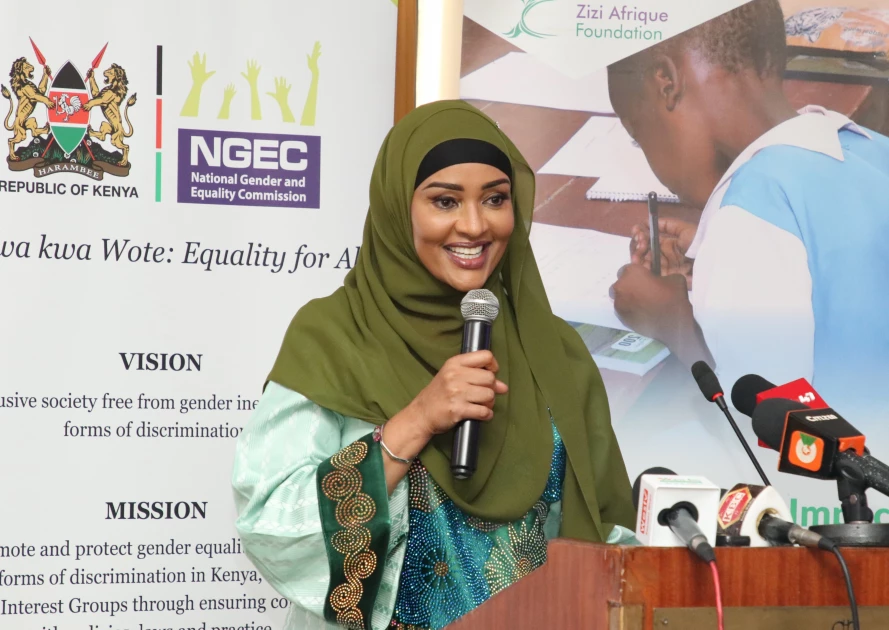
Chairperson of the National Gender and Equality Commission, Rehema Jaldesa, during the launch of the National Gender Research Agenda 2025–2029 on Wednesday, December 10, 2025. PHOTO | COURTESY

Audio By Vocalize
The high-level conference, organized by the National Gender and Equality Commission (NGEC) in partnership with the Japan International Cooperation Agency (JICA), brought together stakeholders from the gender, education, research, and policy sectors to develop a coordinated, data-driven strategy.
The agenda aims to move the country from fragmented interventions toward cohesive and measurable action, ensuring that women and girls can access education and live free from violence.
“The fight against GBV in Kenya has long relied on commitment, courage, and community action,” said an NGEC official. “Today, we are shifting from isolated efforts to evidence-driven transformation.”
According to NGEC, gender-based violence and harmful cultural practices remain pervasive, particularly in marginalized communities, where they continue to restrict girls’ and women’s access to education.
The research highlights the multifaceted nature of GBV, shaped by cultural, social, historical, and economic factors. Physical violence is the most reported, primarily affecting women aged 15–49 in intimate relationships.
Sexual violence, including rape, defilement, and sexual assault, is widespread among adolescents aged 10–19. Emotional and psychological abuse is underreported due to stigma but has long-term mental health consequences.
Economic abuse, such as control over resources and denial of property rights, perpetuates dependency. Online violence is rising, with cyberbullying, sextortion, and non-consensual sharing of intimate images increasingly reported.
The study also revealed that nearly a quarter of schools reported learners experiencing some form of violence, with boys more affected by physical abuse and girls more affected by sexual violence.
Harmful practices such as female genital mutilation (FGM), child labour, and child marriage continue to disproportionately impact girls and disrupt their education. On average, 6.7% of schools reported cases of FGM, child labour is more prevalent among boys, and child marriage affects 16.9% of girls compared to less than 1% of boys.
Interviews with teachers and community leaders indicated that these practices are often driven by cultural expectations, traditional rites, and economic hardship, particularly in pastoralist and semi-arid regions such as Isiolo, Narok, and Garissa.
Headteachers noted that child labour is often normalized, with boys herding livestock and girls assisting in household work, viewed as essential skills rather than violations of child rights.
NGEC emphasized that addressing these challenges requires cross-sectoral collaboration linking education, social services, and local leadership, along with community innovation, survivor-centered services, education, and evidence-driven policy.
The launch of the National Gender Research Agenda 2025–2029 marks a major step toward transforming Kenya’s GBV prevention and response framework from isolated initiatives into a nationwide, coordinated, and measurable system
Join the Discussion
Share your perspective with the Citizen Digital community.
No comments yet
This discussion is waiting for your voice. Be the first to share your thoughts!