

Kenyan-made training tool boosts keyhole surgery skills for women's health

Audio By Vocalize
Specialist surgical expertise remains unevenly distributed, with advanced procedures largely concentrated in major urban centres. In many facilities, open surgery is still common, contributing to longer hospital stays, higher infection risk and increased costs for patients.
A locally driven initiative by The Hem Practice is seeking to address this disparity by strengthening minimally invasive surgery (MIS) skills among practising doctors through structured simulation-based training.
“This is not just training. It is a deliberate effort to make minimally invasive surgery the norm rather than the exception in Kenya,” said Faith Wanjeri, co-founder of the organisation.
The organisation recently graduated the second cohort of its Stitch & Knot Laparoscopic Suturing Programme, an eight-week skills course targeting obstetricians, gynaecologists and registrars. The training emphasises repeated practice using portable simulation tools that allow clinicians to build competence outside the operating theatre.
Minimally invasive surgery is associated with smaller incisions, faster recovery, fewer complications and lower overall treatment costs. However, practitioners note that access to equipment alone does not expand services without deliberate investment in surgical skills.
Participants in the programme commit to at least 30 minutes of daily practice, with performance tracked over time to measure improvement in precision and speed. According to the organisers, early cohorts have demonstrated notable gains in competency scores and procedural efficiency.
The initiative has also drawn a high proportion of female surgeons, with women accounting for 70 per cent of the first cohort and 80 per cent of the second—an outcome the organisers say reflects an effort to strengthen female leadership in a field historically dominated by men.
Board chair Stephen Mwatha said expanding MIS capacity could have system-wide benefits, including shorter hospital admissions and reduced infection risks.
“When these skills are shared across hospitals, minimally invasive surgery becomes more accessible. That has implications for both cost and patient outcomes at community level,” he noted.
The training model is complemented by outreach efforts that bring surgical teams to county facilities, aiming to extend services beyond major cities where specialist care is more readily available.
Dennis Mureithi, who led development of the simulation platform used in the training, said the model was adapted to reflect local resource realities.
“While similar suturing programmes exist globally, this version was refined over several years to ensure it works within our environment and delivers practical impact,” he said, adding that the long-term goal is to integrate laparoscopic skills earlier in medical training.
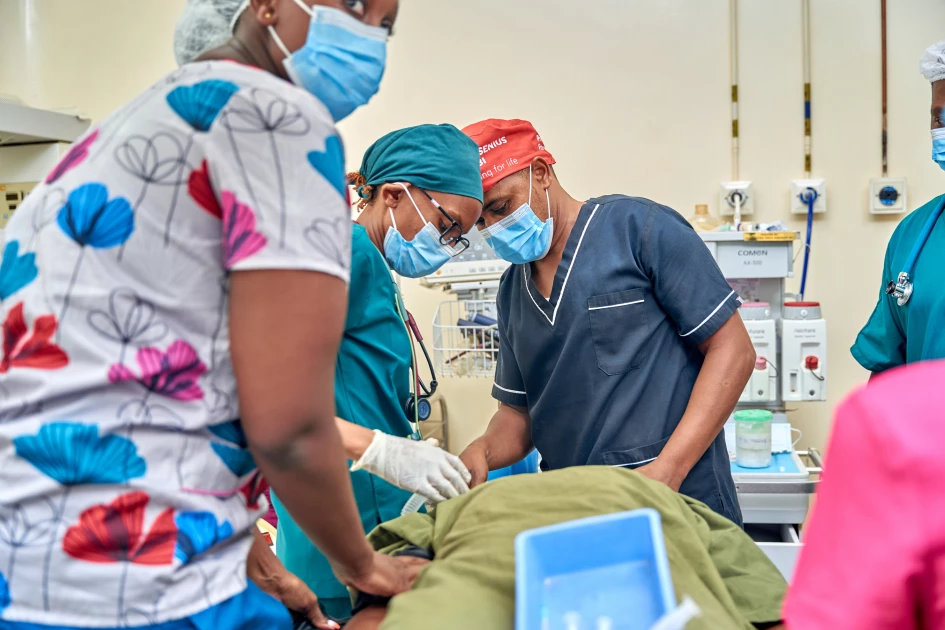
The second cohort concluded its training with a supervised surgical camp at Maryhelp Hospital, where participants applied their skills in a clinical setting.
As Kenya continues to address disparities in surgical access, initiatives focused on simulation, mentorship and decentralised training are emerging as potential tools to expand minimally invasive care and improve women’s health outcomes.
Leave a Comment