

Kenya’s electric vehicles doubled to 5,294 in 2024
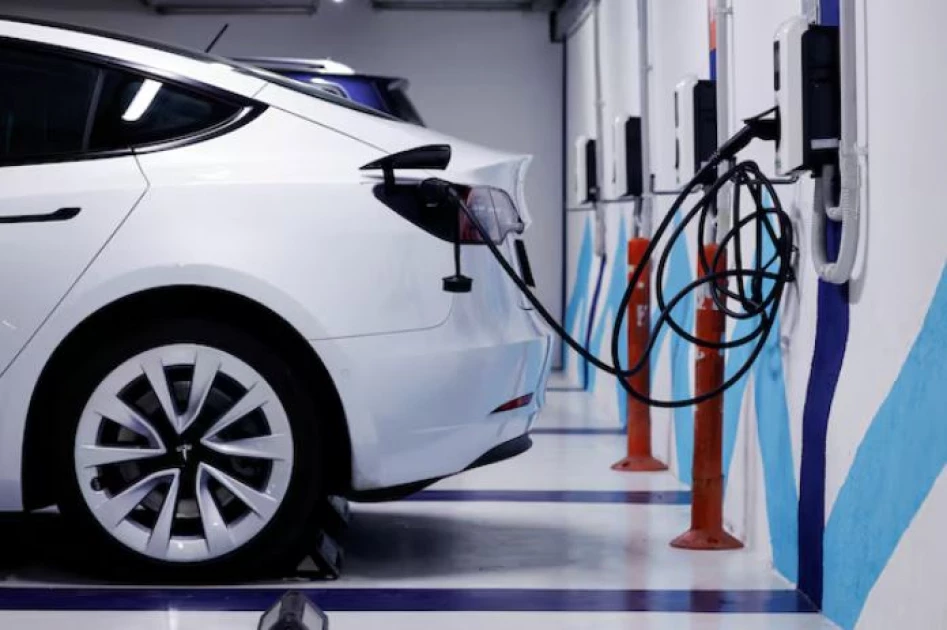
An electric vehicle is plugged into a charging station. REUTERS/File Photo

Audio By Vocalize
The number of electric vehicles (EVs) registered
in Kenya in 2024 doubled to 5,294 from the 2,694 registered in 2023, new data
shows.
According to the Electric Mobility
Association of Kenya (EMAK), motorcycles continue to lead the country’s green
mobility adoption, with 4,862 units registered in 2024, followed by
three-wheeler vehicles, commonly known as tuk-tuks, at 185.
Some 123 electric cars were registered last
year, alongside 87 forklifts and 32 buses.
This brings the total e-motorcycles registered in Kenya to 8,097, three-wheelers to 324, 318 e-cars, 53 buses and 227 forklifts.
EMAK’s President, Hezbon Mose, on Monday
said this pushes the fraction of EVs to Kenya’s total registered vehicles to
0.2 per cent.
The association projects that two-wheeler
EVs (motorbikes and bicycles) will grow to over 60,000 in 2030, while the
number of registered e-buses is forecast to grow to over 2,000 in 2030.
“EV passenger vehicles are forecast to grow
to over 7,600 vehicle sales in 2030 and cumulatively have over 30,000 passenger
vehicles with high incentives,” Mose told delegates at this year’s E-mobility
Conference and Expo organised by Kenya Power, the German development
agency GIZ and EMAK.
Kenya’s e-mobility
growth has been spurred by factors like the government’s introduction of an
e-mobility tariff in the current electricity tariff control period, as well as
tax incentives.
But EVs’ upfront costs remain relatively
high compared to the used internal combustion engine (ICE) vehicle imports
common in Kenya, with EV companies citing battery costs as a major contributor
to the high costs.
Additionally, there is limited public charging
infrastructure, with few charging stations, mostly concentrated in
Nairobi.
The government has been rolling out charging
stations in select towns and cities to drive up EV uptake.
On Monday, Kenya Power announced it will
install some 45 EV chargers across Nairobi, Nyeri, Kisumu, Eldoret, Nakuru,
Mombasa and Taita-Teveta counties.
Additionally, the utility said it is
exploring setting up local battery assembly plants in a bid to bring down EV
costs further.
Leave a Comment