

Layers of self: How Nairobi youth are wearing identity out loud

Audio By Vocalize
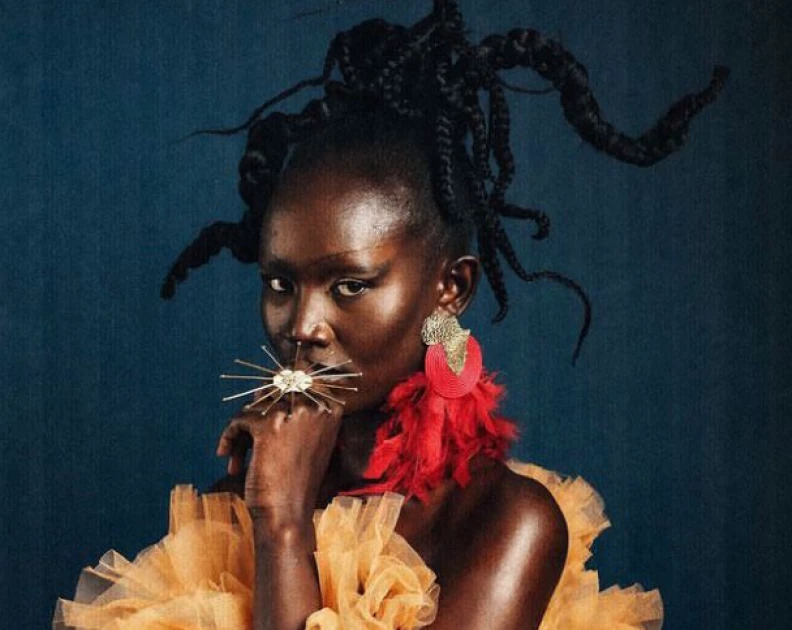
Fashion in Nairobi is no longer about adhering to aesthetic trends, it is about claiming space. In museum courtyards and matatu queues, on the corners of Instagram and the backs of second-hand stalls, a new style vocabulary is unfolding. One that feels less like performance and more like protest.
Identity, once subtly
stitched into hems or saved for special occasions, is now worn daily; feathered,
beaded, oversized, loud. This generation is not revisiting tradition. They are rewiring
it.
Young Kenyans are using
fashion as a form of self-definition; an expressive tool to communicate gender
identity, spirituality, politics, and heritage. Streetwear intersects with
shuka patterns. Ankara is styled with Doc Martens. Maasai beads sit next to
chunky rings and hand-poured resin earrings. These are
not contradictions, more of compositions.
You can see it in the
rise of accessory-heavy looks that lean into cultural symbolism. Copper,
shells, and earth tones are layered, not for costume, but for confrontation and
expression. The style here is not polished, but personal. Not curated, but
felt.
One of the many local
voices adding to this evolving conversation is Charity Kiarie, whose work in
design centres around what she calls “experiencing queendom in accessories.”
Charity, founder of
Kiarie Afrika, describes herself as a lover of bold adornment, an instinct that
emerged from her desire to challenge the understated fashion narratives around
modern African women.
“I wanted to defy
that,” she says. “No more showing up small in terms of accessories. Women need
to be out there representing themselves unapologetically.”
Charity’s process isn’t
trend-led, but more of an intuitive process. Her designs often begin as visions
she memorizes before bringing them to life. The inspiration comes from
everywhere: The Himba women of Namibia, Fulani silhouettes, Maasai beadwork,
the brass jewelry worn by Agikuyu women. She’s an archivist of beauty and a
student of tradition, drawing on African, Caribbean, and Aboriginal influences
not to replicate, but to reinterpret.
“It’s more of
redefining our culture and ancestry to fit the modern world,” she says.
“Culture must evolve, creativity is one way to prove that.”
This sentiment echoes
across Nairobi’s fashion landscape, where many young designers and wearers are
turning to ancestral forms of beauty not to replicate nostalgia, but to
reinvent it. In Charity’s words; “My divine self-guides me in my creations all
the way to the energies that my pieces carry, you wear a piece, you elevate, you
feel seen.”
That idea, that
personal style, is a spiritual declaration that is felt in the city’s streets.
Divine femininity is a recurring theme. Not as softness or submission, but as
self-possession and presence.
“In a world where women
are more in their masculinity than femininity, I still choose to be feminine in
my own way,” Charity reflects.
“There’s so much power
in our femininity, just choosing to be the woman you are. Working on your
spirit. Showing up healed, or healing. Whole.”
Nairobi is a fertile
ground for this kind of expression. A city where creativity collides with
culture, where the bold are not just accepted but expected.
“Nairobi tells the
story of African people who are no longer conforming to the world’s view on
Africa,” she says. “It’s the game changer.”
That energy, the
refusal to shrink, is mirrored in the statement pieces worn on runways and
rooftops, in thrift markets and on TikTok. These are not just outfits. They are
mood boards of memory. They are armor and mirrors.
They whisper to the
wearer: “You are special. Beautiful. Seen.”
And maybe that’s the quiet
revolution happening here not in the pieces themselves, but in the way
Nairobi’s youth are choosing to show up in them. Not seeking validation, but returning
to themselves.
Leave a Comment