

Marsabit: Pastoralists look to fish farming to stop over-reliance on relief food
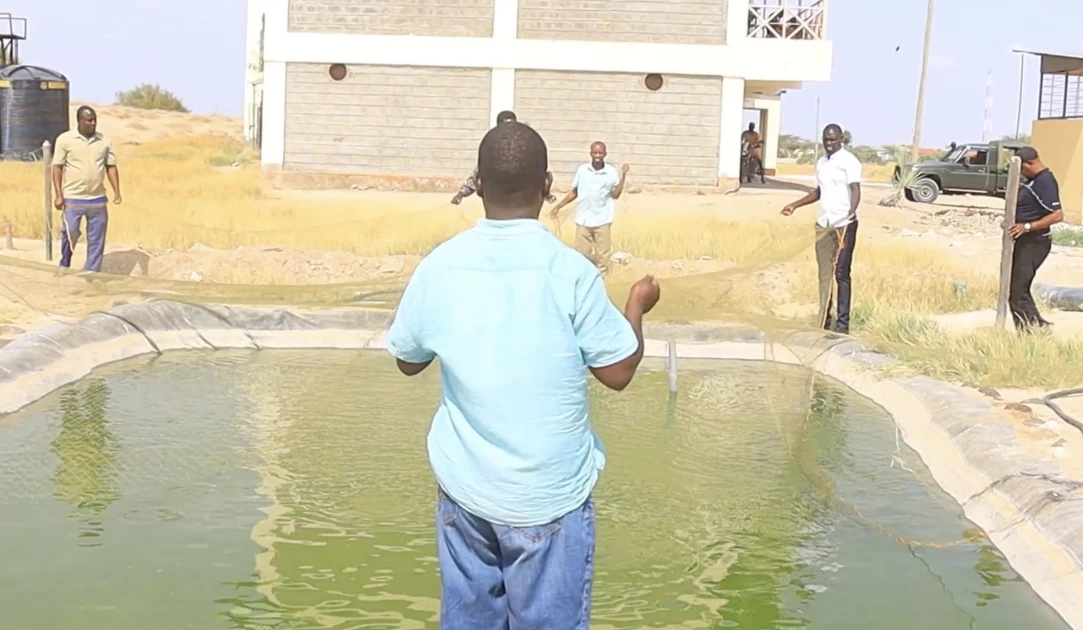
Fish farming in Marsabit. /MOSES MWENDA

Audio By Vocalize
The project is meant to shield against climate shocks.
From just 15 members, when the project began in 2023, one group has grown to 40 fish farmers. Interest is spreading fast, with women like Hadija Guyo leading the charge.
She said that fish is now more than just food, it’s a major source of hope after several years of over-reliance on relief food in the region.
For Hadija and others, fish farming is also a path to financial independence and gender inclusion.
She said that her group uses proceeds from the sale of fish for table banking—to save, to loan, to grow.
At the North Horr Technical Training Institute, aquaculture is now part of the curriculum—blending agriculture, nutrition, and business education.
According to Abudho Galgallo, an Agriculture student at the Institute, the fishpond is not just a class project—it’s a symbol of what’s possible in the larger community.
Adho Game, a Diploma student of Agriculture at the same institution narrated how she never ate fish before, but now loves it—and tells others to try it, adding that the fish farming venture could help solve youth unemployment if they embrace it.
Administrators here believe aquaculture is more than an academic exercise, it’s a game changer.
Sammy Malingu, Deputy Principal, North Horr Technical Training Institute (NHTTI), noted that the presence of fish ponds at the institution gives the students hands-on skills, learning by doing.
According to Kephas Juma, the Head of Agriculture Department at the institute, students are becoming aquaculture ambassadors in their respective villages.
Nutrition experts also see the potential to fight malnutrition through fish protein, especially in vulnerable areas like North Horr.
Anastacia Mutiti, the Head of Nutrition Department at the institute said that fish is rich in proteins and amino acids, and could significantly reduce malnutrition if embraced widely.
In Moyale, another hunger hotspot, Musa Hassan Dida has turned aquaculture into a success story.
"I started with 300 fingerlings. After six months, I sold them for 75,000 shillings. Now I have 500, and clients are calling every day." Said Musa.
From pond profits, Musa supports his entire family—including paying for his hypertensive father's treatment in Nairobi.
Leave a Comment