

MPs express concerns over new university funding model
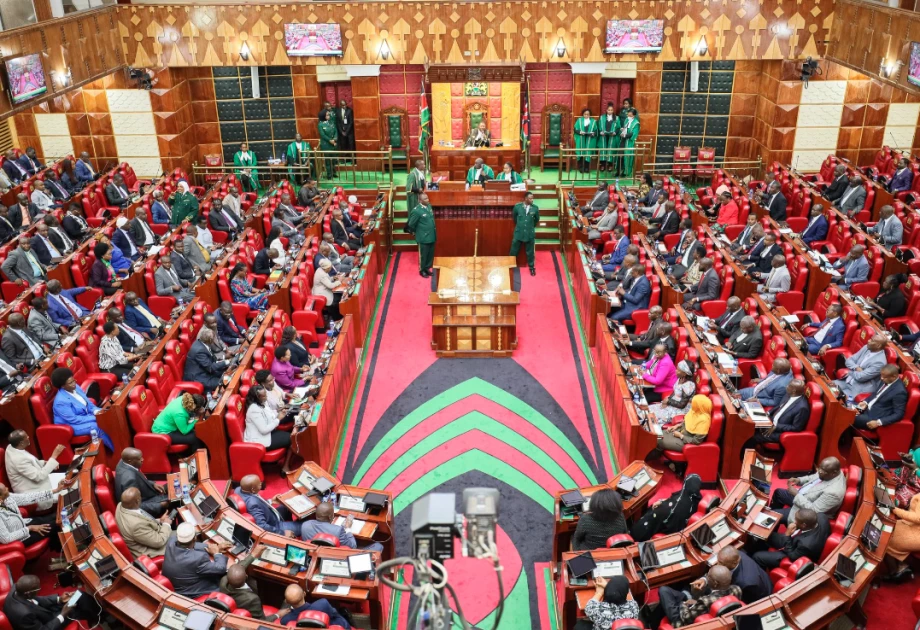
File image of a previous National Assembly session. PHOTO | COURTESY

Audio By Vocalize
Members of the National
Assembly have poked holes in the new university funding model with fears that
it could affect many Kenyans and cause them not to access higher education.
According to the members
of the Education Committee in the National Assembly, the variables being used
to determine which category a student falls in to get funding cannot be
validated.
The government uses the Means
Testing Instrument (MTI) model which incorporates the Kenya poverty report, family
background, Gender and the previous schools a student had attended.
In a meeting with the
higher education Principal Secretary Dr. Beatrice Inyangala, Kenya Universities
and Colleges Central Placement Service (KUCCPS) CEO Mercy Wahome, HELB CEO
Charles Ringera and university funding board CEO Geoffrey Monari, the MPs
claimed thousands could be locked out of university education if the variables
being used will not be changed.
According to the MTIs, the
government uses tax returns filed by parents, contributions to the National
Health Insurance (NHIF) and poverty indexes.
“This is one of the most
vulnerable formula I have ever come across, all these independent variables are
not verifiable, the parameters you have used for validation, you can’t have
authentic results,” charged Kibra MP Mwalimu Peter Orero.
“How many Kenyans are
paying taxes and are captured by KRA? How many Kenyans are on NHIF to enable
you get verifiable information? You are going to leave out very relevant information
when you use that method,” said committee deputy chair Malulu Injendi.
Tinderet MP Julius Melly, who
chairs the committee, told PS Inyangala and her team that the gaps in the
funding model are glaring.
“There is no need for us
to lie to the country, just say if the model is not working and we start
afresh,” he said.
However, HELB CEO Ringera defended
the model, saying it has worked perfectly so far.
“I want to confirm that
these validators are working and are working very well,” he said.
PS Inyangala acknowledged
that there had been complaints on the model in the first year of its
implementation, and committed to make necessary changes to improve it.
“For the comfort of the
public, some of these issues were brought to our attention, we always plan that
after the first year of implementation we would gather feedback and reassess
and enhance true effectiveness and efficiency,” she said.
According to the formula,
families that earn less than Ksh.5,000 will be in band one, and will get 70% of
scholarship; 25% of their fee will be a loan while the family will cater for
5%.
Band two will receive 60%
scholarship, 30% as a loan as the family pays 10% of the fee, while band 3 will
receive 50% scholarship, 30% loan and the family pays 20% of the fee.
Students in band 4 will
pay 40% of the fee, get 40% scholarship and 30% loan, while students in band 4
are expected to pay 40% of the fee, get 30% scholarship and 30% as a loan.
Leave a Comment