
Nearly 600 former Boko Haram militants graduate from Nigeria rehab
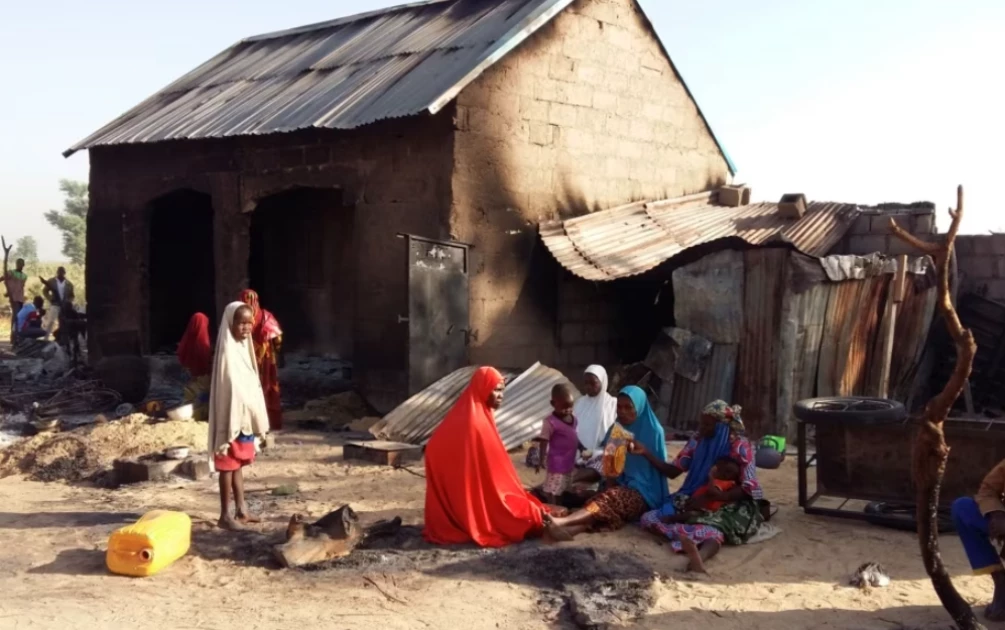
FILE - People sit near a burned house after an attack by suspected members of the Islamist Boko Haram militant group, in Bulabulin village, Nigeria, Nov. 1, 2018.

Audio By Vocalize
Nigerian authorities say a rehabilitation
program for former Boko Haram sect fighters is helping weaken the group's
fighting power. Nearly 600 fighters graduated from the program over the weekend
and tendered a public apology for their actions. Authorities say they will be
reintegrated into society, but experts are warning of possible relapse.
The former Boko Haram fighters dressed in
white simultaneously and echoed an oath of allegiance to Nigeria during a
graduation ceremony Saturday at the De-radicalization, Rehabilitation and
Reintegration (DRR) camp in northern Gombe state.
They're the latest batch of voluntary
defectors from the sect to undergo the six-month physical, mental and
psychosocial rehabilitation program tagged Operation Safe Corridor.
Nigerian authorities started the safe exit
program in July 2016 as a strategy to degrade the fighting power of terror
groups like Boko Haram.
Program coordinator Uche Nnabuihe spoke to
Lagos-based television during the ceremony.
"Based on the therapeutic interventions
these sets of clients have undergone, they're better citizens from when they
initially arrived at the DRR camp and accordingly are certified fit for
graduation and subsequent reintegration to their respective communities,”
Nnabuihe said.
Authorities said three of the graduates are
from Niger and one from Chad, while the rest are Nigerians mostly from Borneo,
Adamawa, Yobe, Zamfara, Niger and Nassarawa states.
The former fighters offered a public apology
and promised to embrace peace in their respective communities.
Security analyst Senator Iroegbu said in
theory the program could help but warns there could be relapses.
"Repentance is a thing of the mind,”
Iroegbu said. “Someone can pretend to have repented because the conditions to
express himself otherwise are not there. This is a controversial program in
many facets. There'll always be resistance to it. What has been the impact? Has
it been able to stop more recruitment?"
Authorities say thousands of repentant Boko
Haram members have been freed since 2019 and that they have become productive
members of society.
But in 2021, Borno State Governor Babagana
Zulum called for a review of the program, saying ex-Boko Haram members spy on
communities and then rejoin the group.
Local communities in Borno, which is the
epicenter of the Boko Haram insurgency, have also questioned the program.
Vivian Bellonwu, founder of Social Action
Nigeria, explained why.
"It appears rehabilitation attention has
mostly been focused on the rebels themselves, whereas the communities also
suffered very far-reaching trauma,” Bellonwu said. “And they are actually
supposed to undergo psychological, psychosocial rehabilitation. And I have not
seen this sufficiently being done for them."
Bellonwu said it will not be easy for the
former fighters to be accepted back into the communities they once harmed.
"These are communities that have been
abducted en masse, Bellonwu said. “Their women have been raped. Some of the
children have watched their parents being slaughtered by these elements. These
kinds of things have a way of having a lasting impact in the minds of the
victims. How do you expect them to forget?"
Boko Haram has been fighting to create an
Islamic caliphate in northern Nigeria since 2009. The violence has led to tens
of thousands of deaths and spilled over into neighboring Niger, Chad and
Cameroon.
On Sunday, Nigerian defense authorities said
some 51,000 Boko Haram militants and their families surrendered to Nigerian
forces between July 2021 and May 2022.
Join the Discussion
Share your perspective with the Citizen Digital community.
No comments yet
This discussion is waiting for your voice. Be the first to share your thoughts!