

OPINION: By-elections duel and why electorates voted as they did
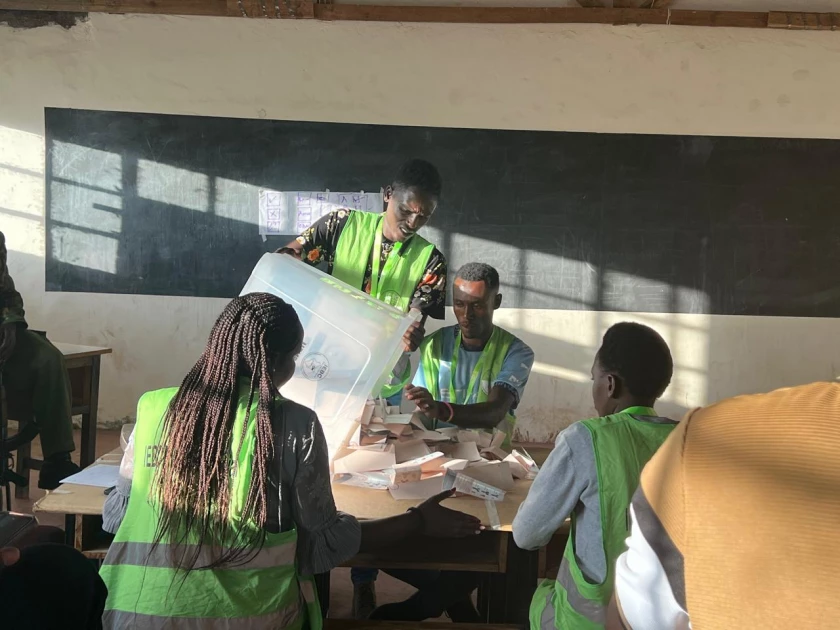
IEBC official place ballot papers on a table ahead of vote counting process on November 27, 2025. Photo:IEBC

Audio By Vocalize
The just-concluded by-elections were not only a ground-level political barometer, but also provided a real-time assessment of the kind of politics that Kenyans believe in and want for themselves.
The November 27, 2025, by-elections took place in the Coastal, Nyanza, Rift Valley, Western, Nairobi, Eastern, Central and Northern Kenya regions. The outcome, therefore, was a true pulsation of the regions.
A pigeonhole view would likely conclude that the by-elections were a duel between the government-inclined candidates against those leaning towards the opposition. Yet more objective and clear lenses cannot fail to see that it was a duel between progressive policy ideals against the retrogressive dull politics of tribal narratives.
United Democratic Alliance (UDA) and Orange Democratic Movement (ODM) outmanoeuvred the opposition candidates on account of their development record and progressive issue-based politics.
Undoubtedly, the people voted against a politics of regional fragmentation, ethnic isolationism and against a politics of vengeance and empty rhetoric that is not conscious of development strides so far, development needs and aspirations.
The by-elections outcome was an outright rejection of nihilistic politics woven around false narratives that seek to tie Kenyans in a web of naysaying, warped doomsday prophesies.
Factually, it cannot pass without notice that Kenyans are consciously angling toward issue-driven politics, and not to be long detained to a politics of invectives, tribal conglomeration and separatism.
Are there vital lessons to be drawn from the conduct of and outcome of the by-elections? Certainly.
Firstly, the outcome of the by-elections is a self-evident affirmation of the broad-based government, a national development and cohesion ideal cemented by President William Ruto, and the now deceased former Prime Minister Raila Odinga.
Secondly, some political actors and opponents, faced with limited ideas, policy alternatives and strategies, resort to violence and intimidation, and conveniently apportion the blame to the security operatives for ‘failing to respond on time’.
The Independent Electoral and Boundaries Commission (IEBC), as newly reconstituted, has demonstrated proper administrative preparedness in running and managing the by-elections, and that public trust remains undented. Nonetheless, IEBC needs to improve on its responsiveness whenever challenges are experienced, such as cases of election offences of any kind, and notable cases of violence around polling stations.
What remains unquestioned and unquestionable is the commitment of IEBC to ensure candidates’ compliance with free and fair elections.
However, much needs to be done to enhance and ensure increased stakeholders’ involvement in dealing with election-related challenges. For instance, the Office of Registrar of Political Parties (ORPP) needs to do much more to ensure compliance by political parties and their supporters with regulations and the political parties' code of conduct.
To turn the spotlight a little to politicians who headlined the by-election campaigns, the field of facts has been harvested, and the true yields are plenty.
For instance, Rigathi Gachagua’s perceived absolute control of Mt. Kenya region and its politics has been debunked. He does not have the keys to all Mt. Kenya villages and hamlets, as he had portrayed himself as the political landlord of the region. In fact, in the absence of hanging on to tribal agency and Kikuyu exceptionalism, Gachagua has nothing to offer Mt. Kenya region.
On the other hand, Deputy President Kithure Kindiki has also confirmed himself as a conscious agent of issue-driven and development-focused politics, able to paint the picture of what the government of President William Ruto is achieving and what the future holds.
Lastly, the ultimate report card is that in the run-up to the 2027 general election, President Ruto’s re-election bid will be assessed based on his development record, and his opponents will have to present fitting alternative policy ideas if at all they intend to scathe his bid.
The writer, Javas Bigambo, is a Governance and Political Communication Specialist based in Nairobi
Leave a Comment