

OPINION: Healing the wounded and settling Malava dust after by-election
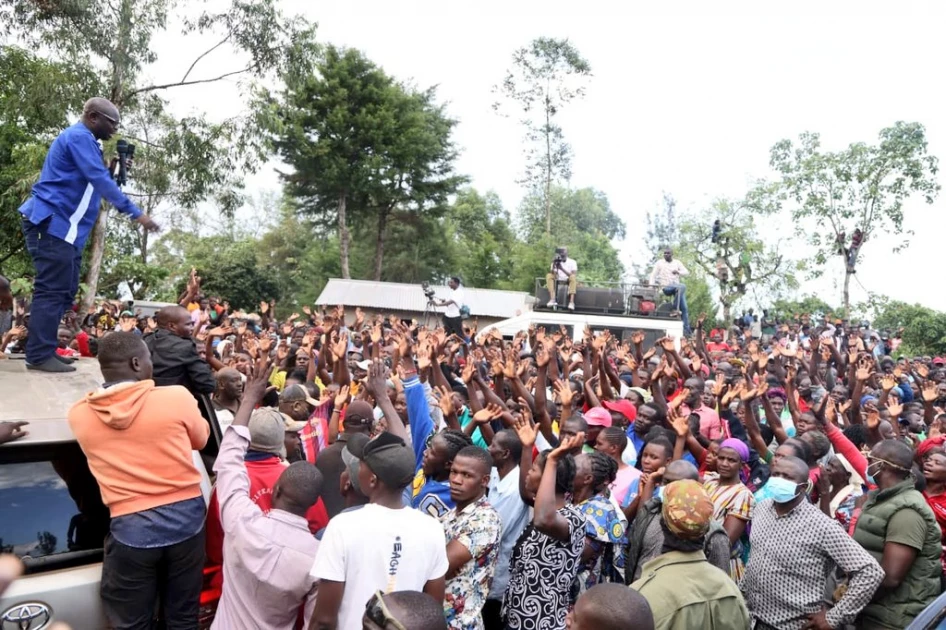
DAP-K candidate in an address to Malava constituents ahead of the November 27 by-elections. Photo: DAP-K/X

Audio By Vocalize
In a functioning democracy, elections allow citizens to choose representatives who can articulate their interests in Parliament. When these interests are effectively consolidated, the Executive is able to translate them into meaningful policies and tangible outcomes.
Just as in a football match, the campaign season should be a fair contest in which candidates present their ideas and persuade voters that they are the most capable among strong competitors. Violence has no place in a credible electoral process.
Whoever emerges victorious ultimately governs on behalf of all citizens, including those who voted for their opponents. Democratic culture requires sportsmanship—the ability of winners and losers to shake hands, accept the verdict of the people, and recommit themselves to the greater project of nation-building. Any form of violence undermines free and fair elections and must be condemned unequivocally.
All candidates have an obligation to conduct themselves with dignity, elevate issues over personality attacks, and reject the use of hired goons. Respect for public institutions is equally vital.
The Office of the President, in particular, symbolizes national unity. While disagreements with the policy positions or personal views of the President are normal in a democracy, the office itself must always be accorded respect.
It is in this spirit that I urge Malava Parliamentary aspirant Seth Panyako to honour the Presidency and refrain from making inflammatory or derogatory remarks about the President or his community. Such rhetoric fuels division and detracts from the constructive political discourse Kenya urgently needs.
As an observer of the Malava by-election, I witnessed a contest marred by violence and decided by a razor-thin margin. I encourage the President to extend a reconciliatory gesture to Panyako—perhaps through a state appointment and compensation for the property he lost.
This should not be interpreted as an admission of wrongdoing but as a meaningful step toward healing and reconciling a wounded community. Such an olive branch would demonstrate leadership that rises above parochial politics and reflect the conduct of a true statesman after a tense and polarizing mini-election.
Kenya’s democracy is still young, and its key institutions remain in a formative phase. They require steady nurturing and responsible stewardship from all Kenyans, irrespective of political affiliation. Across much of the African continent—including Kenya—incumbents typically enjoy significant structural advantages, from control over government machinery to access to state resources.
With a few notable exceptions, such as Zambia and Malawi, unseating a sitting President before the end of an optional two-term cycle remains exceedingly difficult. Even President Moi left power only after term limits were constitutionally entrenched.
Politicians must approach campaigns with this reality in mind. Presidents, like all human beings, can feel provoked when disrespected and may be tempted to use unconventional means to retain power. The opposition must therefore recognize that democracy is not a perfect system; it is an evolving process that demands restraint, responsibility, and respect from all actors.
If Kenya is to deepen its democracy, then political leaders—and the electorate—must embrace civility, uphold the dignity of institutions, and reject the violence and brinkmanship that continue to threaten our democratic progress. Only then can the nation move forward, united and confident in the legitimacy of its political processes.
The writer, Moses Onyango, is the Director of Organic Leadership Agency (OLA).
Leave a Comment