

OPINION: In its final year, Basketball Experience expands the court to every child

Audio By Vocalize
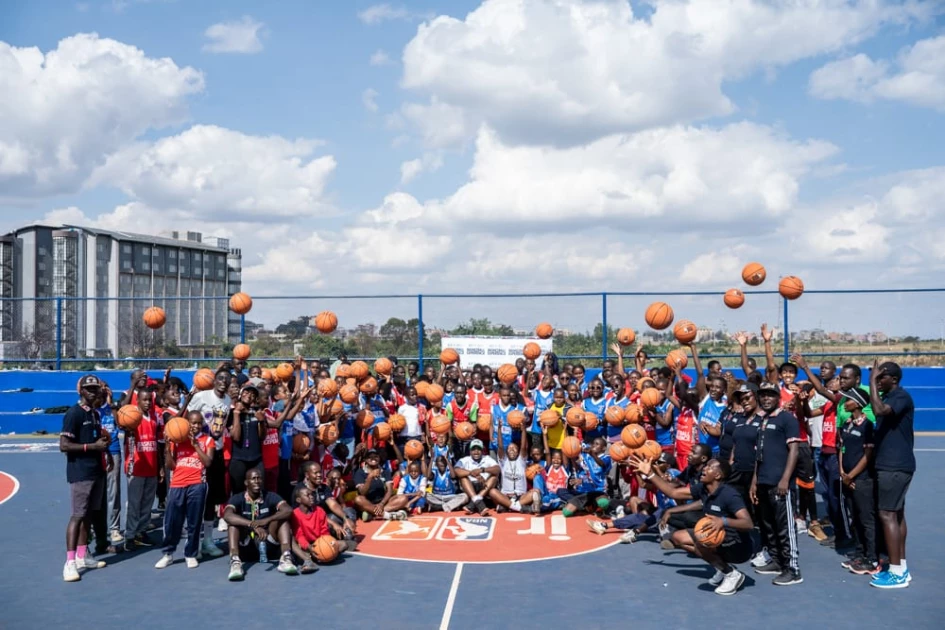
When the Basketball Experience program, an initiative by The
Agence Française de Développement (AFD) in collaboration with NBA Africa,
launched in Kenya in July 2024, its objective was clear: to empower young
people with Life Skills, using basketball as a tool.
From the outset, the program focused on reaching children in
schools with structured coaching and mentorship that extended beyond the court.
Now, as it enters its final year, Basketball Experience is making one of its
most consequential moves by placing inclusion at the center of its legacy.
The new component focuses specifically on children with
hearing, visual, and physical mobility impairments and will be implemented
across Nairobi, Kiambu, Machakos, and Kajiado counties, ensuring that the
program’s impact reaches learners who are often excluded from organized sport.
From the beginning, the program’s strongest impact has been
on life skills development. Children who joined the sessions learned confidence
by stepping onto the court and taking responsibility for their performance.
They also learned discipline by committing to training
schedules and respecting teammates and coaches. Decision making became part of
every drill and match, while critical thinking shaped how they read the game.
As a result, basketball became more than a sport. It became
a practical way for young people to understand themselves, manage peer
influence, and resolve conflict in constructive ways. The reach of the program
reinforces the scale of this impact.
Through the joint AFD
and NBA initiative, Basketball Experience engaged learners in 48 schools across
Nairobi including four special needs schools. By the end of 2025, the programme
had engaged 52,953 children through various activities. Of these, 50,934
learners were reached through school assemblies introducing life-skills themes,
while 1,667 learners participated in structured basketball clinics that
combined technical training with hands-on life-skills learning.
A further 352 learners took part in the national Final Game
event, including 30 children with disabilities, marking an important step
toward inclusive participation. Tens of thousands of children were exposed to
structured basketball training, while 20 local coaches received professional
development.
This approach mattered because it built capacity within
communities. Therefore, even as the program winds down, trained coaches and
established school systems remain in place to continue the work.
Another defining element has been access to mentorship and
high-level expertise. Young people aged 8 to 18 trained under experienced
coaches. For many participants, this exposure was transformative. It showed
them what was possible beyond their immediate environment. Consequently,
aspirations shifted.
Basketball became a gateway to broader conversations about leadership, health, gender equality, and personal responsibility. In other words, the court became a space where ambition was normalized rather than discouraged. The defining development, however, comes in the program’s final phase. This year, Basketball Experience introduced a structured inclusivity component targeting 32 schools serving children with disabilities.
These
include 10 schools for children with visual impairments, 11 for children with
hearing impairments, and 11 for children with mobility impairments. This
expansion is not symbolic. Training methods have been adapted, coaches have
been equipped with inclusive techniques, and sessions have been redesigned to
ensure meaningful participation for every child across Nairobi, Kiambu,
Machakos and Kajiado counties. An example of this can be seen in how drills
rely on sound cues, tactile guidance, or modified movement patterns depending
on participants’ needs.
As might be expected, the impact has been immediate.
Children who are often excluded from sports programs are now active
participants, learning teamwork, building confidence, and developing a sense of
belonging. Furthermore, their peers are learning inclusion in practice rather
than theory, which strengthens empathy and cooperation across the group.
This is reflected in regular clinic participation, where
1,990 learners were engaged more intensively, including 1,032 boys without
disabilities, 862 girls without disabilities, and 96 children with disabilities
who joined general activities. This inclusivity focus also sends a broader
message to schools and communities.
Inclusion is not an extra feature to be added later. It is a
core principle that improves outcomes for everyone. By integrating children of
all abilities into its final year, the program has demonstrated how sports
initiatives can be both ambitious and equitable.
Similarly, it has shown that ending a program does not mean
slowing its vision. It can mean sharpening it. As Basketball Experience moves
through its final year, its legacy is already taking shape, even as the work
continues.
Kenya stands alongside Morocco, Nigeria, and Senegal as
countries that have implemented the initiative at scale, and the months ahead
will feature a full calendar of activities that will further test and
demonstrate the program’s impact. Therefore, this is not a closing chapter but
a period to watch closely.
While participation numbers tell part of the story, the
deeper outcomes are unfolding in real time, visible in young people who
communicate better, make more confident decisions, and carry a stronger sense
of self-worth.
Finally, when the last sessions conclude and the equipment is packed away, the impact will continue. Skills learned on the court will travel into classrooms, homes, and future workplaces. Therefore, while the program may be ending, its influence is far from over. In expanding the court to include every child, Basketball Experience has ensured that its final year will be remembered as its most defining one.
Peter Martey Addo is the Deputy Director, Agence Française
de Développement (AFD). Dlamini Baleseng is the Marketing Partnerships
Management and Business Development Lead, NBA Africa.
Leave a Comment