

OPINION: Protecting children at the crossroads - Grade 10 transition in Kenya’s ASAL counties
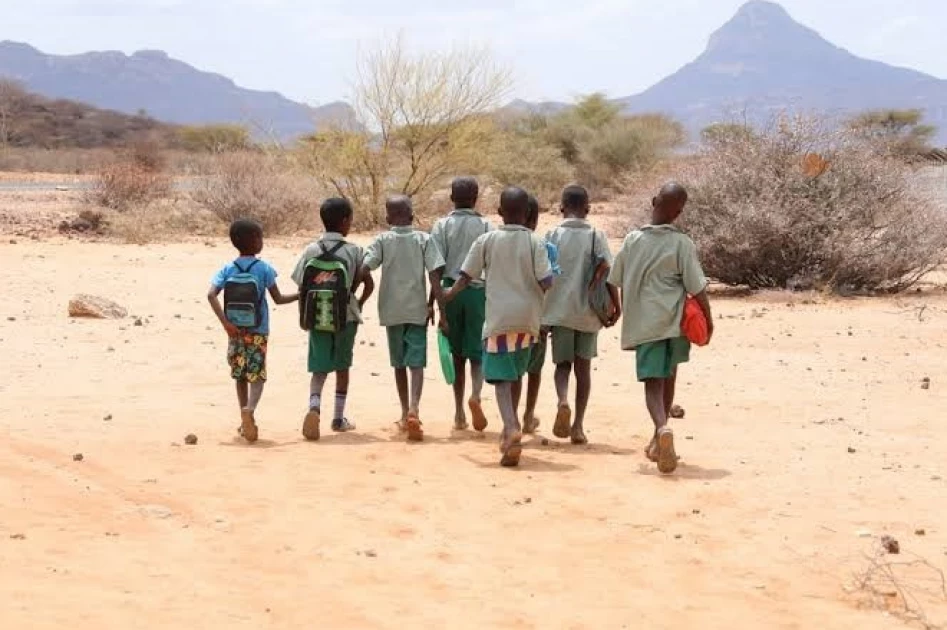
School-going children in Marsabit. PHOTO | COURTESY

Audio By Vocalize

As Kenya advances implementation of the Competency Based
Curriculum (CBC), the transition into Grade 10 marks a defining milestone in a
child’s educational journey. For learners in drought affected Arid and Semi-Arid
Lands (ASAL) counties, however, this transition is unfolding amid a deepening
humanitarian crisis. In these regions, the Grade 10 transition is not merely an
education reform milestone but a child protection emergency.
According to the latest National Disaster Management Authority
(NDMA) assessments, 18 counties are currently classified as most severely
affected by drought: Turkana, Marsabit, Mandera, Wajir, Garissa, Isiolo,
Samburu, Tana River, Baringo, Laikipia, West Pokot, Kitui, Makueni, Kajiado,
Narok, Kilifi, Lamu and Kwale. These counties face prolonged rainfall deficits,
collapsing livelihoods, food insecurity and acute water shortages — conditions
that place children at heightened risk.
Collectively, these counties are home to more than 12 million
people, approximately six million of whom are children. Current assessments
indicate that over 2.8 million people require humanitarian assistance,
including about 1.4 million children facing hunger, malnutrition, disrupted
education and escalating protection risks.
ASAL counties account for nearly 89 per cent of Kenya’s land
mass and host roughly 36 per cent of the national population. Livelihoods in
these areas are predominantly pastoralist or rain fed agricultural, leaving
households highly vulnerable to climate shocks. As drought erodes income and
food access, children are often the first to bear the consequences.
Child protection assessments show that nearly 30 per cent of
households in affected counties report at least one child aged 5 to 17 years
not attending school, largely due to poverty, migration and increased domestic
responsibilities. For adolescents expected to transition into Grade 10, these
pressures intensify sharply.
Families grappling with livestock losses, reduced incomes and
rising food prices struggle to meet education related costs such as uniforms,
transport and learning materials. As a result, children are pushed into harmful
coping mechanisms. Boys increasingly engage in prolonged herding, farm work and
casual labour, often under unsafe conditions. Girls face heightened risks of
domestic labour, early marriage, sexual exploitation and transactional sex, all
closely linked to school dropout and non-transition to senior secondary
education.
Beyond access to education, drought has significantly escalated
protection risks. Migration in search of pasture and water disrupts schooling
and separates children from caregivers, exposing them to neglect and abuse.
Girls in affected counties account for a disproportionate share of reported
early marriages and teenage pregnancies, trends that directly undermine
transition and completion rates. Children with disabilities face even greater
exclusion due to limited mobility, inadequate resources and inaccessible school
infrastructure.
The psychosocial toll on adolescents is equally severe.
Learners approaching Grade 10 are navigating a sensitive developmental stage
even under stable conditions. In affected counties, many shoulder excessive
domestic responsibilities, witness family distress and endure chronic hunger
and uncertainty. Yet access to guidance, counselling and structured
psychosocial support remains limited in many ASAL schools.
School feeding programmes continue to play a vital protective
role. In many of the affected counties, consistent provision of school meals
has stabilised attendance, improved concentration and reduced hunger related
absenteeism, particularly for learners transitioning into Grade 10. The
Ministry of Education, in collaboration with the State Department for Special
Programmes, deserves commendation for sustaining these interventions in some of
the country’s most challenging environments.
From the perspective of the Ministry of Gender, Culture and
Children Services, through the State Department for Children Services, the
Grade 10 transition must be treated as a critical child protection intervention
point. The State Department is implementing targeted support in day secondary
schools within the worst affected counties, focusing on learners at risk of
dropping out.
These interventions include provision of dignity kits,
scholastic materials and food items to complement the school feeding programme.
During field visits, mentorship initiatives are also promoted to strengthen
resilience and inspire learners navigating adversity. Counties supported so far
include Kitui and Samburu, with planned scale up to Garissa, Wajir, Mandera,
Makueni, Marsabit, Meru, Elgeyo Marakwet, Kilifi and Kwale in February and
March 2026.
This moment calls for a coordinated, child centred national
response. We must strengthen school feeding and nutrition programmes, expand
cash transfers and social protection for vulnerable households, provide
targeted bursaries and fee waivers, invest in water, sanitation and hygiene
infrastructure in schools, deploy trained guidance counsellors and reinforce
community-based child protection systems anchored in county governments.
Government cannot and should not act alone. Safeguarding
children during the Grade 10 transition is a shared national responsibility.
Development partners, civil society organisations, faith-based institutions,
the private sector, county governments and communities must work alongside
Government through coordinated financing, technical support, outreach and
service delivery. Together, we can mitigate the impact of drought, keep
children in school and protect them from harm.
Kenya must recognise drought not only as a climate challenge
but as a social, educational and child protection emergency. Safeguarding the
Grade 10 transition is inseparable from safeguarding children’s dignity, safety
and future.
If we act decisively, this transition can become a moment of
protection and possibility rather than exclusion and loss. No child should be
denied education or exposed to harm simply because they were born in a drought
affected county.
[The writer is the Principal Secretary, State Department for
Children Services, Ministry of Gender, Culture and Children Services]
Leave a Comment