

OPINION: The future of the built environment in Nairobi’s CBD isn’t uncertain
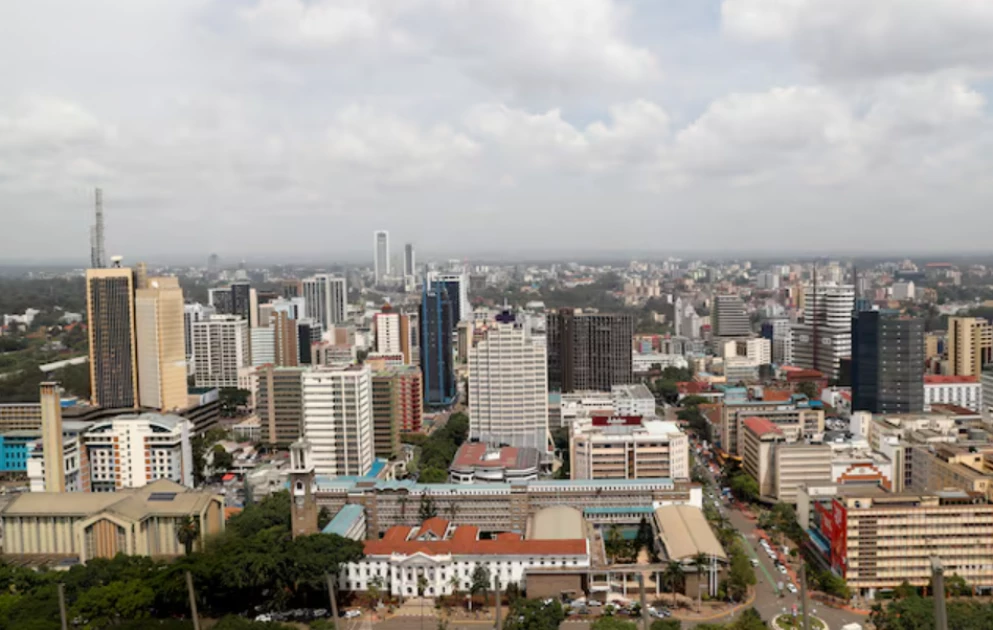
A general view shows the Central Business District in downtown Nairobi, Kenya February 18, 2022. REUTERS/Thomas Mukoya

Audio By Vocalize
Each October, cities around the world pause to reflect on
their urban journeys through World Cities Day, the culmination of UN-Habitat’s
Urban October.
This year’s theme, “People-Centered Smart Cities: Enhancing
Public Spaces for All,” resonates deeply with Nairobi’s evolving identity. At
the heart of this transformation is the Central Business District (CBD), a
symbol of Kenya’s urban aspirations and the nerve centre of our economic,
cultural, and civic life.
Yet, a fundamental question lingers; is Nairobi’s CBD on the
decline?
Nairobi CBD, once a bustling epicenter of commerce and
innovation, has in recent years shown signs of strain. Congestion, ground out
infrastructure, unruly street vending, limited parking, and diminishing public
spaces have contributed to this perception of decline. Admittedly, businesses have
been gradually migrating to newer hubs like Upper Hill, Kilimani, and
Westlands, seeking better connectivity, modern facilities, and security.
At the core of this challenge lies a mismatch between design
and urban needs. Footpaths are narrow or obstructed, midblock crossings are
unsafe, and intersections remain vehicle-dominated. Street lighting, shading,
and pedestrian comfort are inconsistent, while on-street parking often competes
with walkability. Street vending, though economically vital, remains poorly
integrated into the city’s spatial design, resulting in conflict between order
and livelihood.
But decline need not mean decay. It can also signal a moment
for renewal. We still have a chance to rethink what the CBD could be and mean
for the next generation of Nairobians, if we all worked together to restore its
vibrancy.
The 2025 Placemaking Week Nairobi offered a blueprint for this
renewal. Its transformation of Kimathi Street into a vibrant pedestrian
corridor, alive with art, greenery, and cultural activity, showed that small,
change-driven actions can help us reimagine the CBD's future outlook.
To refresh and restore the CBD’s vibrancy, we must anchor
interventions in three key areas: rethinking urban design, encouraging public
participation, and strong and effective policy decisions.
A thriving CBD depends on active mobility which includes
walking, cycling, and public transport. This has to be supported by safe,
well-designed streets. Footpaths must be wide, continuous, and shaded. Cycle
tracks should connect seamlessly to public transport nodes, while intersections
must prioritize pedestrians.
Green infrastructure, modern lighting, and accessible public
toilets are not luxuries, but the real foundations of a livable city. The
success of tactical urbanism interventions like those demonstrated during
Placemaking Week proves that Nairobi can experiment, adapt, and scale solutions
that make streets more human-centered.
Similarly, cities thrive when citizens take ownership, meaning
the future of Nairobi’s CBD must be co-created by all, government, businesses,
and residents. City dwellers should be visible and vocal in public forums,
shaping policies on vending zones, parking, and pedestrian networks. Businesses,
too, must be part of this conversation.
Public–Private Partnerships (PPPs) can drive the
rehabilitation of key streets, introduce managed parking, and fund public art
or urban greening initiatives. The private sector’s innovation, paired with
government policy, can turn public spaces into inclusive economic ecosystems. Collaboration
between real estate developers, authorities, city dwellers and civic groups can
produce safe, inclusive, and economically vibrant environments.
We must advocate and exhort our leaders to prioritize
livability in the city. A sustainable CBD is one that balances commerce,
culture, and community. Our policy making must therefore acknowledge that the CBD
is not merely a commercial zone, but the social and cultural heart of Nairobi,
which needs to be developed and nurtured.
The economic implication is clear: a vibrant CBD fuels a
vibrant economy. Every street redesigned for pedestrians, every building
retrofitted for energy efficiency, and every public space reclaimed for culture
contributes to Nairobi’s global competitiveness.
By embedding green architecture, renewable energy, efficient
waste systems, and inclusive mobility into the built environment, Nairobi can
enhance both B2B competitiveness and B2C vibrancy. Investing in sustainability
is not just good for the planet, it is good business. Walkable, well-lit, and
safe streets attract customers, tenants, and investors. Green buildings reduce
operational costs. Public spaces enhance brand visibility and community trust.
The future of the built environment in Nairobi’s CBD will not
be determined by chance, but by choice. Let us choose to invest in
people-centered design, to bridge policy and practice, and to collaborate
across sectors in reaffirming this shared responsibility. The CBD belongs to
all of us.
Its renewal depends in our collective will to have the courage
to reimagine Nairobi’s heart, not as a congested relic of the past, but as a
model for sustainable urban living. A place where business thrives, people
connect, and the city breathes again.
[The writer is the Head of Property and Facilities
Management, PDM Services.]
Leave a Comment