

OPINION: The most overlooked climate investment is where people live
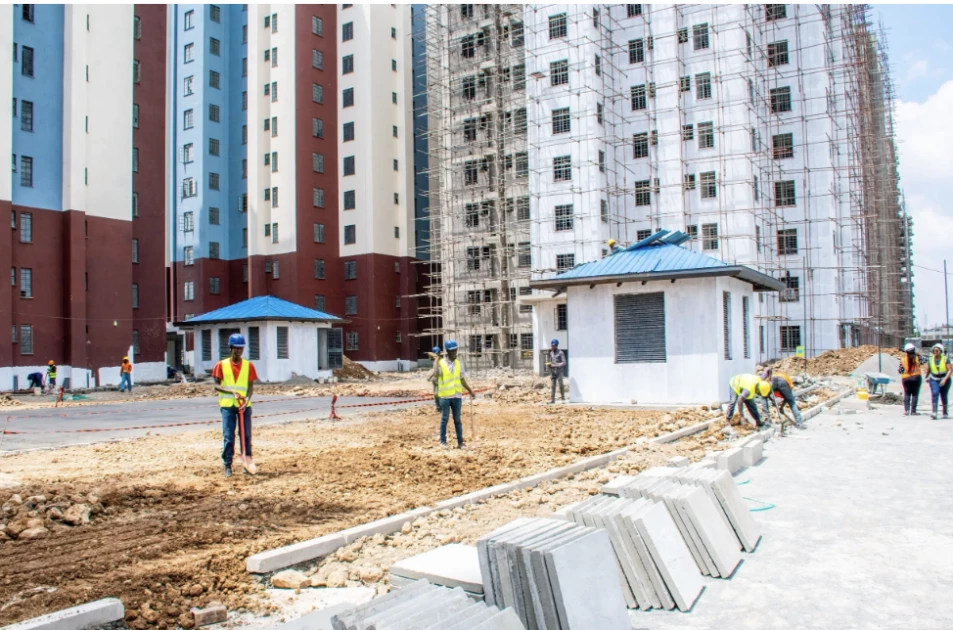
A file image of Mukuru Kwa Njenga Affordable Housing project. Photo: Handout

Audio By Vocalize
Heavy rains have swept across Kenya, flooding roads, overwhelming drainage systems and raising concerns in low-lying neighbourhoods.
The Kenya Meteorological Department has warned that rainfall exceeding 20 millimetres in 24 hours may continue across several regions, increasing the risk of flash floods in some areas. Moments like these highlight how climate change is often experienced in everyday urban life.
Climate change is often discussed in global forums through the language of emissions targets, electric vehicles, carbon credits and net-zero commitments.
These tools are important in the global effort to reduce carbon output. Yet in many rapidly growing cities, especially across the Global South, climate change is experienced less through policy frameworks and more through everyday living conditions.
Across African cities, rapid urban growth has often followed a familiar pattern. Housing estates built in the 1960s and 1970s are ageing, while informal settlements continue to expand as urban populations grow faster than the formal housing supply.
This uneven development has created cities where climate risk, public health challenges and economic inequality are concentrated in the same spaces.
Housing therefore, remains both a social and a climate issue. When floods occur after heavy rainfall, it is frequently the neighbourhoods with limited drainage infrastructure and inadequate housing that experience the greatest damage. In such settings, climate vulnerability intersects with affordability.
Kenya provides a clear example of this dynamic. Despite being located in a region with abundant sunlight, health professionals have reported the re-emergence of rickets, a condition linked to vitamin D deficiency. In many cases, the cause is often structural rather than environmental.
Poorly lit, overcrowded and poorly ventilated housing limits access to natural light and fresh air, turning homes into environments that can negatively affect health.
Urban planning decisions also shape how cities contribute to climate outcomes. The distance between where people live and where they work influences commuting patterns, energy use and household spending. When housing is located far from employment centres, residents often spend more time and money on transport.
Data from the Kenya National Bureau of Statistics (KNBS) illustrates the financial pressure this creates. Housing, water and utilities account for approximately 13.6 per cent of household expenditure in Kenya, while transport accounts for about 9.6 per cent. Combined, these two categories represent nearly a quarter of average household spending.
Transport patterns in Kenyan cities further illustrate how urban design affects both the cost of living and emissions. In Mombasa, data from the Institute for Transportation and Development Policy.
(ITDP Africa) shows that about 45 per cent of residents primarily walk to reach their destinations, while 36 per cent rely on matatus. Only a small proportion of residents use private vehicles.
This mobility pattern reflects a largely low-carbon urban lifestyle, but it is also shaped by necessity rather than infrastructure planning. Many residents still face long and fragmented commutes that require multiple matatu trips.
According to the KNBS Economic Survey 2024, long-distance transport costs increased by about 15 per cent, driven largely by fuel price volatility and inefficient transit routes. These additional costs, sometimes described informally as a “matatu tax,” disproportionately affect lower- and middle-income households.
Urban housing design can help address these challenges. When residential developments are located closer to employment hubs, schools and essential services, commuting distances decrease, reducing both household transport costs and transport-related emissions.
Infrastructure within housing developments also plays a role in climate resilience. Well-planned sewer systems reduce the risk of flooding during heavy rains. Green spaces and permeable ground surfaces allow rainwater to drain more effectively, reducing pressure on urban drainage systems. Trees and open spaces can also lower temperatures in densely built areas.
Housing design can also influence social outcomes. Shared facilities such as sports fields, playgrounds and community spaces can support youth development and social interaction within neighbourhoods. In this way, housing developments can function as residential spaces as well as community environments that contribute to social mobility and wellbeing.
Globally, access to adequate housing remains a major urban challenge. According to
UN-Habitat, nearly 80 percent of cities worldwide are unable to provide affordable housing for even half of their residents.
At the same time, almost three billion people lack access to adequate housing. This indicates an existing structural constraint on sustainable urban growth.
Addressing this gap requires collaboration between governments, private developers and urban planners. Public-private partnerships can help mobilize investment while ensuring developments address broader social and environmental needs.
In Mombasa, the Buxton Point development has adopted one approach to integrating housing with sustainability features. Solar-powered Street lighting in common areas reduces reliance on grid electricity while lowering service costs. Waste management systems encourage waste separation and support circular economy initiatives at the neighbourhood level.
These types of interventions demonstrate how climate action can be embedded in everyday urban systems rather than existing only in policy frameworks. In practice, climate resilience often begins with infrastructure that supports daily life, lighting, sanitation, green space and walkable neighbourhoods.
As global conversations about climate and urban development continue, housing is increasingly being recognized as a central component of resilient cities. Major international forums, including the upcoming World Urban Forum, have emphasized the role of safe and resilient housing in sustainable urban development.
For cities facing rapid population growth, the challenge goes beyond building more housing units. It is also to ensure that housing supports a balanced cost of living. When housing costs consume too much of household income, spending on education, healthcare and other essential needs is often reduced.
Affordable housing, should therefore, be viewed as essential infrastructure rather than a peripheral social programme. Well-designed housing can reduce climate risk, support public health, lower transport emissions and protect household financial stability.
In many cases, the most practical climate investment may simply be ensuring that urban residents have access to safe, affordable and well-planned places to live.
The author, Geoffrey Ongaya, is the General Manager of Buxton Point
Leave a Comment