

OPINION: What if everyone had to plant a tree, or else...
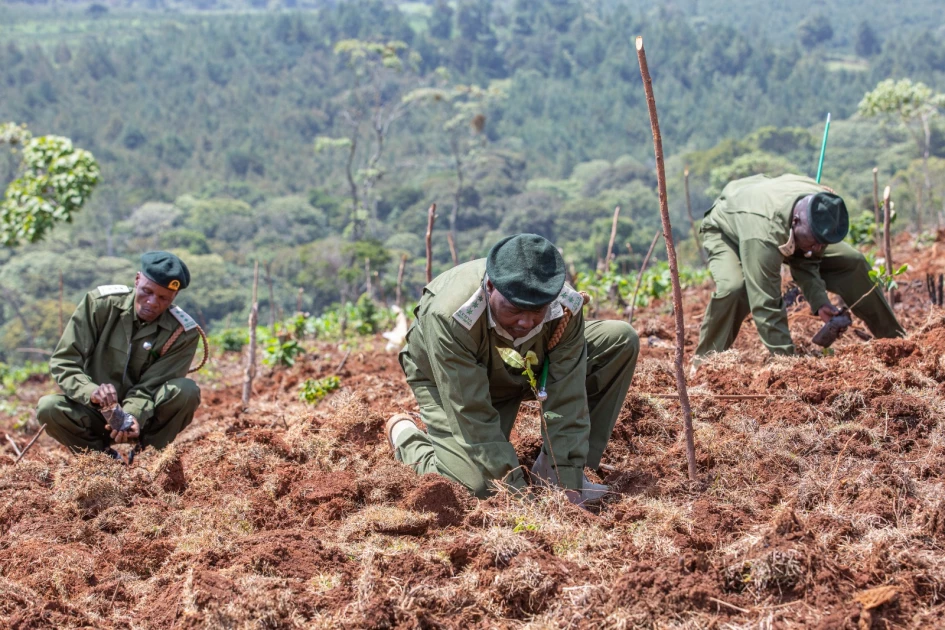
File image of a tree planting exercise at Kaptagat Forest

Audio By Vocalize

Imagine if, like filing taxes or renewing your ID, every Kenyan was
required by law or culture to plant a tree each year. Not as a suggestion. Not
as a campaign. As a basic act of citizenship. You turn 18? Plant a tree. Want a
business permit? Show us your sapling. Run for office? Let’s see your forest.
Wild? Maybe. But is it wilder than pretending we can survive ten more
years of erratic rains, poisoned rivers, and cities that choke more than they
breathe?
We have turned sustainability into an option. A luxury. A side show. But
what if it became a rite of passage? A shared ritual that cuts across tribe,
class, and county?
A boda rider in Kisumu, a banker in Westlands, a mama mboga in
Kitengela, a form-two student in Nyeri; all united by one quiet action:
digging, planting, and watching something grow.
This is not about numbers. We’ve heard the targets. 15 billion trees. 30
percent forest cover. They’re ambitious. But targets don’t water seedlings.
People do. Targets don’t protect trees from being chopped down in December.
Culture does.
Because the truth is this: if we can make birthdays sacred, if we can
make land titles sacred, if we can make voter’s cards sacred, we can make
planting trees sacred too.
And imagine if the tree wasn’t just a tree. What if it came with a
geotag? A name? What if your tree was your legacy? What if it was how we
remembered people? How we dated events? “I planted this when my daughter was
born.” “This one was for my first job.” “That one, after the floods of 2023.”
We are running out of time and topsoil to keep talking about
sustainability like it’s optional. Kenya doesn't need more pledges. It needs
habits. Rituals. A culture that rewards creation as much as we reward
consumption.
And maybe the change won’t start in Parliament. Maybe it’ll start in
plot corners and roadside verges. In church compounds. Behind apartments. In
schoolyards. With influencers turning tree planting into a flex. With schools
ranking pupils not just by grades, but by growth of saplings they planted.
Because planting a tree is not just an environmental act. It is a
declaration: I believe there is a future worth shading.
And if every thumb on social media can go viral, surely every palm can
hold a seedling.
Let’s stop waiting for the government to green the country. Let’s green
it ourselves, one stubborn, sacred tree at a time.
But imagine if this went further, beyond symbolism,
into structural design. What if municipalities issued tree credits just like
tax reliefs? What if schools made environmental restoration part of the
graduation requirement? What if building codes required a living canopy in
every new construction plan?
The tree could become a passport to participation. Not in the form of
punishment, but pride. Imagine awards for the most biodiverse compounds, or tax
breaks for developers who preserve indigenous trees. Let the next celebrity
endorsement be not a billboard, but a native fig tree planted in public memory.
We must transform climate action from a reactionary measure to a
cultural instinct. We must teach our children not just how to read and count,
but how to care for soil, for air,
for water, and for roots. If we fail to embed these values into our collective
identity, no government target, donor pledge, or climate summit will save us.
In a generation’s time, our children will not ask how many policies we
passed. They will ask: Did you try? Did you plant? Did you protect
anything worth inheriting?
Maybe, just maybe, we’d rediscover that sustainability isn’t a department. It’s a duty.
Mr Enock Bii is the founder and CEO of ClimaVox Consult, a Nairobi-based
Pan-African sustainability and strategic communications firm.
Reach him via: ceo@climavox.africa
Leave a Comment