

OPINION: Why EALA’s donkey protection motion matters for East Africa
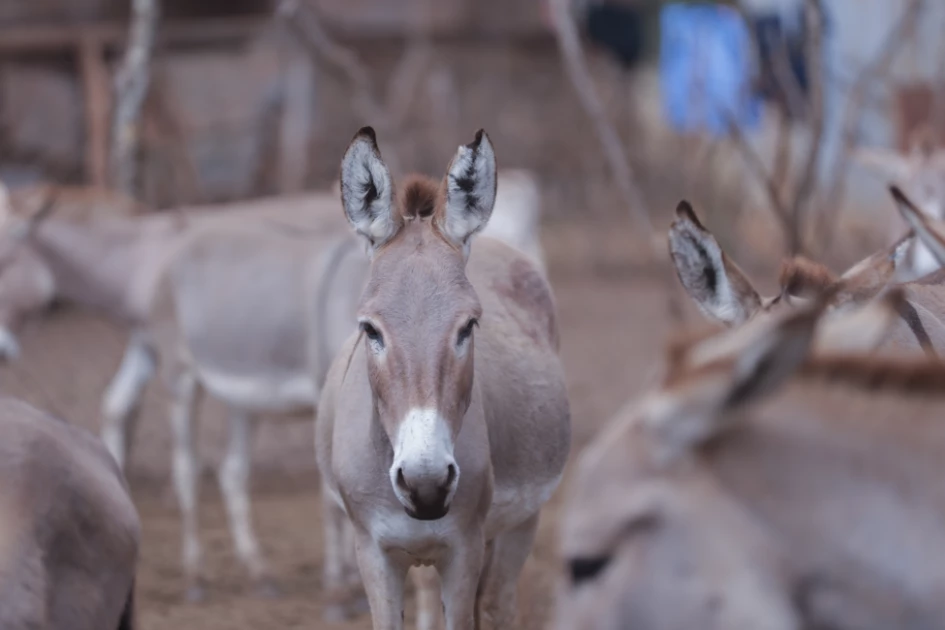
For over a decade, the East African Community has been rapidly and quietly losing one of its most vital assets: the donkey.

Audio By Vocalize
By Dr. Raphael Kinoti
We welcome the East African Legislative Assembly’s
Motion urging the EAC Council of Ministers and Partner States to develop a
regional policy and legal framework for the protection of donkeys and the
regulation of the donkey skin trade, and we commend Uganda’s EALA MP Veronica
Babirye Kadogo for her bold leadership in moving the Motion.
For over a decade, the East African Community has been
rapidly and quietly losing one of its most vital assets: the donkey. An animal
that for centuries has been a lifeline for millions of households, powering
transport, water access, agriculture, and trade. Yet the high and unsustainable
demand for their skins, used in the Chinese traditional medicine ‘Ejiao,’
has pushed these animals to the brink of extinction.
The rising cases of illegal donkey bush slaughter
continue to devastate communities, accompanied by increased donkey theft,
leaving donkey-dependent communities struggling to carry water, farm their
land, and sustain local trade. The crisis is not only economic. Unregulated
slaughter exposes communities to deadly zoonotic diseases, placing human health
at serious risk.
It is in this context that we welcome the East African
Legislative Assembly’s Motion. This policy statement is a recognition that
donkeys are critical socio-economic assets sustaining millions of families
across East Africa. The Resolution builds on prior commitments, including the
2024 high-level executive directives by the AU Heads of State, the 2025 Abidjan
Declaration on Donkeys, and outcomes from the IGAD and Pan-African Donkey
Conferences.
Taking a case study of Kenya, the origin of this
dilemma can be traced back to the donkey hide trade. In 2016, Kenya authorized
the operation of the first donkey slaughterhouse, which later increased to
four, primarily to meet the demand for donkey hides used in making the Chinese
traditional medicine called ‘Ejiao.’ This valuable medicine is processed into
bars, pills, or liquids for various consumable goods and beauty products.
The consequences of this decision have been
staggering. In just three years (2016 to 2019), the four donkey abattoirs in
Nakuru, Baringo, Turkana, and Machakos slaughtered 301,977 of Kenya’s donkey
population.
This accounted for 15.4 percent of the country’s
donkey population, according to the 2019 Kenya Agricultural and Livestock
Research Organization (KALRO) report titled ‘The Status of Donkey Slaughter
for Skin Trade and Its Implications on the Kenyan Economy.’
With the rise of cases of illegal donkey bush
slaughter, Kenya has further lost most of her donkey species. Donkeys are
seasonal breeders, and artificial insemination for donkeys is still not viable,
making the trade in donkey skins unsustainable. According to KALRO, if Kenya
had continued to keep the four slaughter abattoirs operational, we could have
slaughtered the last of our donkey species in 2024.
With the EALA Motion now standing as the official
position of the East African Legislative Assembly, and set to be formally
transmitted to the Council of Ministers and the EAC Secretariat for
consideration and action in accordance with the Treaty for the Establishment of
the East African Community, Partner States should act urgently to develop a
harmonized framework that safeguards livelihoods, halts illegal trade, protects
public health, and ensures the sustainable management of donkey populations.
I am very happy
and proud that Africa has now come of age, and that we are able to clearly
defend our local resources for our people’s livelihoods. I truly congratulate
the East African Legislative Assembly, and particularly the mover of this
Motion, Hon. Veronica Babirye Kadogo.
Brooke East Africa, an equine welfare charity, is
committed and ready to support the implementation of this historic decision in
the push for bettering the welfare of working equines and the communities that
depend on them.
[The writer is an animal welfare advocate and the Regional
Director of Brooke East Africa, an animal welfare charity organisation working
to alleviate the suffering of working equines.]
Leave a Comment