
Opinion: Why Talanta Stadium should honour Kenneth Matiba

Audio By Vocalize
When the late former Prime Minister Raila Amolo Odinga passed away last
October, a well-intentioned proposal quickly surfaced: that the
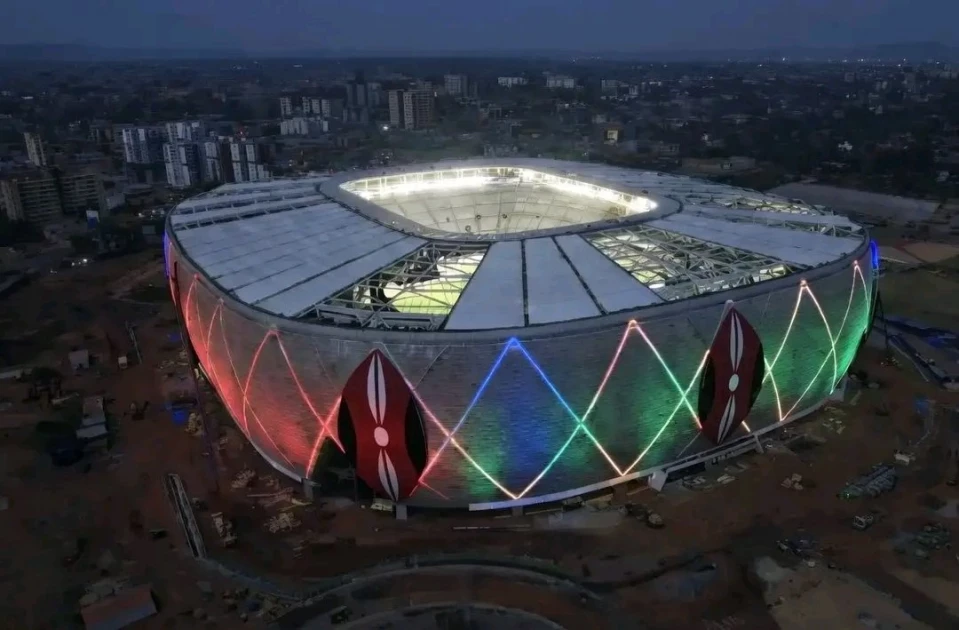
soon-to-be-completed, ultra-modern Talanta Stadium in Nairobi be renamed after
the towering politician —Raila Odinga International Stadium.
The suggestion was rooted in gratitude, in memory, and in the undeniable
truth that the iconic figure in Kenyan politics widely known as
"Baba", was one of Kenya’s most gallant freedom fighters. Few would
contest that he deserves national recognition of the highest order.
Yet history has a way of whispering uncomfortable reminders, and in this case, it urges us to pause.
During the funeral of the late Kenneth Stanley Njindo Matiba the man most
closely associated with the courageous push for the restoration of multiparty
democracy in 1990 a solemn commitment was made.
Former President Uhuru Kenyatta publicly promised to sit down with Raila
Odinga and agree on a meaningful way to honour Matiba’s immense contribution to
Kenya. Sadly, that promise never materialised.
Time has passed, but as the saying goes, better late than never. Ironically,
it was Raila himself who, in his funeral tribute to Matiba, lamented that one
area where justice had not been done to him was in sports.
Matiba’s legacy stretches far beyond the political trenches. Long before he
became a symbol of resistance and sacrifice, he was a passionate sports
administrator and reformer. He served as Chairman of the Kenya Football
Federation between 1974 and 1978, and later, in 1983, was appointed Minister
for Culture and Social Services, then the docket overseeing sports.
At the helm of KFF, Matiba pursued deep, structural reforms with characteristic courage and clarity of vision. His frustration, however, lay in the resistance to his boldest idea: professional football.
In his autobiography, Matiba reflects candidly on this struggle, concluding
with remarkable foresight:
“Although there was a lot of progress made in the management of the game
during my time, I would not be altogether satisfied until professional soccer
was introduced in the country… Unless and until we have professional football
in Africa, we will not make meaningful headway in the game. But the day we go
professional, I believe we will bring the World Cup to Africa without any
difficulties.”
His insistence on professionalism cost him politically within football circles. When the opposition became too entrenched, he chose principle over position and stepped away, convinced that the stand he had taken was right.
When Matiba was appointed to the Cabinet in 1983, The Weekly Review,
then Kenya’s most respected political magazine, offered a glowing assessment of
his credentials and energy. It noted his transformative role at Kenya
Breweries, his reforms at KFF, and his administrative depth shaped by years in
public service and private enterprise.
Above all, the magazine captured Matiba’s defining trait: relentless energy.
It observed that if his work ethic were emulated across Cabinet, the
performance of government itself would be dramatically improved.
In 1992, as Matiba contested the presidency, B.M. Gecaga, then chief of BAT Kenya, paid tribute to Matiba’s rare ability to rise above tribal boundaries. He pointed to Matiba’s stewardship of football a sport deeply associated with specific regions and how, through discipline and professionalism, he unified and elevated it against formidable odds.
-Dreaming the impossible-
Matiba’s belief that Africa could one day host and even win the World Cup was not idle dreaming. It was rooted in systems, standards, and sacrifice.
Today, as East Africa prepares to host the Pamoja AFCON tournament for the
first time, that dream feels closer than ever.
It is within this context that Talanta Stadium presents itself as a rare and
powerful opportunity. Naming it after Kenneth Matiba would be a fitting tribute
to a patriot whose love for sport was both practical and visionary.
Matiba’s passion for sport found its purest expression in mountaineering. In
1986, while still a Cabinet minister, he embarked on a Himalayan expedition not
as a symbolic gesture, but as a serious climber. By then, he had already scaled
Mount Kenya seven times and Mount Kilimanjaro twice, the first time as a
student in 1953.
True to form, he personally sought Kenyan companions for the Himalayas climb, funding the effort himself, despite the scarcity of experienced climbers. The expedition succeeded. Matiba planted the first-ever Kenyan flag in the Himalayas.
Few Kenyans know that Matiba once served as the first indigenous chairman of the Outward Bound Movement in East Africa, an organisation dedicated to leadership development through physical challenge.
With a permanent mountain
school in Loitokitok, it shaped young leaders across Kenya, Tanzania, and
Uganda until the collapse of the original East African Community dealt it a
fatal blow.
That this movement has never been revived in Matiba’s honour remains one of
the quiet tragedies of our collective amnesia.
There is a profound link between sport and leadership in Matiba’s worldview.
One cannot help but imagine that had he ascended to the presidency, the bar for
leadership would have been set extraordinarily high.
One can even picture a New Year beginning not with speeches, but with a
mandatory climb up Mount Kenya for senior government officials led by the President himself.
The idea sounds audacious, even impractical, yet deeply symbolic. It would
have captured global attention, drawn tourists, and embodied servant leadership
in its purest form.
A story shared at Matiba’s funeral by Major (Rtd) Marsden Madoka illustrates this spirit vividly. While climbing Kilimanjaro, Matiba developed altitude sickness.
Madoka advised retreat. Matiba refused, dismissing the suggestion and urging Madoka to descend alone if he wished. That was Matiba relentless, uncompromising, and indomitable.
Perhaps the most telling tribute came in 1988, when Kenyan athletes preparing for the Seoul Olympics invited Matiba to address them at their farewell ceremony at Kasarani despite the fact that he had left the sports ministry two years earlier.
They
remembered his leadership. He encouraged them, rewarded them personally, and
rallied others to contribute.
It is painful to reflect that the sporting fraternity did not fully honour
him when he most needed recognition. Yet perhaps this moment offers a final
window.
Rather than naming Talanta Stadium after Raila Odinga, why not honour him by
renaming Uhuru Park a space inseparable from Kenya’s democratic journey?
It is where Kibaki Tosha was declared, where the 2010 Constitution
was promulgated, and where the People’s President was sworn in. Raila was also
a champion of environmental protection.
Let Talanta Stadium, a home of sport, bear the name of Kenneth Matiba the
great sportsman and patriot whom Raila himself so profoundly acknowledged.
Join the Discussion
Share your perspective with the Citizen Digital community.
No comments yet
This discussion is waiting for your voice. Be the first to share your thoughts!