
Parts of Somalia face famine risk for first time since 2022
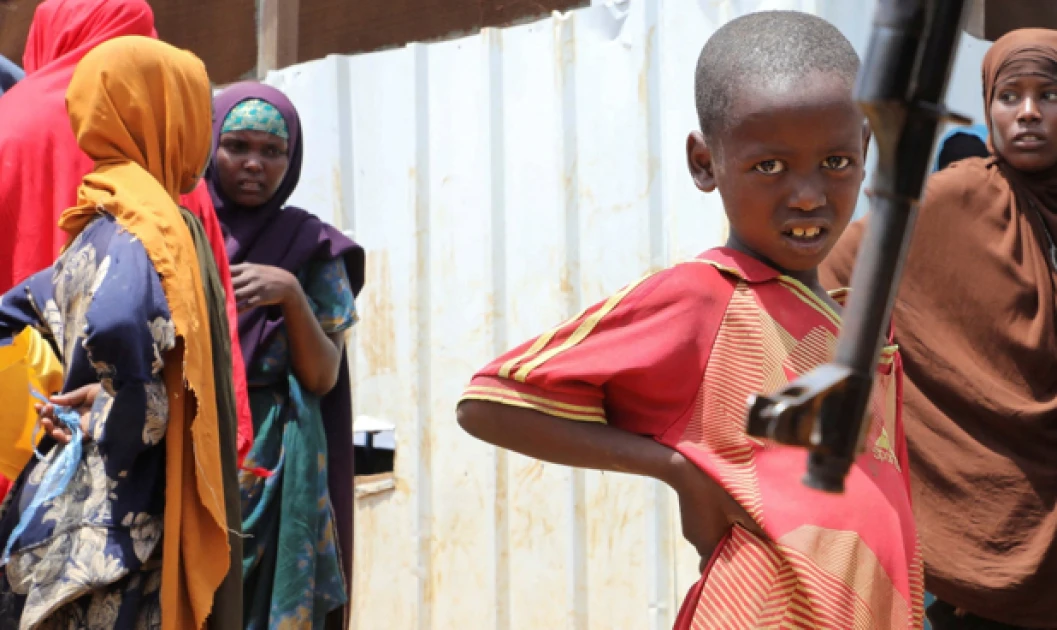
A security officer stands guard as the United Nations (UN) Under-Secretary-General for Humanitarian Affairs and Emergency Relief Coordinator Tom Fletcher (not in the picture) visits a camp for the internally displaced Somali people. PHOTO | REUTERS

Audio By Vocalize
Areas of southern Somalia are at risk of famine, two global
food security monitors said on Thursday, with one district reaching a level of
hunger not seen in the country since 2022.
One of the world's most food-insecure nations because of
frequent drought, conflict and poverty, Somalia last experienced famine in
2011, when around 250,000 people died, and came close in 2017 and 2022.
This time, global cuts to foreign aid and the impacts of the
U.S.-Israeli war on Iran are complicating efforts to
respond to food shortages caused by multiple failed rain seasons and ongoing insecurity.
More than 37% of young children in the Burhakaba District of
southern Somalia's Bay Region, which is estimated to have a population of
around 200,000, suffer from acute malnutrition, according to a report by the
U.N.-backed Integrated Food Security Phase Classification.
"The IPC analysis found Burhakaba District to be at
risk of Famine under a plausible worst-case scenario of failing Gu (season)
rains, soaring food prices and below expected delivery of humanitarian food
security assistance," the report said.
Famine occurs when at least 20% of households in an area
face an extreme lack of food, at least 30% of children suffer from acute
malnutrition, and two out of every 10,000 people are dying each day because of
hunger.
FEWS NET, a U.S.-funded monitor focused on providing early
warning about hunger crises, said in
a statement that its most likely scenario assumed seasonal rains would improve
enough to temporarily stabilise conditions but that a credible alternative
scenario involved poor rains leading to another failed harvest.
"If the harvest fails, Famine could rapidly emerge in
these areas," FEWS NET spokesperson Hannah Button said, referring to
agro-pastoral areas in the Bay, Bakool and Gedo Regions of southern Somalia.
The number of Somalis facing crisis levels of food
insecurity or worse was
about 6 million, according to the IPC report. That is lower than the 6.5
million reported in February but worse than the projected 5.5 million for this
period due to worse-than-expected rains.
Global cuts to foreign aid, including by the United States,
have substantially reduced support to Somalia.
The IPC
report said humanitarian assistance for the April-June period had increased
significantly, but still covered only 12% of those facing crisis levels of food
insecurity or worse.
Overall humanitarian funding for Somalia in 2026 stands at
$160 million and was $531 million last year, according to U.N. data, compared
to $2.38 billion during the last drought in 2022.
"Somalia risks becoming one of the first major crises
of the 'post-aid era': a place where needs are growing, survival is becoming
more expensive, and the response is shrinking," said Daud Jiran, the
Somalia country director at Mercy Corps, an aid group.
Join the Discussion
Share your perspective with the Citizen Digital community.
No comments yet
This discussion is waiting for your voice. Be the first to share your thoughts!