
Possible Iran-US deal: What we know
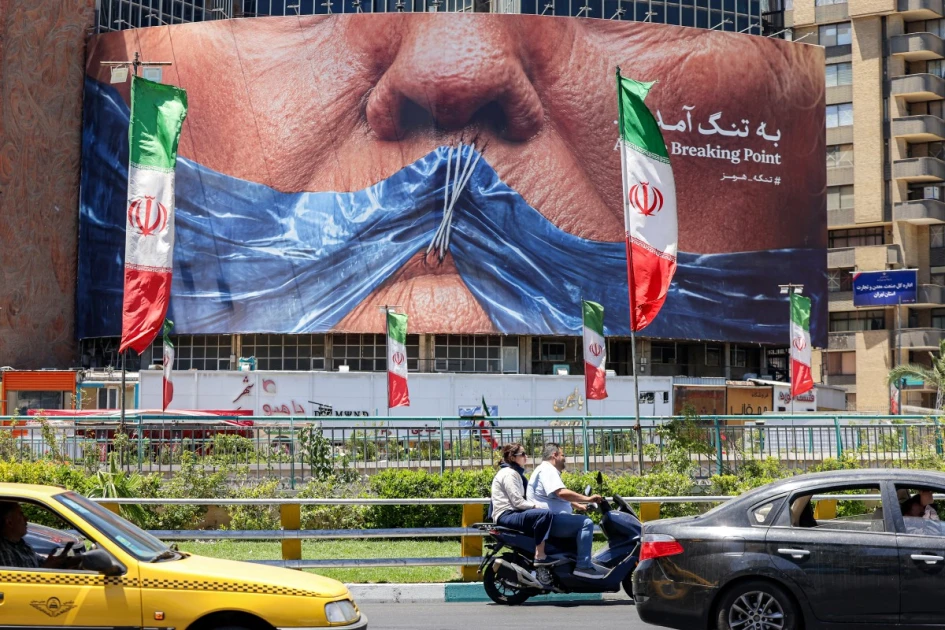
Motorists drive their vehicles past a political billboard featuring US President Donald Trump and the Strait of Hormuz along Valiasr Square in Tehran on May 26, 2026.

Audio By Vocalize
Iran and the United States appeared to be cautiously edging
toward a deal to end the war that erupted in late February, despite deep
mistrust and a brief military flare-up this week.
Diplomatic exchanges continued even after Tehran accused
Washington of violating the ceasefire in place since April, after the US said
it launched strikes in southern Iran targeting missile sites and mine-laying
boats.
On Wednesday, Iranian state television published what it
described as a draft outline of a potential memorandum of understanding between
the two sides, while stressing that the text was "still not
finalised".
Washington swiftly rejected the report as a "complete
fabrication".
Here are the latest reported details surrounding a possible
agreement.
Iran has said it is finalising a 14-point framework
agreement with the United States prioritising an end to the war "on all
fronts", including Lebanon, where Israel has stepped up its attacks on
Iran-backed Hezbollah.
Iranian officials have publicly disclosed only broad
outlines of the proposal, with further details emerging through Iranian media
reports.
On Monday, senior Iranian negotiators travelled to Qatar for
talks that state media described as part of the diplomatic process.
The Tasnim news agency reported that Tehran was seeking the
release of around $24 billion in frozen Iranian assets abroad as part of the
agreement.
Around $12 billion "should be made available at the
start of the announcement of the memorandum", Tasnim said.
There is no official figure for Iran's frozen overseas
assets, though Iranian media outlets have recently estimated the total at
between $100 billion and $123 billion.
Iran has maintained tight control over the Strait of Hormuz,
a vital global energy shipping route, since the outbreak of the war, while the
United States has imposed a naval blockade on Iranian ports since April 13.
Iranian foreign ministry spokesman Esmaeil Baqaei confirmed
that the draft framework included provisions related to ending the US blockade
and arrangements governing the Strait of Hormuz.
Iranian state television reported on Wednesday, citing the
draft text, that Washington had "committed itself to lifting" the
blockade.
In return, Iran would allow commercial shipping through
Hormuz to resume "within one month" under conditions similar to those
before the war.
The report added that Iran would continue to manage shipping
lanes, inspect vessels and impose service fees, but its commitments would not
apply to military ships.
Tehran had not agreed "to unconditionally reopen the
strait", according to the report.
The White House denied the Iranian reports, adding,
"nobody should believe what Iranian state media is putting out,"
without specifying which details it objected to.
Baqaei said details related to Iran's nuclear programme
-- a major sticking point for Washington -- would be deferred to a later
stage after agreement on the framework.
Iranian media reported that nuclear-related issues,
including enrichment levels and the fate of Iran's highly enriched uranium
stockpile, would be negotiated during a 60-day period following the signing of
the memorandum.
US President Donald Trump said in a social media post that
he expected Iran to surrender its enriched uranium to the United States for
destruction, or destroy it inside Iran under international supervision.
"The nuclear fuel will either be immediately turned
over to the United States to be brought home and destroyed or, preferably, in
conjunction and coordination with the Islamic Republic of Iran, destroyed in
place or at another acceptable location," Trump wrote.
One of Tehran's key demands has been guarantees that
Washington would honour any agreement, particularly after the United States
withdrew from the 2015 nuclear deal during Trump's first term in office.
Under the reported draft framework, Tehran and Washington
would enter a 60-day negotiation period after agreeing on the memorandum,
though the exact topics for discussion were not specified.
"If negotiations reach a final agreement during the
60-day period, this agreement is expected to be approved by a binding
resolution of the United Nations Security Council," the draft said.
"This is the highest level of guarantee recognised in
international law," the report added.
Join the Discussion
Share your perspective with the Citizen Digital community.
No comments yet
This discussion is waiting for your voice. Be the first to share your thoughts!