
Redefining style and space: The rise of plus-size thrift experience
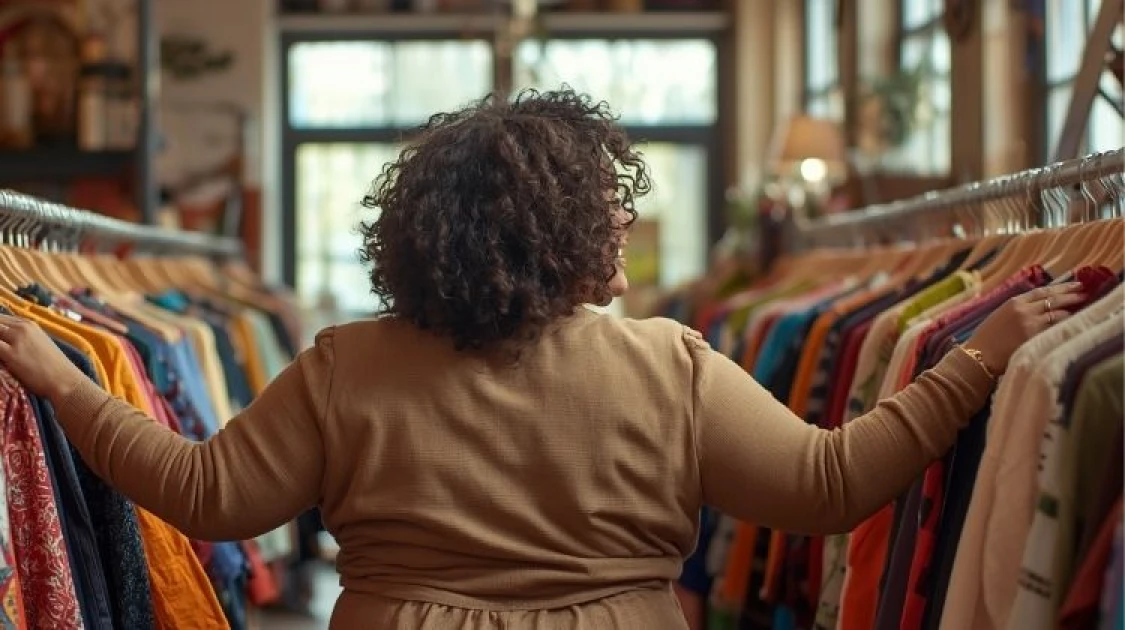
An AI generated image of a woman going through clothes at a thrift store

Audio By Vocalize
For the longest time, thrifting as a plus-size person meant compromise. You’d walk into a store, hopeful, only to be met with a tiny corner if any dedicated to larger sizes. And even then, the options felt disconnected from reality.
More often than not, what was available leaned heavily toward maternity wear as if the only way to imagine a bigger body was through pregnancy.
It sent an unspoken message: this body is temporary, this body is transitional, this body is not meant to simply exist and be styled.
On the rare occasion you did find something trendy, it was usually in the same limited size range you’d see on models sizes that didn’t reflect the diversity of real bodies. Style, it seemed, had a ceiling, and plus-size bodies were expected to adjust, shrink, or simply miss out.
But that narrative is shifting. Today, thrift culture is expanding, and with it, the visibility of plus-size fashion lovers who are redefining what it means to show up, take space, and look good doing it.
Social media has played a huge role in this transformation. Platforms like TikTok and Instagram have amplified the voices of plus-size creators who document their thrift finds, styling tips, and shopping experiences. What was once hidden is now celebrated.
These creators are not just influencing fashion they’re challenging an industry that has historically sidelined them. Through reels, hauls, and try-ons, they’re proving that style is not dictated by size, but by confidence and creativity.
At the same time, the rise of conversations around body image has brought another layer to this evolution the growing hype around weight loss. Everywhere you look, there’s a new “before and after,” a new diet trend, a new body standard being pushed.
While there’s nothing wrong with wanting to feel healthier or more comfortable in your body, the narrative often becomes one-dimensional, ignoring a crucial truth: not every body is meant to be the same.
For many people, body size is influenced by genetics, medical conditions, or simply natural body composition.
It’s not always about discipline, diet, or effort. Yet, society often reduces it to a matter of choice, creating pressure and misunderstanding.
The assumption that being plus-size is something that needs to be “fixed” is not only outdated it’s harmful.
At the same time, being smaller, petite, or naturally slim does not automatically mean someone is healthy. They struggle to gain weight, who feel overlooked in conversations about body image, and who are constantly told to “just eat more” as if their bodies are simple to control.
Health exists across a spectrum, and the pressure to conform whether to lose weight or gain it reflects the same underlying issue: a society uncomfortable with bodies that exist outside of its preferred standard.
There’s also the financial reality that often goes unspoken: plus-size clothing is expensive. In mainstream retail, extended sizes often come with a higher price tag. Ask why, and the common response is that plus-size clothes use more material.
While that may be partially true, it doesn’t fully justify the consistent markup especially when access to affordable fashion is already limited.
This is one of the reasons thrifting has become such an important space for plus-size shoppers. It offers not just affordability, but possibility.
This is where the cultural shift becomes even more interesting. There’s a noticeable change in language and perception.
From Kanono to thick.It reflects how society often repackages the same body into something more “acceptable” once it fits a certain aesthetic.
The word “thick” is celebrated, desired even, while “fat” is still stigmatized, even when they can describe similar bodies.
Still, there’s work to be done. Inclusivity shouldn’t be a trend; it should be the standard. Thrift stores, like the broader fashion industry, need to consistently cater to diverse body types not just when it’s popular, but always.
Join the Discussion
Share your perspective with the Citizen Digital community.
No comments yet
This discussion is waiting for your voice. Be the first to share your thoughts!