

Religious leaders urged to break silence on adolescent sexual health
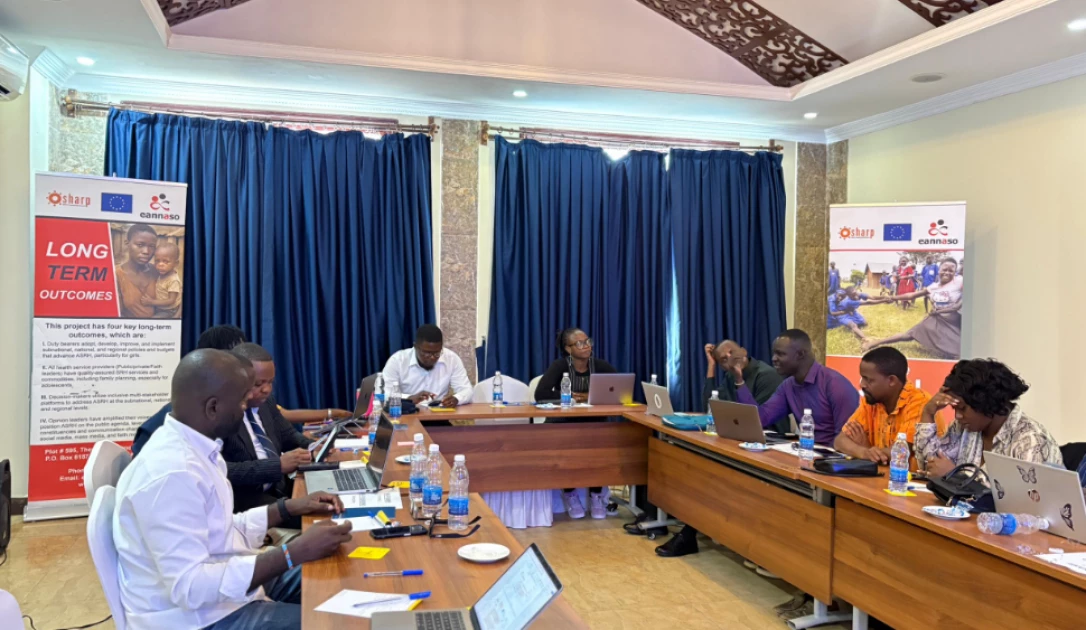
The regional training for journalist champions under the Solutions for Supporting Healthy Adolescents and Rights Protection (SHARP) programme hosted by the Eastern Africa National Networks of AIDS and Health Service Organizations (EANNASO) in Zanzibar.

Audio By Vocalize
Human rights defenders across East Africa are calling on religious leaders to openly address adolescent sexual health and rights, arguing that silence within faith institutions is placing young people at risk.
Advocates say many religious leaders avoid discussions on
sexual health due to fear of appearing unspiritual or encouraging immorality.
However, experts warn that this hesitation has contributed to
misinformation, risky behavior, and the continued spread of HIV and other
sexually transmitted infections among young people.
Speaking during a regional training for journalist champions
under the Solutions for Supporting Healthy Adolescents and Rights Protection
(SHARP) programme hosted by the Eastern Africa National Networks of AIDS and
Health Service Organizations (EANNASO) in Zanzibar, the experts emphasized that
sexual health education should no longer be treated as a taboo within churches
and other faith spaces.
“The church should start holding regular teachings with
adolescents on matters of sexual health and rights without fear,” noted Dennis
Bwana, a health rights advocate.
Human rights organizations argue that faith leaders are
uniquely positioned to influence young people’s decisions and values.
By remaining silent on issues such as puberty, consent, HIV prevention, and safe sex, churches risk leaving adolescents to seek information from unreliable or harmful sources. “Sexual health education does not erode faith — it protects lives,” said Lizzis Otaye of EANNASO.
Evidence from Kenya and Tanzania shows that open
government-led conversations on condom access and sexual health have improved
awareness and encouraged safer sexual practices among youth.
Advocates say this progress demonstrates that honest dialogue
works — and that faith institutions should be part of that conversation.
“Our young people are not waiting for lessons on radio or
television,” noted Ronald Malaba during the training.
“They are on digital platforms, where information is fast and
unfiltered. If churches are absent from these spaces, young people will learn
elsewhere — sometimes at great cost.”
Stakeholders and policymakers are now being challenged to
collaborate with religious institutions to develop culturally sensitive,
faith-informed approaches to adolescent sexual health education. Such
partnerships, advocates argue, could help curb new HIV infections while respecting
moral and spiritual values.
Human rights defenders insist that embracing diversity,
science, and compassion is not a betrayal of faith but an expression of it.
“As leaders entrusted with guiding society, religious
institutions must choose whether silence or knowledge will define the future of
our youth,” Bwana added.
Leave a Comment