Sakaja proposes penalties for blocking access to water meters
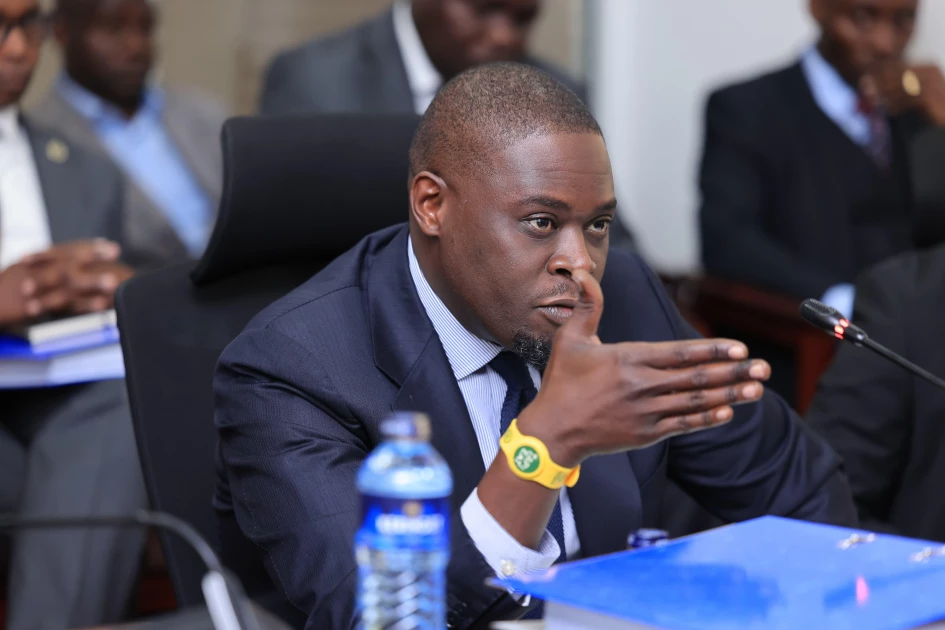
Nairobi Governor Johnson Sakaja.

Audio By Vocalize
Nairobi Governor Johnson Sakaja has issued
a stern response to concerns by senators over unread water meters in the city,
even as Nairobi City Water and Sewerage Company (NCWSC) celebrates a record revenue
performance.
Appearing before the Senate County Public
Investment and Special Funds Committee on Monday, Sakaja acknowledged
challenges in accessing water meters in some residential premises, largely due
to homeowners being away or domestic workers being instructed to deny access to
meter readers.
“Following the inability to access meters
in some premises due to residents not being at home, Nairobi Water is
sensitizing customers on self-meter reading through SMS reminders. Further, the
utility is relocating meters outside gates for easier access,” Sakaja
explained.
In a hard-hitting proposal, the Governor
suggested penalties for residents who intentionally block access to water
meters.
“We are also considering rolling out smart
meters. While the normal meter costs Ksh.3,500, the smart one goes for Ksh.15,000,
so we are factoring in the cost implications,” he continued.
Nairobi Water Managing Director Eng.
Nahashon Muguna, who also appeared before the Senate committee, admitted that
while the majority of Nairobi’s 250,000 meters are read monthly, roughly 15,000
meters remain problematic due to restricted access.
“Our teams do their best, but in some premises, staff are denied
access, sometimes by house helps following strict instructions. That is why we
are moving meters outside gates,” Muguna explained.
Muguna backed the idea of smart meters,
terming them more accurate but admitted the high cost remains a hurdle.
“Smart meters are five times more expensive
than ordinary ones. Rolling them out city-wide requires a phased approach,” he
said.
On the issue of unpaid bills, Muguna
disclosed that some of the highest defaulters are public institutions.
“We have accounts that were billed but
remain unpaid throughout the year, particularly public schools. Disconnections
in such areas are not encouraged, but it’s an issue we must resolve,” Muguna
stated.
Senators Edwin Sifuna (Nairobi), Eddy
Oketch, and committee chair Godfrey Osotsi raised concerns about possible
revenue leakages arising from unread meters and outstanding bills.
“Our concern is that Nairobi County,
through Nairobi Water, must seal all revenue loopholes. Unread meters and
uncollected bills pose a risk to the city’s financial health,” Osotsi warned.
The concerns come despite Nairobi Water
reporting its highest-ever revenue, collecting Ksh.11.7 billion in the
2024/2025 financial year. This marks a remarkable growth from Ksh.10.75
billion in 2023/2024 and Ksh.9.46 billion in 2022/2023.
Before Governor Sakaja’s reforms in 2022,
the utility’s revenue had stagnated at Ksh.8 billion annually.
Under the current administration, collections have climbed steadily, signaling
improved efficiency and tighter revenue management.
Leave a Comment