

Somalia's human rights minister says new constitution brings stronger rights awareness
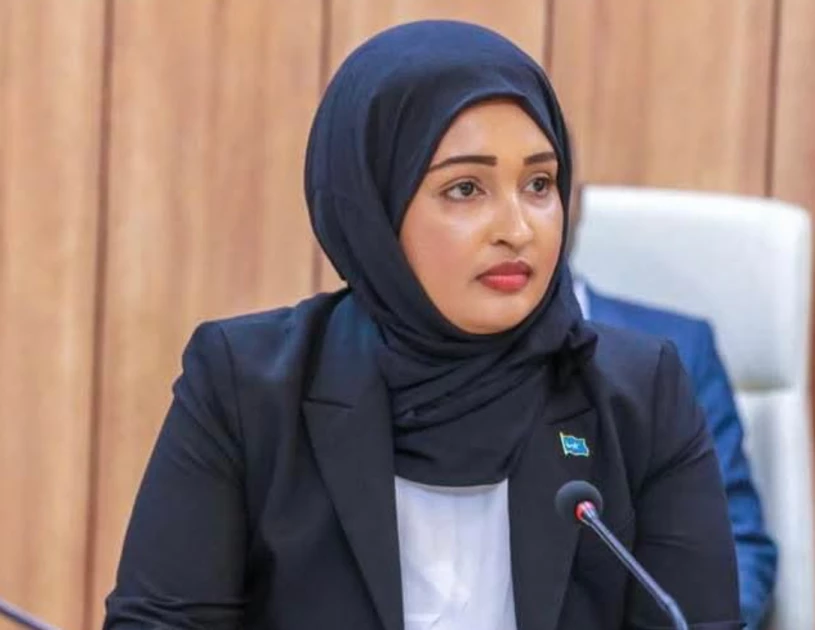
Somalia's Minister of Family and Human Rights Khadija Al-Makhzoumi. | COURTESY

Audio By Vocalize
Khadija Al-Makhzoumi has expressed heartfelt gratitude to lawmakers and government institutions following the completion of Somalia’s Provisional Constitution, saying the milestone will empower citizens to better understand their rights and uphold the rule of law.
Speaking after the
decisive vote in the Federal Parliament of Somalia, the Minister of Family and
Human Rights thanked Members of Parliament for what she described as unity of
purpose in delivering a constitutional framework that belongs to the Somali people.
“Today is a great
day for Somalia. We have fulfilled a constitutional duty that we swore to carry
out, completing and finalizing the Provisional Constitution,” she said, noting
that the process reflects years of commitment to rebuilding state institutions.
Al-Makhzoumi
emphasised that beyond its legal and political significance, the Constitution
will serve as a civic compass for citizens.
By clearly
outlining fundamental freedoms, responsibilities and the structure of
government, she said, the document provides an accessible foundation for
Somalis to understand their rights, and equally, their obligations under the
law.
“As a member of
the Council of Ministers and as a Member of Parliament, it is an honor to see
my role in Somalia’s state-building process reflected in this achievement,” she
added, describing the vote as proof that collaboration among institutions can
yield historic results.
The revised
Constitution is expected to strengthen safeguards for women, children and
vulnerable communities, a key mandate of the Ministry of Family and Human
Rights.
It also clarifies
the separation of powers, reinforces accountability mechanisms and defines
federal–member state relations, helping to reduce legal ambiguities that have
occasionally strained governance.
Analysts say the
completion of the constitutional review marks a turning point in Somalia’s
recovery from decades of conflict and institutional fragility.
Since the adoption
of the transitional charter in 2012, the country has steadily worked toward
refining its governance framework to reflect federal realities and democratic
aspirations.
For ordinary
citizens, the impact could be transformative. A clear and finalised
Constitution not only protects freedoms such as equality before the law and due
process, but also strengthens public confidence in state institutions.
Greater rights
awareness, combined with consistent enforcement of the law, is expected to
nurture a culture of accountability and civic responsibility.
With the Parliamentary
process concluded, focus now shifts to implementation and public education.
For Al-Makhzoumi,
the real success of the Constitution will be measured not only in legislative
chambers, but in communities across Somalia, where informed citizens can
confidently claim their rights while remaining steadfast custodians of the law.
Leave a Comment