
Sri Lanka flies monks over drought-hit areas to seek divine help
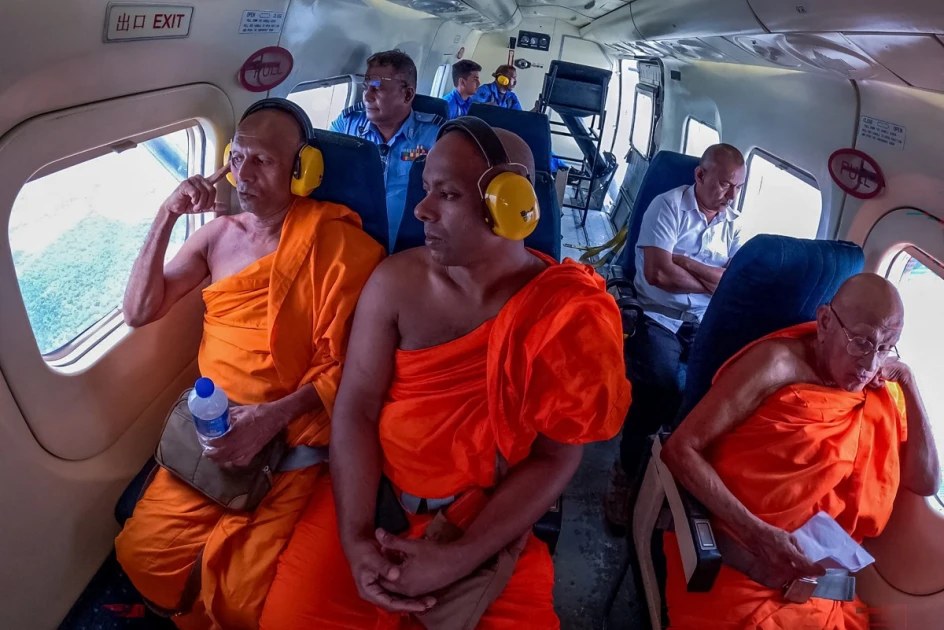
This handout photograph released by the Sri Lanka Air Force on September 20, 2026 shows Buddhist monks aboard a Y-12 aircraft chanting prayers over the island's drought-hit areas seeking rain.

Audio By Vocalize
Sri Lanka's meteorology department has warned that both severe drought and heavy rains are likely to hit Sri Lanka during the rest of the year as the largely agricultural nation faces its "worst" El Nino climate phenomenon.
Three saffron-robed monks chanted prayers during Saturday evening's flight invoking the gods to end the drought, while airmen sprinkled holy water from five-litre (1.3-gallon) plastic bottles.
An air force official told AFP the monks were flown aboard a Y-12 fixed-wing aircraft.
"As the nation faces the hardships of dry weather, the... aircraft takes to the skies in a symbolic act of compassion," the air force said in a social media post.
While the monks prayed for rain over drought-hit areas, the meteorology department has also warned of heavy downpours over other parts of the South Asian nation of 22 million people.
At Yala, Sri Lanka's largest wildlife park in the southeast, two out of six blocks have been closed to visitors because of the drought.
Weather experts have forecast that those dry conditions will give way to heavy rain from late September until December.
However, those rains are then expected to be followed by a prolonged drought early next year.
Water reservoirs, including those supplying hydroelectric power stations, are at around 50 percent capacity, according to officials.
That compares well with previous years, but there are concerns if drought conditions intensify next year as forecast.
Sri Lanka's electricity utility has also held religious services in the past to appease the gods when hydro reservoirs run low.
El Nino is a natural climate variation that warms surface temperatures in the central and eastern equatorial Pacific Ocean, bringing worldwide changes in wind and rain patterns.
Human-caused climate change can amplify its effects because a warmer ocean and atmosphere make more energy and moisture available to feed extreme weather events.
Join the Discussion
Share your perspective with the Citizen Digital community.
No comments yet
This discussion is waiting for your voice. Be the first to share your thoughts!