

This International Women’s Day, Let’s Put Care at the Heart of Work – Oxfam Kenya
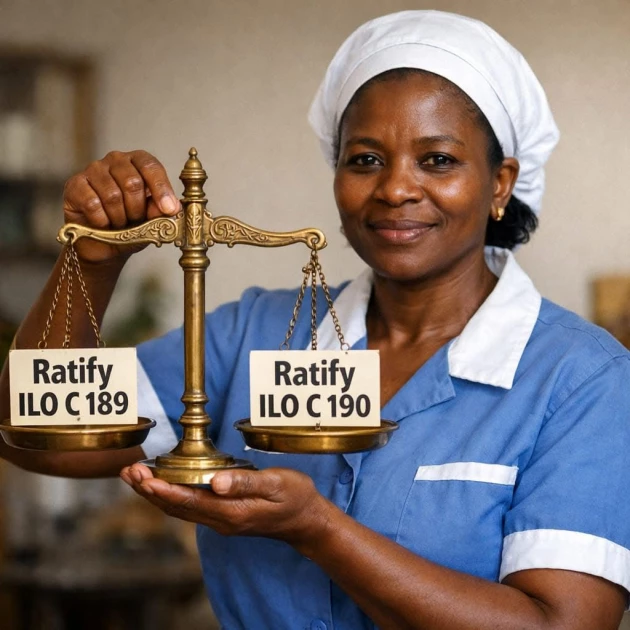
The IWD 2026 Campaign is themed – Give to Gain. Let’s give care work some thought – and good consideration. [Photo/Courtesy]

Audio By Vocalize
As Kenya joins the rest of the world in marking International Women’s Day (IWD) 2026, millions of women involved in care work; childcare, cooking, cleaning, fetching water, caring for the elderly or sick, and other domestic responsibilities, merit a good nod.
Many
women daily toil and moil for long hours – dispensing care work at home just to
keep the social and economic needle moving.
The
IWD 2026 Campaign is themed – Give to Gain. Let’s give care work some thought –
and good consideration.
Much
of care work is unpaid and disproportionately carried by women, significantly
limiting their time, productivity and opportunities for economic growth.
On average, according to studies, women spend 4 times more hours daily on domestic duties compared to men. This impacts women’s economic participation and independence.
Globally, women discharge 76% of unpaid care work, according to a United Nations Development Programme (UNDP) report published in April 2025.

Although
this information underscores the significant role women play in supporting
economic advancements in the society – unpaid work has not received appropriate
recognition and support – disproportionately impacting women’s economic
opportunities. Equality just never seems to arrive.
Existing imbalance
Efforts
to address this imbalance are underway.
Oxfam
Kenya is actively engaging several companies with a view to strengthening economic participation and advancement
of women’s rights.
“Oxfam Kenya is walking this journey with the private
sector to help them establish a care responsive workplace - from assessing the
care status in their enterprises, to provision of technical support through
training of owners, managers, employees and suppliers. We are looking at 360°
care transformation at every stage of supply chain or even a business operation.”
Says Purity Jebor, Gender Justice and Women’s Rights – Programme Officer at Oxfam Kenya.
“It is projected that if care is mainstreamed, enterprises
will not have the worries of absenteeism that affects outputs as employees will
be able to receive the same care service and attention from their employers.” Notes
Purity.
Since women constitute the majority in the informal sector, organisations should equally match the needs that women will require in workplaces.
Cherubet Foods Limited – which emerged
as a deliberate response to that imbalance – is one of the companies that have been working
closely with Oxfam on this matter.
“Cherubet
is more than a food enterprise. It adopts a care-centered business model and recognizes
unpaid care work. It reduces it where possible. It redistributes opportunity
along the value chain. It strengthens women at home, on farms, and in
factories. It contributes to national food security while advancing women’s
economic participation.” Says Mary
Cherop Cheptap-Cheress, the Founder and Chief Executive Officer of Cherubet
Foods.
According to Mary, this is not simply a
household issue.
“This
is an economic issue. Unpaid care and domestic work limits women’s time,
energy, earning potential, and leadership progression — exactly the imbalance
that Oxfam continues to challenge,” says Mary whose company was ‘borne out of the
quiet exhaustion of a working woman trying to do it all’.
“We
asked ourselves: what if nutritious, culturally relevant, affordable meals
could be made accessible in a way that gives women back time? What if food
solutions could reduce the hours spent planning, cooking, and worrying —
without compromising family health? What if care could be recognized, reduced,
and redistributed through enterprise?”
“On this International Women’s Day, we are proud to stand with Oxfam in demonstrating that care is not a private issue; it is a public, economic, and structural one,” says Mary.

Aphia
Cheruiyot, Operations Manager at Cherubet Foods Company Limited, has benefitted
immensely from a care responsive workplace.
As
Operations Manager, she coordinates staff schedules, supports employee
wellbeing, and ensures a safe working environment.
“Cherubet
Foods supports me by providing a supportive work environment, flexible
coordination of duties, and strong teamwork among staff. In my role as
Operations Manager, this helps reduce the stress of balancing work and domestic
responsibilities and allows me to focus on managing operations effectively
while promoting gender equality and supporting women in the workplace.” Says
Aphia.
Oxfam
is also working with Nyota Limited – an Agro-processor that converts fresh
vegetables into value-added frozen vegetables and canned products in
partnership with women smallholder farmers across rural Kenya.
“Nyota
is committed to fostering a supportive and inclusive workplace by promoting
open communication, maintaining a respectful working environment and ensuring
equal opportunities for professional growth for all employees,” says its
Founder and CEO Florence Mogere.
“Our
two-shift system provides flexibility, thus helping our women employees who
often balance work and family responsibilities to manage their professional
duties alongside their personal commitments more effectively, while feeling
valued and supported within the organization.”
Joan,
who works at Nyota as Head of Production, says care work can be very involving
and draining.
“At
home, I prepare meals for my family, shop, clean the house, help my child with
his homework and take care of the family when they are ill,” says Joan.
She
notes that the care work she does at home takes up a lot of time.
Just
last week, Joan’s son suffered a hot water burn accident – forcing her to take
a few days off work to care for him.
“My
employer is quite understanding and supportive. Whenever I have an emergency at
home, she allows me time to attend to it. This support helps me manage both my
work and family responsibilities.” Says, Joan.
Investing in a care responsive workplace improves
productivity and general output.
Care is invisible. It is difficult to tell. It could
be mental care. It could be childcare. It could be just being away from work
for some hours, or it could just be that section where one can just go to reset
their thinking after work.
But how can workplaces
recognize, reduce and redistribute care responsibilities, particularly through
policies such as childcare support, flexible work arrangements and workplace
care services?
“In a recent Oxfam’s assessment report on rapid care
analysis on private sector, almost 85% of employees mentioned the difficulties
they had to go through when they had their babies – so much many have to think
through if having another baby was a choice.”
“One even mentioned that in her previous employment, the
moment the manager discovered that she was expectant; her contract was
terminated when she proceeded on leave.” Says Purity.
There
is no gainsaying the fact that a wide range of policy improvements need to be
put in place to address care work concerns.
“For starters, Human Resource policies should include
care leaves. This is a basic human labour right. In-terms of maternity leave,
how long is the maternity leave? What point do they go for maternity leave? Do
we even have care for expectant female employees when going for their pre-natal
healthcare? do organisations consider that as a duty of care or a medical
leave?” Asks Purity.
“In addition, HR policies should have a clause on post
maternity induction. This will give women employees ample time to catch up on
what has been happening or even where they can start picking up progressively,
instead of expecting them to dive into their project or even responsibilities
at work right away.
Childcare room or even a childcare section is also
another important indicator in recognising care in workplaces.
This is not too much to ask. Women require a conducive
space for them to be comfortable to express out milk, store it and take it home
for the baby when she’s at work.
There is also a need for workplaces to consider
extending flexible working hours for such women, within the HR requirements. This
sounds basic but would help the mother to be more productive at work.
Kenya is at the peak of enacting a policy on care work. The government has recognised that care is not just a social need, but equally an economic necessity. The latest findings by the Kenya National Bureau of Statistics (KNBS) on economic value of unpaid and paid care work of 2023; the care sector contributes an average 24.1% of Kenya ‘s GDP, indicating that unpaid and paid care-work is important to the economy.

This national care policy has outlined and identified key
policy priority areas, and how care can be mainstreamed to harness its huge
potential.
Oxfam is committed to continuing partnering with
non-state actors and private sector in providing evidence on the status of care
and how it can also be addressed to empower women, and to recognise other
invisible, yet important elements that shape women’s productivity at work.
Research works at Oxfam have facilitated the development
of training guides, especially for working with the private sector, looking at
how private sector can mainstream care, development of case scenarios that
demonstrate the economic dividends that the private sector can adopt to
mainstream care in their operations.
“We want engagements that provide scientific data that
inform policies that influence behaviour change, not only at the organisation,
but also household level.” Says Purity.
Oxfam continues to invest heavily in addressing social
norms for a productive care policy, and to ensure meaningful change is realized,
and operations revised to be more care responsive.
Oxfam is committed to continuing working with the
private sector as the biggest employer in the country on how care can increase
their sales, productivity; and how to sustain the gains and celebrate gender
transformation at our workplaces.
Leave a Comment