
TSC seeks Ksh.423B in 2026/27 budget as it plans to recruit 16,000 teachers
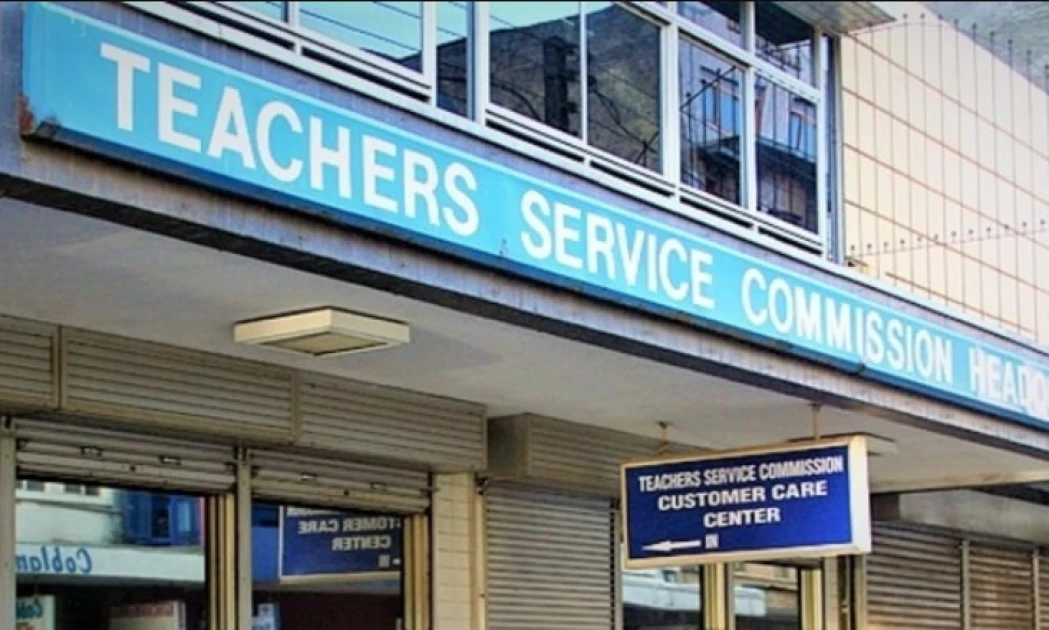
The Teachers Service Commission (TSC) headquarters.

Audio By Vocalize
The Teachers Service Commission (TSC) has proposed a budget of Ksh.422.95 billion for the 2026/2027 financial year, up from the Ksh.387.2 billion approved in the current financial year, as it seeks to address a lingering teacher shortage and implement a raft of reforms in the public education sector.
The commission presented its Budget Policy Statement to the
Parliamentary Departmental Committee on Education on February 18, 2026,
outlining its spending priorities and performance targets for the medium-term
period.
Central to the commission's plans is the recruitment of 16,000
additional teachers for Junior and Senior Schools (JSS) at a cost of Ksh.1.9
billion.
This move, it said, is aimed at bridging a teacher deficit
that has long hampered the delivery of quality education in public schools.
TSC notes that it has already recruited 100,000 teachers over
the past three financial years under the government's Bottom-Up Economic
Transformative Agenda (BETA), which had targeted the elimination of a
116,000-teacher shortage within two financial years.
Beyond recruitment, the commission plans to convert 20,000
intern teachers to permanent and pensionable terms at a cost of Ksh.7.2
billion, a move expected to bring greater job security and stability to
thousands of educators serving in public institutions.
Teachers at various levels across primary, secondary, and
teacher training colleges will also benefit from a Ksh.2 billion promotion
exercise.
In line with the government's competency-based curriculum
reforms, TSC has also proposed Ksh.1.5 billion for the retooling of teachers on
new learning areas in Junior and Senior Schools.
The commission further plans to train 70,000 teachers annually
on Competency-Based Curriculum across the Medium Term Expenditure Framework (MTEF)
period, while thousands more will be trained under the School-Based Teacher
Support System (SBTSS) and through live-streaming of lessons under World
Bank-funded programmes.
The second phase of the 2025-2029 Collective Bargaining
Agreement (CBA) is also set for implementation at a cost of Ksh.8.4 billion,
which will have direct implications on teacher salaries and allowances.
On the health front, the commission confirmed that it has
enrolled all of its more than 400,000 teachers and approximately one million
dependants onto the Social Health Authority (SHA) universal health coverage
platform.
However, TSC warned that the proposed allocation of Ksh.16.5
billion for medical cover may fall short given the growing number of teachers
who have recently been recruited into the service.
The commission also flagged several unfunded priorities that
risk undermining its service delivery.
These include group life, personal accident, and Work Injury
Benefits Act (WIBA) insurance covers for teachers, estimated at Ksh.5.3
billion, for which no provision has been made in the current ceilings.
Additionally, TSC said it requires an extra Ksh.700 million to
adequately facilitate its decentralized offices at the regional, county, and
sub-county levels, noting that the funds allocated have not matched
infrastructure and operational needs.
A significant policy shift on the horizon involves the
introduction of a new administrative structure for Junior Schools.
TSC intends to appoint Heads of Institutions and their
Deputies for these schools, a change that will require additional budget for
personnel emoluments, capacity building, teacher recruitment, and possibly the
expansion of school infrastructure.
The commission acknowledged that the move could face
resistance from teacher unions and existing primary school heads.
TSC also raised the issue of teachers serving in acting
capacities in higher administrative positions without an acting allowance,
noting that no funds have been allocated to compensate them despite a clear
policy framework in place since 2017.
Join the Discussion
Share your perspective with the Citizen Digital community.
No comments yet
This discussion is waiting for your voice. Be the first to share your thoughts!