

U.N. Increases Aid in Myanmar as More Displaced by Coup’s Consequences
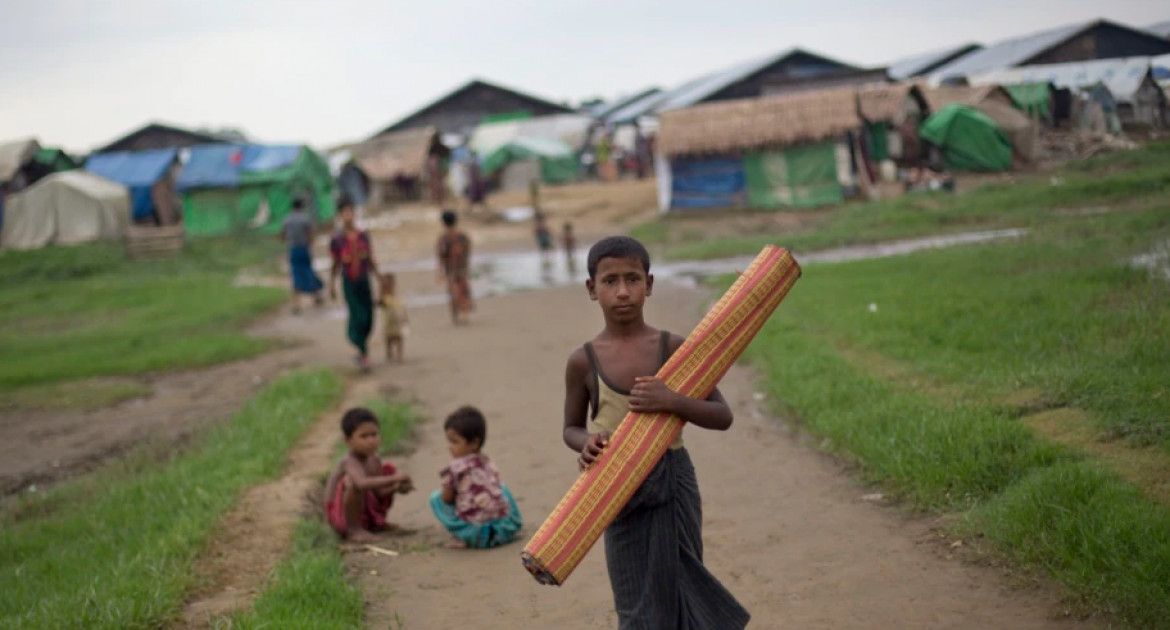
A Rohingya boy walks with a mat as children play in the background at Dar Paing camp for Muslim refugees in north of Sittwe, western Rakhine State, Myanmar. PHOTO/COURTESY: VOA

Audio By Vocalize
U.N.
and other aid agencies are increasing humanitarian operations in Myanmar in
response to a growing displacement crisis there.
The
number of displaced people in Myanmar has doubled to more than 800,000 since
the military junta seized power from the democratically elected government a
year ago.
The
U.N. Refugee Agency says that number is likely to rise in the coming weeks and
months, as fighting and armed conflict intensify across the country.
UNHCR
spokesman Matthew Saltmarsh says his agency and others are increasing emergency
aid in support of as many of the displaced as possible. He says they are living
under precarious conditions and have pressing humanitarian needs.
“Humanitarian
access in many parts of Myanmar remains restricted due to insecurity,
roadblocks and challenges in obtaining access approvals," Saltmarsh said.
"As a result, host communities and local responders continue to play a
leading role in assisting displaced populations—demonstrating solidarity with
each other by donating what they can.”
UNHCR
says hostility toward the military has grown since the coup and volence is
spreading across the country. U.N. human rights chief Michelle Bachelet warns
Myanmar is heading toward civil war and the escalating conflict is threatening
regional stability.
The
UNHCR has a somewhat fluid, ambiguous relationship with the country's post-coup
leader, Min Aung Hlaing. Saltmarsh stresses the need for organizations to have
access, to get aid into the country, and to ensure that humanitarian staff can
work freely.
That
access comes and goes, he says. For example, agencies have only been able to
reach some 600,000 stateless Rohingya Muslims in Rakhine state sporadically. He
adds development projects for their benefit have been relatively rare.
“Life
there is extremely difficult. The questions about pathways to citizenship still
remain. This is a stateless population," Saltmarsh said. "As of
course you all know, there is almost a million Rohingya who fled several years
ago across the border to Bangladesh and the situation on the ground in Rakhine
state remains extremely challenging.
Some
200 UNHCR staff work in 10 locations across Myanmar. Saltmarsh says the agency
remains committed to providing humanitarian assistance despite the
difficulties.
Leave a Comment