
‘We were told to strip naked, crawl and go wash off the blood’: Boniface Mwangi opens up on Tanzania ordeal
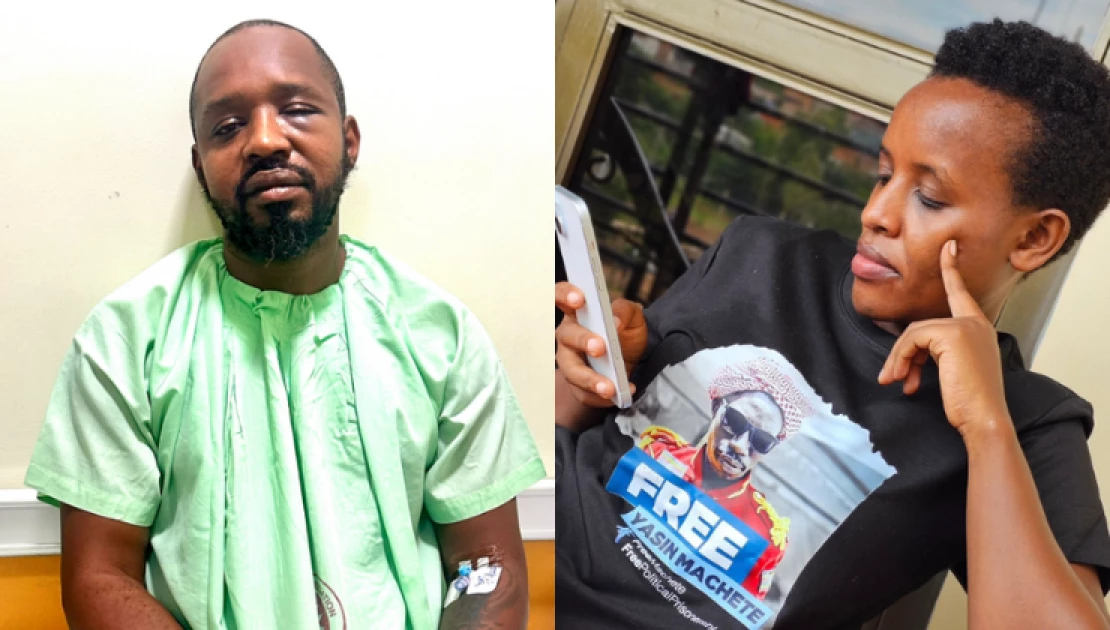
A photo collage of activists Boniface Mwangi (Kenya) and Agather Atuhaire (Ugandan). PHOTOS | COURTESY

Audio By Vocalize
Activist Boniface Mwangi has delivered a chilling and unfiltered account of the brutal torture he and fellow Ugandan activist Agather Atuhaire allegedly endured while in Tanzanian custody, calling out President Samia Suluhu by name.
Mwangi, who was released on Thursday after being held since Monday, revealed that he and Atuhaire had
travelled to Dar es Salaam in solidarity with Tanzanian opposition leader Tundu
Lissu, but ended up victims of what he describes as a politically motivated and
inhumane ordeal.
He narrated that the last time he was in the same space as Atuhaire was on the morning of Tuesday, May 20, 2025. Atuhaire has since been found dumped at the Mutukula border of Tanzania and Uganda.
“We had been tortured, and we
were told to strip naked and to go bathe. We couldn't walk and were told to
crawl and go wash off the blood,” Mwangi said. “We were handcuffed and
blindfolded, so I didn't even see her, but I heard her groaning in pain as they
barked orders at us.”
He added: “Any attempt to speak
to each other during the night we were tortured was met with kicks and insults.
We were removed from the torture location in different vehicles.”
Mwangi claims that the torture
was orchestrated by a Tanzanian state security officer who followed them from
Immigration offices to the Central Police Station and ordered their removal to
a secret location for what was termed as “Tanzanian treatment.”
“That man assaulted me in the
presence of three lawyers from Tanganyika Law Society and identifying him might
help us find where Agather is being kept,” he said. “He scared the three
lawyers, and they left us at Central Police Station, where we were removed
while handcuffed and blindfolded.”
He described the said man as
overweight, of average height, light brown skin, with wavy short hair and a
sagging potbelly. On the day in question, Mwangi said, he wore a black suit,
black shoes, and a white shirt without a tie, and that he allegedly reports
directly to President Samia Suluhu Hassan.
In a separate and equally raw statement, Mwangi offered gratitude to those who pushed for his release while reiterating that Atuhaire still remains unaccounted for.
“Words can’t express my gratitude
to all of you for raising your voices to get me released. I say ‘me’ because we
are yet to know the whereabouts of my friend and comrade, Agather. We went
through the worst form of torture and were threatened with public humiliation
if we revealed what they did to us,” he narrated.
“You cannot torture us, however,
and then dictate how we should react. We were detained, tortured, and treated
worse than rabid dogs in the name of President Suluhu.”
Mwangi recounted his history of
cross-border solidarity, attending court hearings and visiting jailed activists
across the continent.
“We were there peacefully as
members of East African Community to attend a court hearing in solidarity with
Chadema’s party leader, Tundu Lissu,” he said.
“When the then Chadema’s Freeman Mbowe was in jail in the same
Tanzania, l visited him. When Dr. Stella Nyanzi was jailed in Uganda, I went to
see her. And when Bobi Wine was under house arrest, l went to visit him, too.”
Referencing Pan-Africanist
ideals, Mwangi quoted Ghana’s first President: “As Kwame Nkurumah said, 'I’m
not African because l was born in Africa, but because Africa was born in me.’”
“I’m a Pan-Africanist, and l have
trained and mentored activists in all four corners of our continent – from Arab
to French-speaking and from English to Swahili-speaking nations,” he said.
Mwangi emphasized that their
visit to Tanzania was intended to be brief — a one-day show of solidarity
before heading to Uganda for another case involving opposition leader Kizza
Besigye. But that plan was violently interrupted.
“Our arrest and detention should
not stop the solidarity among African activists or deter us from showing up for
each other. Dictators are united, and only our own unity can help democratize
our respective countries.”
He laid responsibility squarely
at President Suluhu’s feet: “Everything that happened to us in Tanzania was
done in Samia Suluhu’s name, and we will ensure the world gets to know. We
shall speak for the Tanzanian victims who are too afraid to speak.”
“What Suluhu did to us will be
revealed to the world. We shall not be silenced by a torturous dictator who has
her foot on the necks of the Tanzanian people.”
Join the Discussion
Share your perspective with the Citizen Digital community.
No comments yet
This discussion is waiting for your voice. Be the first to share your thoughts!