
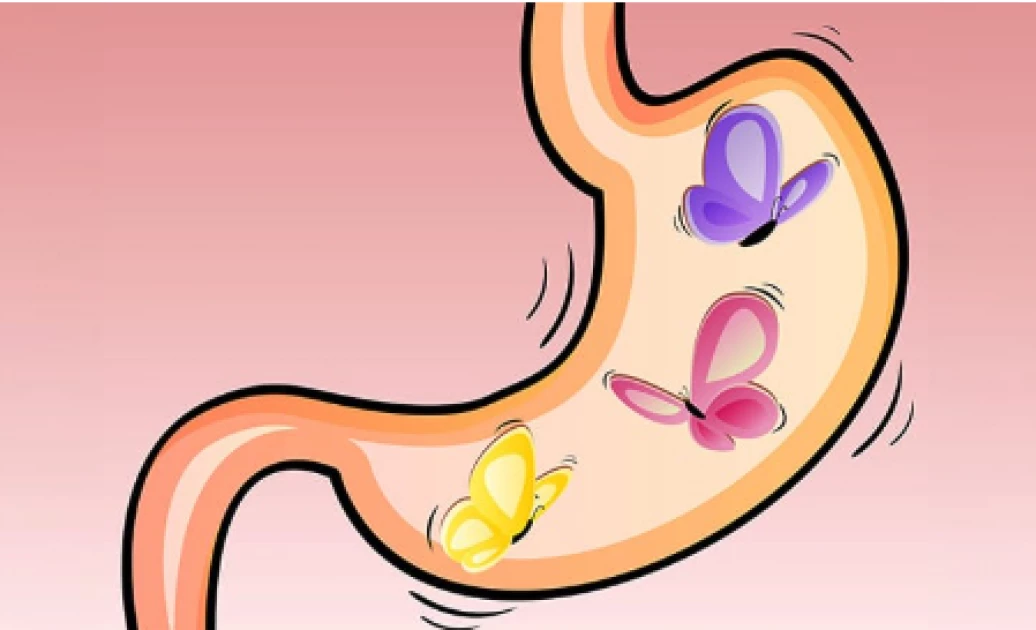
Why do we get ‘butterflies in my stomach’?

Audio By Vocalize
It’s a cute description for one part of the fight-or-flight response that can kick in if you’re excited or afraid.
But what exactly are these butterflies? Why can we feel them in our stomach? And is there anything we can do about them?
Threat alert
These “butterflies” – along with a raised heart rate, sweating and feeling “jumpy” – are part of your survival mode. That’s when the part of your body known as the autonomic nervous system gets involved.
When you sense a possible threat – whether it’s physical or social, real or imagined – information is sent to the brain’s amygdala region for emotional processing. If the amygdala perceives danger, it sends a distress signal to another part of the brain, the hypothalamus, which kick-starts a cascade of changes to help the body prepare.
The adrenal glands on top of each kidney send the chemical messengers adrenaline and noradrenaline into the bloodstream, activating receptors in the blood vessels, muscles, lungs and heart. The heart rate and blood flow increase, blood sugar levels go up, and muscles are primed for strength (fight) and speed (flight).
Digestion can wait
Digestion can wait until after you have escaped from the tiger (or the job interview). So while all this is happening, your body reduces blood flow to your stomach and intestines, and pauses the constant digestive pulsing of the gut (known as peristalsis).
The autonomic nervous system also stimulates the stomach (and other organs) via the vagus nerve, the nerve that runs down from the brainstem alongside the vertebra, sending signals back and forth between the brain, heart and digestive system.
There isn’t direct evidence to explain which part of this cascade leads to the feeling of butterflies. But it is likely to be related to how the autonomic nervous system pauses the pulsing of the gut, and the vagus nerve sends signals about this change up to the brain.
The feeling of butterflies is technically a “gut feeling” but it’s just one of the signs of the gut communicating back and forth with the brain, along the so-called gut-brain axis. This is the system of communication pathways that shares signals about stress and mood, as well as digestion and appetite.
Could our gut microbes be involved?
Gut microbes are one part of this complex communication system. It’s tempting to think that the action of microbes is what causes the fluttery, butterfly feeling, but it’s unlikely to be that simple.
Microbes are, well, microscopic, as are the actions and changes they undergo from moment to moment. There would need to be coordinated microbial movements en masse to explain the sudden onset of that anxious feeling, like a flock of geese in formation, and there isn’t any evidence that microbes work like that.
However microbes have been shown to impact the stress response, with most research so far conducted in mice.
In humans, there is modest evidence from a small study linking microbes with the stress response. This showed that sticking to a microbiome-targeted diet – a diet, rich in prebiotic fibres, designed to feed fibre-loving members of your gut microbiome – could reduce perceived stress compared to a standard healthy diet.
But this single study isn’t enough on its own to definitively tell us exactly how this would work, or if this diet would work for everyone.
What can I do about the butterflies?
How can we manage those nervous bodily feelings?
The first thing to consider is if you need to manage them at all. If it’s a once in a blue-moon, high-stress situation, you might be able to just say “hi” to those butterflies and keep going about your day until your body’s rest-and-digest response kicks in to bring your body back to baseline.
Self-guided techniques can also help.
Mindfully observing your fluttery butterflies may help you notice subtle cues in your body about how you’re feeling, before you become overwhelmed.
By then moving through any actions in your control – from noticing your breath through to taking the next steps towards the plunge you fear most – you show your brain you can overcome the threat.
Sometimes it can be worth turning to the cause of the anxiety-causing situation itself. Could some extra interview prep (for example) help you feel more in control? Or is it more about reminding yourself of how getting through these situations aligns with your values? Sometimes a shift in perspective makes all the difference.
If anxiety is more frequent or is getting in the way of doing the things that matter to you, try the evidence-based method of “dropping the struggle”.
This means sitting with, instead of trying to fight or resist, anxiety and any other bothersome feelings. You might even thank your mind (and body) for its attempt to help, and for the reminder about what is important to you.
Or you can seek help from a psychologist to ease anxiety (as well as other common mental health struggles) using an evidence-based approach commonly known as ACT or acceptance and commitment therapy. This involves developing skills for living a meaningful life in spite of difficult emotions and situations. It helps people work with, rather than control, tricky thoughts and feelings.
Join the Discussion
Share your perspective with the Citizen Digital community.
No comments yet
This discussion is waiting for your voice. Be the first to share your thoughts!