
FINAS 2026 Summit to push for sustainable financing of Africa’s food systems
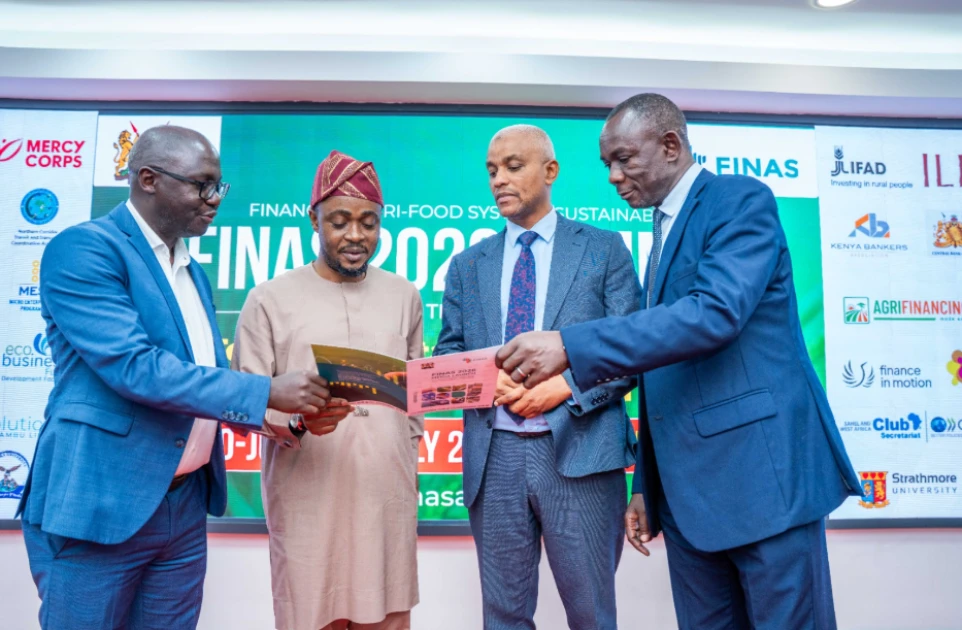
From Left: Kennedy Oketch, Agriculture Economy and Financial Advisor, GIZ Kenya, David Adama, Senior Policy Officer, AGRA, Rashid Khator, Secretary of Administration in the State Department of Agriculture and Peter Owoko, Director of Policy at the State Department of Agriculture, Ministry of Agriculture during the FINAS2026 media launch in Nairobi.

Audio By Vocalize
The summit, scheduled for June 30 to July 2, will be held under the theme “Towards Sustainable Financial Architecture for Africa’s Food Systems.” Organisers say the forum will focus on investment mobilisation, policy alignment, and solutions to bridge financing gaps in agriculture across the continent.
Africa’s agri-food systems contribute between 20 and 30 percent of GDP in many countries and employ more than 60 percent of the workforce.
However, the sector faces an annual financing gap estimated at more than 100 billion US dollars, while agriculture receives less than five percent of formal bank lending in most African markets.
Smallholder farmers, women, youth, and agri-SMEs remain the most affected despite producing up to 80 percent of the continent’s food supply.
Speaking during the summit launch in Nairobi, Rashid Khator, Secretary of Administration in the State Department for Agriculture, said African countries must strengthen financing models that deliver measurable outcomes for farmers and food systems.
“We must ensure every shilling invested in agriculture delivers value and supports sustainable food systems,” he said.
Stakeholders at the launch said access to affordable financing remains one of the biggest barriers facing farmers, especially small-scale producers and young agripreneurs who often lack collateral required by lenders.
Participants noted that nearly 80 percent of Kenya’s agriculture sector remains informal, limiting access to commercial bank financing. They called for subsidized lending rates, blended financing models, and innovative financial solutions to make credit more affordable and accessible.
Officials highlighted government interventions including increased funding to the Agricultural Finance Corporation, fertilizer and seed subsidy programmes, and investment in climate-smart agriculture and irrigation projects.
The discussions also focused on technology and data-driven financing solutions. Officials said the government is developing the Kenya Agriculture Data Center to improve access to reliable agricultural data for research, policymaking, and financing decisions.
GIZ Kenya Project Manager Sophia Baumert said the summit has evolved into a continental platform promoting collaboration in financing food systems.
The summit will feature ministerial and CEO roundtables, policy discussions, and deal-making sessions, and will conclude with visits to innovation hubs including Konza Technopolis and Tatu City.
Join the Discussion
Share your perspective with the Citizen Digital community.
No comments yet
This discussion is waiting for your voice. Be the first to share your thoughts!