
Kenyans slapped with high fuel costs; Why the Israel-Iran war is not only factor to blame

Audio By Vocalize
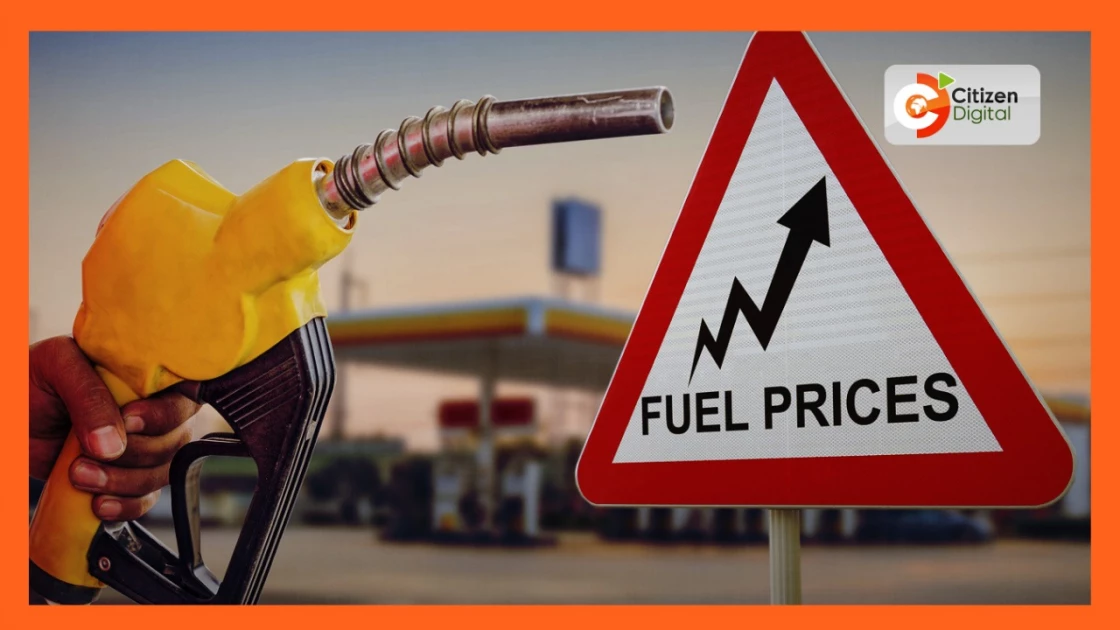
EPRA’s current scheduled monthly fuel review statement shows prices affecting super petrol, diesel, and kerosene as from July 15 to August 14 are up by Ksh.8.99, Ksh.8.67 and Ksh.9.65 per litre respectively.
The new prices have raised a litre of super petrol to Ksh.186.31, diesel sells at Ksh.171.58 and Kerosene sells at Ksh.156.58 a litre in the capital city, Nairobi.
When releasing the new fuel prices, the EPRA Director General Daniel Kiptoo said the rise in fuel prices was due to “the average landed cost of imported super petrol which increased by 6.45% from US$590.24 per cubic meter in May 2025 to US$628.30 per cubic meter in June 2025; diesel increased by 6.27% from US$580.23 per cubic meter to US$616.59 per cubic meter while kerosene increased by 6.95% from US$569.00 per cubic meter to US$608.54 per cubic meter over the same period.”
EPRA said the reason for the price of petroleum products was based on global market trends, as Kenya does not produce or refine its petroleum; it imports already processed fuel from other countries.
EPRA is mandated to safeguard public interest by ensuring fair pricing in the energy and petroleum sectors. This includes regulating prices, monitoring market activities, and promoting fair competition. EPRA is responsible for ensuring that energy and petroleum products are priced fairly, taking into account both consumer affordability and the sustainability of the supply chain. Currently, however, this seems to have remained only on paper.
The energy body is legally mandated to calculate the maximum retail prices of petroleum products each month. The prices released by EPRA are inclusive of the 16% Value Added Tax (VAT) in adherence to the provisions of the Finance Act 2023, the Tax Laws (Amendment) Act 2024, and the revised rates for excise duty adjusted for inflation as per Legal Notice No. 194 of 2020.
Oil is a natural energy commodity that is traded in global markets due to its widespread use and demand. This makes it a product with fluctuating prices influenced by supply, demand, and geopolitical factors.
Kenya, like many other countries which are not yet net oil producers, has to depend on imported oil products. Since the Kenya Oil Refinery Corporation ceased operations years back due to alleged obsolescence, Kenya does not refine its oil for use locally but imports the final products for use within its market.
Why a high landed cost
There are a number of factors that influence the landed cost of fuel in Kenya. The primary driver of the cost of fuel is the cost of crude oil per barrel in the international markets.
Fluctuations in global crude oil prices directly impact the cost of refined products, and therefore, the cost of refining crude oil into a usable product like diesel or petrol is a factor that affects its final landed price.
The cost of shipping, insurance and other logistical factors to a final port of discharge are also factors in its landed cost. Import duties and taxes levied by the importing country (Kenya, in this case) are factored into the final landed cost.
Currency fluctuations in currency exchange rates also add to the final landed cost. Lastly, Global and regional supply and demand for refined fuels, together with security factors, can influence prices.
Once the product reaches the intended country, for instance Kenya, the attendant storage, levies and taxes plus inland transportation, are major factors that affect the pump price.
Motorists feel the pinch
This week’s steep rise in fuel price took many Kenyans by surprise and one of the entities to voice their opposition and lodge a complaint was the Motorists Association of Kenya (MAK).
MAK said the government was taking advantage of motorists, as it described the new prices as “unjustified.”
However, Cabinet Secretary for Treasury, John Mbadi, came out strongly to defend the government over the big leap in fuel prices, as he dismissed claims by Kiharu MP Ndindi Nyoro as misinformed. CS Mbadi insisted the increase was driven by the ongoing Israel-Iran war and rising global oil prices.
A dismayed MAK said it is shocked by EPRA’s sharp fuel price increment, even as global oil prices remained largely stable. MAK also stated that, "Whenever world prices are dropping, EPRA reduces local pump prices by a paltry one shilling, insulting the millions of motorists who already sustain this government through oppressive taxation.”
MAK went on, “the cost of fuel is made up largely of taxes, which is economically destructive and morally wrong." MAK further listed several other policies that they claimed had led to the detriment of the industry, including the deliberate increase in oil marketers’ margins at the expense of the motoring public.
Kiharu MP had stated earlier that he was disappointed by EPRA on the recent spike on fuel prices. He claimed the increment was a result of an “opaque and potentially unconstitutional government borrowing practices.”
The former National Assembly Budget committee chairperson had earlier, in a rejoinder, rejected the Ministry of Energy's explanation in a public statement, which attributed the fuel price increase to rising global oil prices, saying it was unsubstantiated by international market data. According to the MP, the true cause of the fuel cost crisis is excessive local taxation and the securitization of fuel levies.
The Israel-Iran conflict
Independent statistics and analysis from the United States Energy Information Administration (EIA) indicate the Brent crude oil price increased for the first time in five months in June 2025 to an average of $71 ,primarily due to concerns of oil supply lines being disrupted by the probable escalation of the Iran-Israel conflict in mid-June.
The matter of grave concern was the potential of the Strait of Hormuz being blocked, as it is an important corridor to the global oil supply. An estimated 20% of global petroleum consumption is shipped through the Strait of Hormuz, and concerns among market participants about its potential closure caused a slight fluctuation in oil prices and volatility.
Brent crude oil spot prices increased from $71/b on June 12 to $80/b at the height of the conflict on June 19 as the market responded to reports that Iran was considering closing the Strait of Hormuz.
However, prices dropped back below $70/b in subsequent days as the conflict de-escalated. This was the highest level of volatility since March 2022, at the onset of Russia’s full-scale invasion of Ukraine.
Currently, crude oil prices have nearly returned to levels before the onset of the conflict, falling to $68 in late June 2025.
These facts would seem to corroborate what both the Motorists Association of Kenya and Nyoro are saying, there has been no untoward elevations of oil prices in the global scene lately, save for the few days scare of the Iran-Israel armed conflict.
Nyoro alleges that the true cause of the escalating fuel price is excessive taxation and the securitization of fuel levies.
Nyoro said that “Out of the total cost per litre of fuel, more than Ksh.80 for petrol and Ksh.76 for other fuels go directly into taxes and levies.”
Further, he argued, in an oil net importing country, tax policy is the only effective tool for protecting consumers from volatile fuel prices, but he claimed it is being abused.
Nyoro went further when he alleged that the government in 2023, quietly implemented a Ksh.7 per-liter levy at a time when global oil prices were falling, effectually denying Kenyans the relief that would have come with lower international prices. Kiharu MP also claims the government's decision to securitize the fuel levy and borrow Ksh.175 billion against it, without parliamentary approval or public disclosure, is rogue.
Fuel levy securitization
Nyoro’s words turned out to be true when CS Davis Chirchir, Roads and Transport docket, in a statement to newsrooms on Wednesday, explained that the government turned to securitization to raise Ksh. 175 billion to pay off verified pending bills inherited from the Jubilee government.
However, he dismissed allegations that the government has plunged the country into fresh debt through the securitization of the Road Maintenance Levy, insisting that the financing model is both legal and fiscally responsible. These unpaid bills, Chirchir asserted, had stalled more than 580 road projects across the country, derailing critical infrastructure development and straining contractors.
This was further compounded by the G-to-G deal with Saudi Aramco, Abu Dhabi National Oil Corporation (Adnoc), and Emirates National Oil Company (Enoc) to provide Kenya with fuel on a 180-day credit period signed in April 2023. It remains shrouded in the secret yet the matter is of utmost interest to the public and in return calls for public funds to realize its achievement.
Before April 2023, Kenya required an estimated $500 million each month to pay for fuel imports. Thereafter, the government credited the deal with stabilizing the Kenya Shilling which was at one point on a free fall.
The G-to-G arrangement allows Kenya to import refined petroleum products and make payments in Kenyan shillings, rather than in US dollars.
Despite the stabilization of the shilling, concerns have been raised that consumers are losing out due to the deal that has fixed fuel prices, while it is the nature of global oil prices to fluctuate, this denies local oil consumers opportunities for fair weather prices.
The G to G trap net
It therefore came as a shock when the Kenyan government approved the extension of the government-to-government petroleum sourcing arrangement with the Arabian Oil Consortium in December 2024, following a Cabinet resolution at State House, Nairobi, chaired by President William Ruto. What is strange, however, is that the government did not give a clear timeline and expiry of the renewed deal.
In 2024, Kenya “sought” to exit the Government to Government (GtoG) deal with Saudi Arabia, saying that it is distorting the forex market,t admitting that it has failed to ease the pressure on the dollar. The government came clean on the G-to-G oil deal with the Arabian Peninsula consortium.
"We intend to exit the oil import arrangement, as we are cognizant of the distortions it has created in the Forex (FX) market, the accompanying increase in rollover risk of the private sector financing facilities supporting it," said the Treasury in a submission to the International Monetary Fund (IMF) then.
In the IMF report, Kenya admitted that the deal soured immediately saying that there was low demand, which saw the import quantities dip contrary to the contract volumes. During that period, the government admitted that the deal was a short-term measure to help ease foreign exchange pressures. "As an interim measure to help ease FX pressures, we introduced a new oil import arrangement in April 2023.”
At the root of Kenya’s oil sector woes is the regressive tax assault on oil products sold in the country. Many are of the opinion that what necessitated the G-to-G deal is now sorted out.
Fuel is a key determinant of inflation in Kenya and once it is up many households suffer want and strain economically. Opaque deals and overburdening fuel products is not the way forward, it hurts the poor majority the most.
Join the Discussion
Share your perspective with the Citizen Digital community.
No comments yet
This discussion is waiting for your voice. Be the first to share your thoughts!