
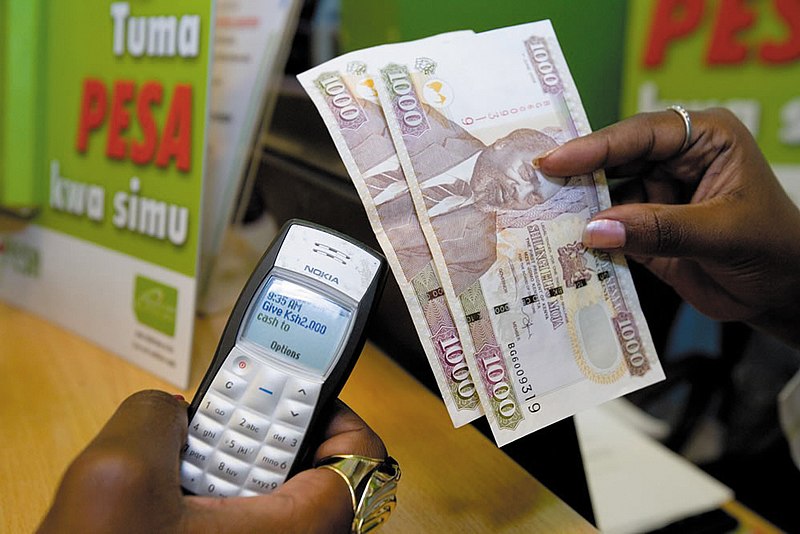
MPESA: Kenya's mobile payment and banking system turns 15

Audio By Vocalize
Over its one and a half decades stay, the solution has proven to be not just a mainstay for the giant telco but also for Kenyans.
15 years ago, the platform took off on just native intelligence, with people exchanging airtime for goods and services and even money.
A look through Safaricom's financial performance over the period reveals the growth of the behemoth that is M-Pesa today.
In March 2008, a year after its founding, M-Pesa had 2.1 million registered users with Ksh.14.8 billion having been transferred from person to person (P2P) across the past 12 months.
In the year, M-Pesa revenues were bundled up with those of data and SMS at a mere total of Ksh.4.6 billion.
Fast forward to March 2021, M-Pesa raked in Ksh.82.6 billion for Safaricom and now has multiple functions beyond just P2P transfers, including payments, betting, international money transfers (IMT) and lending and savings solutions including M-Shwari, KCB-M-Pesa and Fuliza.
Between April 2020 and March 2021, Kenyans moved Ksh.22 trillion through the platform via 11.7 billion transactions.
At the end of March, M-Pesa had 28.3 million one-month active customers.
M-Pesa has since eclipsed voice as Safaricom's main revenue stream, having contributed to 37.8 percent of the telco's revenues as of September 2021, compared to voice's share of 29.9 percent.
To boost consumer experiences on the platform, Safaricom has over the past year unveiled a mobile application to specifically support the service.
Nevertheless, like any other tech-based solution, M-Pesa is susceptible to disruption, with the proposed Central Bank Digital Currency (CBDC) being one of the current existential threats.
Join the Discussion
Share your perspective with the Citizen Digital community.
No comments yet
This discussion is waiting for your voice. Be the first to share your thoughts!