

How a fake juror in Depp vs. Heard trial went viral on TikTok
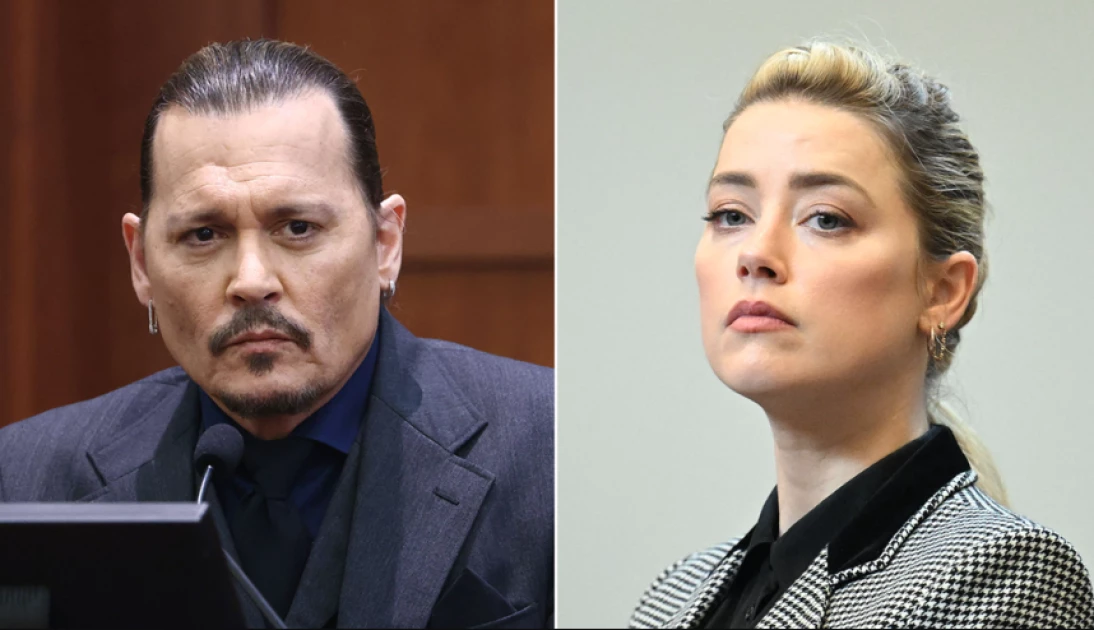

Audio By Vocalize
A
man purporting to be a member of the seven-person jury that deliberated in the
Johnny Depp vs. Amber Heard trial made a series of posts on TikTok last week
about what he claimed were his insights from the high-profile trial that
captivated the world.
While
some social media sleuths were quick to cast doubt on his account — including
closely examining the pixelated image of what he claimed was juror paperwork he
posted as alleged proof of his service — the man's eight videos posted to
TikTok last Thursday and Friday generated much attention. Combined, the posts
garnered more than 2 million views and were recirculated on YouTube and
Instagram by large-scale content creators reaching exponentially more people
before he deactivated the account sometime Friday evening after CNN Business'
attempt to seek comment. TikTok did not respond to a request for comment.
The
Daily Mail circulated his remarks as an "exclusive," while also
noting in the headline how little it knew about him: "Man claiming to be
JUROR in Depp-Heard trial says moment Amber lied about donating divorce
settlement sunk her case and that jury believed Johnny was physically abusive —
but not the instigator." Daily Mail did not respond to a request for
comment. Several other outlets similarly went forward with the story.
But
the man behind the account isn't a resident of Virginia where the trial took
place — and he did not, in fact, serve on the jury. In a text message Sunday,
the man admitted it "was just a prank."
It
is the latest development in how the defamation trial involving the two
celebrities has been seized upon by content creators and influencers on TikTok,
which spawned news cycles,
revealed insight into the consciousness of
users, and shone a light on what content is rewarded on
social media.
According
to Casey Fiesler, an assistant professor of information science at University
of Colorado Boulder and a TikToker, TikTok tends to promote content that is
controversial in some ways, or that the platform's algorithm has determined
people want to see. Because the man pretending to have been a juror in the case
said he believed Depp's story over Heard's, it reinforced beliefs held by
Depp's supporters.
"People
believe the things that they want to believe, absolutely," said Fiesler.
Posting
under an account name "seekinginfinite," the faux juror stated in a
TikTok that he wanted to remain anonymous for the time being but would
"consider confirming my identity" in the future. His videos, in which
he did not show his face, largely echoed common criticisms and observations
made by social media creators throughout the course of the trial. He claimed
that he grew "extremely uncomfortable" with Heard's eye contact with
him so much so that he stopped looking at her while she testified. (Heard's
frequent eye contact with the jury was one major topic of discussion during her
time on the stand.) He claimed to have been a fan of Depp's lawyer, Camille
Vasquez, who became such an internet sensation that one TikToker said she gave herself a
tattoo of Vasquez.
"I
just think she was really sharp and knew what she was doing and did it with
purpose and integrity," said @seekinginfinite in one of the TikTok posts,
responding to another user's question about what the jury thought of Vasquez.
"All the business stuff aside, she wasn't too bad on the eyes."
Importantly,
the TikToker made clear that he didn't believe Heard, validating a viewpoint
that many spent weeks expressing on the platform: "Everything she was
saying came off like bulls***," he said in his original post, calling
Heard a "crazy woman."
The
man is in his late 20s and works as a cinematographer. He appears to have been
in Hawaii during deliberations and post-verdict, based on Instagram posts. When
asked Friday whether the purported juror badge posted by the TikToker user
could plausibly be legitimate, a spokesperson for Fairfax County's Department
of Public Affairs said it could not confirm based on the image shared on
TikTok. Moreover, the spokesperson said it cannot confirm the identities of
jurors who deliberated in the trial because they are under seal for one year. Jurors
are, however, free to speak about their experience before then should they
choose to do so.
Lending
some credibility to his TikTok page was the fact that it wasn't an entirely new
account spun up just for the purpose of claiming to be a juror — there were two
earlier posts pertaining to travel. But CNN Business was able to trace back to
the account's previous name and avatar for the TikTok account which linked to
the man elsewhere online.
Asked
whether he served on the trial, he initially texted: "I'm sorry that is
none of your business," before acknowledging that he was behind the
account: "I deleted everything, leave me alone and don't spread my
information please. I do not give you permission to use any of my information
in any article," he said. "There's more important things to write
about, such as mass shootings, climate change, war, etc."
It
is unclear what he hoped to accomplish, or why he himself would devote time to
posting about the trial given the other pressing societal issues. Asked what
inspired him to post at all purporting to be a juror, he said: "I'm sorry
but I'm not answering any more questions."
Throughout
the trial, the vocal majority on TikTok indicated support for Depp whose case
centered around whether Heard had falsely and maliciously accused him of
domestic abuse in an opinion piece in The Washington Post in 2018. Heard, for
her part, countersued Depp — and after six weeks of hearing their cases, the jury
ultimately found that both Depp and Heard had defamed each
other, with Depp being awarded $15 million in damages and Heard just $2
million.
TikTok's
algorithm works in such a way that it featured a never-ending rabbit hole of
pro-Depp content, with many finding virality by posting favorable content to
Depp. By nature of its algorithm, on TikTok, Fiesler pointed out, "the
odds that someone with very few followers can have something go viral is higher
[that on other platforms]."
"My
first thought was, 'Why do people think this is real?'" said Fiesler.
"At the same time, there were a lot of comments — clearly just people
assuming that it was real, and there was certainly nothing to support that. There
was no kind of evidence. It seemed to me that this is totally the kind of thing
somebody would just do for views, for a joke or whatever."
Fiesler
said there's incentive for creators to post content that people engage with —
to get more views, followers and an eventual financial payoffs if one's
platform grows large enough.
For
those who primarily consume their news through social media, the danger is in
believing that what's shown is the full picture, said Fiesler. "One of the
big challenges with misinformation on social media is its very, very hard to
correct it," she added.
Leave a Comment