
Reggae legend Buju Banton blasts Afrobeats, calls on artists to look beyond money
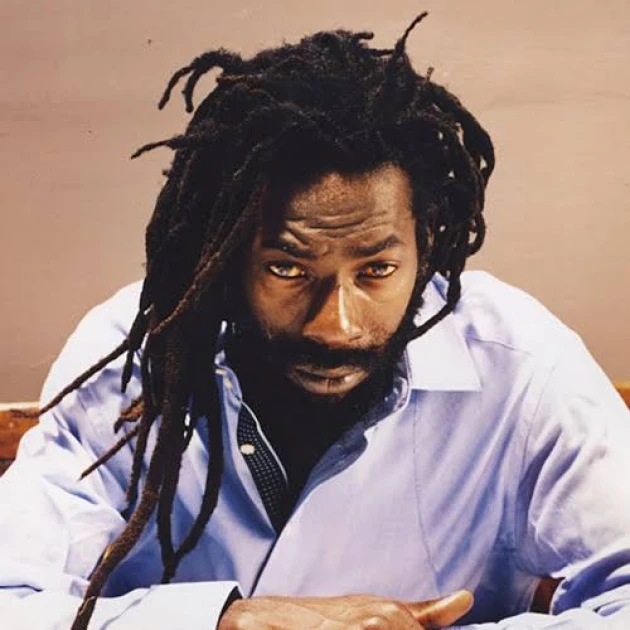

Audio By Vocalize
Speaking during his appearance on a recent episode of the popular US podcast Drink Champs, the singer argued that despite its global success, the genre fails to address pressing socio-political issues or uplift the African people, stressing the need for music that has a meaningful impact.
"When you look at what they’re doing, their music is not freeing Africa. It’s f**kery… their music needs to free Africa. If I’m all the way in Jamaica and my country and my people fight to free your continent with word, sound and power, and you have the ability now and all you’re singing is f**ckery?" he said.
"You don’t sing a song to free Africa now… we desire more from them. You want the money? Go get it, but what’s going to be said about you later on? You didn’t make any impact."
To buttress his point, Banton singled out Kenya, amongst some other African countries, which he noted had been undergoing various political upheavals and needed unifying music at such critical moments.
"Tell me one Afrobeats song that can uplift us. Kenya is suffering. The young men of Kenya are revolting… Sudan, South Sudan, you name it. But which one of these songs can I relate to for peace of mind; to tell me that I’m in the struggle and we are going to be better in the struggle, and even though the struggle is hard, we’re going to overcome," he said.
Banton also addressed the relationship between Afrobeats and reggae, noting that while Afrobeats is an African genre, it bears influences from various musical traditions, including reggae.
However, this influence, he noted, is not always acknowledged by Afrobeats artists, who may claim a distinct separation from Jamaican music.
Banton argued that despite these claims, the fundamental connection between African and Jamaican music remains significant due to shared rhythms and cultural expressions.
“I’m sure a lot of Afrobeats artists will say to you, ‘Oh, Afrobeats has nothing to do with Jamaica’. And we’ll say to them, ‘Our music has everything to do with Africa. We don’t dichotomise. We don’t separate ourselves from Africa. No point, no time, no day, because the drum in our music is what speaks to our soul. I think the drum in your music speaks to your soul," he said.
"But what are you saying? It’s easy for you to have anybody listen to you, but what do you have to say to them? There’s the hard part… our music cannot continue to be uninspiring.”
Moments before, Buju had listed Nigeria’s Fela Kuti, South Africa’s Lucky Dube and Mali's Selif Keita as among the greatest African artists, then pointed out that African artists who came after did not want to “go beyond the pale” of what those musicians were doing.
Thanks to Afrobeats’ global surge, Africa’s music industry is set to top $500 million by 2025 and has the potential to create 20 million entertainment sector jobs by 2030.
With its global success, the genre, which covers contemporary African pop, has become a point of contention, notably in West Africa, where its roots are often linked.
Banton’s criticism seems to have revived a debate on Afrobeats’ lyrical depth, echoed by Nigerian artists like Burna Boy, Davido and Wizkid.
In an interview with Apple Music last year, Burna Boy criticised a message deficit within the genre.
“That’s why you hear most Nigerian music, African music or Afrobeats, as you people call it, is mostly about nothing, absolutely nothing,” he said. “There is no substance to it, like nobody is talking about anything, it’s just a great time. But at the end of the day, life isn’t an amazing time.”
Earlier this year, Wizkid also took to Instagram to dismiss the “Afrobeats artist” label, arguing that the tag limits artists. He emphasised being an “artist first” and touted his ability to explore different sounds.
Banton is best known for tracks like ‘Destiny’, ‘Psalm 23’, ‘Hills and Valleys’ and ‘Untold Stories’.
Join the Discussion
Share your perspective with the Citizen Digital community.
No comments yet
This discussion is waiting for your voice. Be the first to share your thoughts!